
What Past?

Standard

I play drums on the worship team at my church. It's no stretch to say that you'd be hard pressed to find drums in a church sanctuary before 1970, but that's a whole 'nother post.

Having been involved in church music for years, I know a bit about the mindset of worship musicians. Universally, these folks honestly love using their musical talents for the Lord and for the edification of others. And while you do encounter a few moody introverts, my experience is that folks on worship teams are some of the most honest and open people you'll find in a church.

So it's always been odd for me to hear their reactions when I bring up the issue of playing some old hymns now and then and not the same praise and worship-style music we're trapped in. The response 99% of the time: "Yeah, wouldn't that be great? I sure miss singing those old hymns."

And yet we never get around to playing them. It's like those hymns are from a distant past so dusty that to even trot one out would cloud the gleaming modern edifice we call "The 21st Century Church."

Now some of you are saying that this is not your church. Yours sings those hymns with gusto. Fine. But somewhere in your church a paradigm shift occurred that relegated anything from the Christianity that existed before 1860 to the dark recesses of history, regardless of whether you know who Isaac Watts is or not.No Augustines I've yet to encounter an Evangelical church that doesn't seem to live solely in the moment.
Too many churches today act as if the Church sprang into existence after the Civil War. Eighteen and a half centuries flew by and with the exception of a couple of crusty old Europeans with names like Luther, Calvin, and Knox, Christianity didn't actually exist. Heck, history didn't actually exist, right?

One of the most tortured experiences I ever had in a Third Wave church was when the pastor of the one I was attending was given a portion of the text of Isaiah that was unearthed in the Middle East. It was more than a thousand years old. The group presenting it was tickled pink about their gift, but despite the fact that nearly three thousand people sat packed in the church, I would suggest that maybe ten folks in the seats weren't intellectually yawning. "So what?" would be the collective mantra.

I'd like to know when the American Church put a gun to the head of the Ancient Church and pulled the trigger. What happened that we got so arrogant and self-centered that we looked back on all those Christians who came before us, folks who often went to the flames for their faith, and said, "I'll take a pass, thank you," without considering the ramifications of that stance?

The simple truth about every pitched doctrinal battle now erupting in numerous denominations of Evangelical and Mainline Christianity is that the furor would cease to even be a whimper if we gave credence to what Christians a thousand years ago were saying. The Emerging Church, Open Theism, you name it, someone dealt with it a long, long time ago. But post-Enlightenment, it seems that our minds are stuck on our perceived superiority to what those Dark Ages savages thought.

I'd like to make an exceedingly controversial statement. It's not proffered in most genteel circles because some people would consider it borderline racist or sexist. At the risk of losing readers, I'm going to say it anyway. Just hear me out and think past the rhetoric.

I believe that one of the reasons that many American Christians today have rejected pre-Civil War Christianity as having anything useful to say to us today is because of slavery. The belief here is that if we got the slavery issue wrong back in those days, what else did we get wrong? If there were Christians in those days that thought it was okay to own slaves, then obviously folks back then weren't as smart as we are.

The same goes for how some might perceive women as being treated before that war. Afterwards, we got women's suffrage, their leadership in the temperance movements, and women moving into the workplace. But before that there was only ignorance.

Those two issues (and some others, like the Crusades), I believe led today's Christians down a dark path of swearing fealty to anti-traditionalism. Trying to rationalize older Christian positions on topics that make us queasy have led us to abandon en masse any previous age that did look like our more "enlightened" one.

No one is advocating a return of slavery! But our collective guilt about those less enlightened days must not force us to abandon everything associated with them, particularly the solid theology espoused by spirit-filled men and women of God who lived prior to women's suffrage and the Emancipation Proclamation. Many of those older theologians advocated for greater roles for women in society and the church or were staunchly anti-slavery—but we're just not willing to read them, so they cease to exist.

We cannot live believing that we who comprise the Church in America are the pinnacle of Christian thought. Millions have gone before us blessed of God and we are fools to think that we have nothing to learn from them. Their faith then means something for our faith today. It should come as no shock then that the fact we are adrift in so many parts of of the American Church is that we've grown to despise the very history that has made us who we are.

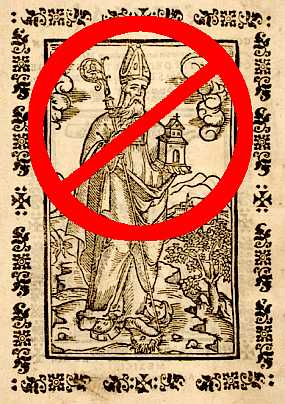
{Image: Woodcut of Augustine of Hippo, artist unknown}
What the Church Is Not Learning

Standard

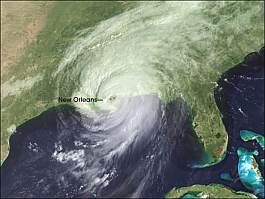
Carnage is the best word to describe what is happening in New Orleans. I pray the Church in this country is watching. What we are seeing may very well be the future, although on a scale restricted to one city in this country. Should more cities than one be involved in a more catastrophic event many days from now, it won't be pretty.

This is not a happy post. People may never want to come back here again after reading this, but I feel compelled to write.

I don't consider Jerry Falwell a spokesman for American Christianity. I want to say that up front. But on 9/11 he commented that perhaps what happened in New York that day was the judgment of God against America's sin. After being shouted down by a protest spearheaded by other Christians, Falwell was forced to retract that statement.

After hearing Falwell's comment, rather than immediately taking sides on it, I thought about it for a long time. Though I never did come to a firm position on what he said, Hurricane Katrinawhat shocked me was that so few people were even willing to consider for a brief moment that what Falwell said might be true.

Now we have a monstrous hurricane decimating a city known for it profligacy and overt sensuality. We have the gambling centers of Mississippi washed out into the Gulf. A couple folks have proffered the same reasoning as Falwell for the wreckage of New Orleans and Biloxi, but once again no one is listening.

Again, I don't have the perfect answer here. Judgment of God or not? I'm still pondering that. What troubles me is that so few Christians are willing to entertain for a second the possibility that Katrina is Wake-up Call #2.

Why does this trouble us so thoroughly that we relegate this possibility to the dumpster so quickly? Can we take a day to ponder this before we say that this is not the judgment of God against this nation? If it's not, then we move on. But what if it is?

The Church here has something to learn through all this. If we cannot discern the judgment of God, a judgment His righteous people easily saw in our Scriptural examples, what does that say about the American Church today?

The images and stories coming out of the Gulf are shocking. They so clearly show the utter depravity of Man that I can't see how we can be the same country after this. All the bravery that we hailed in New York almost four years ago has been swept away. The courageous stories of Katrina are buried in the rubble of vice and sin we see paraded on our TV screens.

What unnerves me about this is that the Church here does not understand that what we are seeing and hearing in New Orleans is far closer to the truth about Man than some are willing to admit. Worst of all, the events in Louisiana only prove that we as a Church are not prepared.

How are we unprepared? Look at the ripples this Gulf event is creating through all the strata that make up this experiment called America. The glaring weaknesses in our government, our energy reserves, our food and water supplies, and most of all, our souls, are on display for all to see. I read today that the area that makes up the most afflicted parts of the Gulf contributes a little less than two percent to the American economy. What if five or ten percent had been affected? Would total chaos reign nationwide?

It saddens me that the Church is largely unprepared to meet a major meltdown in America. We are not planning for a day when times get brutal. In truth, we act as if bad days will never come, the veritable grasshopper to the ant. Only in this story, there appear to be no ants.

He answered them, "When it is evening, you say, 'It will be fair weather, for the sky is red.' And in the morning, 'It will be stormy today, for the sky is red and threatening.' You know how to interpret the appearance of the sky, but you cannot interpret the signs of the times.
—Matthew 16:2-3 ESV

Church, should we not be the ones who interpret the signs of the times? Have we filled our lamps with oil or have the reserves gone out?

Did we learn anything from 9/11?
Did we learn anything from the prolonged recession from 2000-2004?
Are we going to learn anything from the aftermath of Katrina?

From what I can see, we ignorantly go on, blithely brushing it all aside. What else can explain the fact that we have not changed our course?

Just the other day I read that the underground Church in China is praying that persecution will come to America so revival will break out here. While I don't exactly side with that way of thinking, are we prepared if God answers the prayers of the persecuted Church in China?

I don't want the Church here to learn the hard way, but it looks as if we need a more catastrophic event to wake us from our slumber. God help us all should that catastrophe come and we are unprepared.

The Little Things: Ingrates

Standard

Magnifying glassThere's a medium-sized river birch tree in our backyard with a lovely shape and exotic, silvery bark that gleams in the sun. This year, the bark is hard to miss because the tree is leafless, stone dead.

This same time last year all the leaves turned yellow and fell off long before all the other trees on our property surrendered theirs up. Spring came and nothing green appeared on our tree with the metallic-looking bark. A few weeks ago, that bark split and startled me with a bizarre revelation: some plant had grown up under the birch's bark, encircled the delicate living part of the trunk, and strangled the life out of the tree.

I know of parasitic plants from the tropics that will girdle a tree, but I'm at a loss to explain this.

However, I'm not at a loss to explain what strangles the life out of Christians in America. In our materially wealthy country, more than one Christian walk has been girdled by thanklessness.

I'm not going to win any friends by saying this, but I'm going to say it right off—many people in America are ingrates, and that goes for American Christians, too.

Yes, we are the country famed for our one day a year in which we are thankful. Increasingly, I hear that day referred to as "Turkey Day" and not "Thanksgiving Day." One year, the well-known retail computer company I worked for jumped the Christmas stuff grab by opening for a half day on Thanksgiving Day. I still can't get over that one.

Regardless of whether or not there's a holiday set aside for Americans to give thanks, we live as ungrateful wretches most of the year. I believe that part of this is due to the fact we have so much money that we never have to truly rely on God for our daily existence.

For a few people, though, life is marked by losing rather than accumulating. My wife and I have been married for nine years and through much of that time we have been assaulted by loss. We take refuge in something and find it taken away as soon as we acknowledge how much it has helped us. Blink and it's gone.

What this has taught me is that the Lord alone is our daily portion. But it was only through loss that I learned this. Oh sure, if pressed plenty of people say they're thankful, but it's lip service. Take too many things away and they'll gripe like there's no tomorrow.

The other part of being thankless is that the blinders go on. We stop noticing how we are provided for by God. We stop noticing that other people are desperately lacking in the basics. Meanwhile, we moan because our kid got shut out of the exclusive Montessori school that all the VIPs send their kids to. We cry about the fact that we don't have the latest electronic gadget while the couple sitting next to us in church is facing foreclosure on their home because they cannot pay for their medical bills after a prolonged—and expensive—illness struck unexpectedly.

Thankful people, on the other hand, have their eyes made wide by God. They see what God has provided in the natural world and give thanks for it. "Isn't that butterfly gorgeous! Wow, look at the spiral web of that garden spider. Isn't God's world amazing?" They see other people's needs and they meet them. "I hear the Yoders' crops got burned up in this drought, hon. Let's call the electric company and offer to pay their utility bills for the rest of the year." They see hurt and they bring joy into the pain. "That old widow lady who lives alone, Mrs. Samms, had a stroke. Let's go to the hospital and sit with her for a few hours."

The ingrate says, "Look at what I have accomplished by my own effort! Look at all the things I have!" The thankful person says, "God, all I have is yours, even the hours of the day, and I am only the steward of your good provision."

We know about the root of bitterness from the Scripture. But I also wonder if there is not a root of ungratefulness that strangles just as well. Perhaps the two are the same wicked plant.

When we are filled with thanklessness, we

  • Cannot forgive others because we are not thankful that we have been forgiven
  • Cannot live in humility because it requires the death of the bragging self that takes credit away from God
  • Cannot praise God because praise is the essence of thanksgiving
  • Cannot pray because we have become self-sufficient and have no need of God
  • Cannot love because love means acknowledging others, even when they have nothing they can give us.

In short, ingrates cannot know Christ, no matter how much they protest that they do.

The lesson of thankfulness is one I learned through suffering and fear of loss. I always thought I was thankful, but it wasn't until I understood that I could actually lose everything that I made every prayer I prayed afterwards begin with, "Lord, how thankful I am to You…." This is how I've taught my son to pray, too. Sadly, he does not get too many opportunities to have this truth reinforced by others around him. He once wanted to know why we are the only family that prays for our meals when we eat out in public. That's an especially difficult question to answer when you live in what many consider the very heart of "Jesusland."

There are times I believe that thanklessness is the number one reason that the Church in America has reached a plateau and can go no further. I believe that living in ungratefulness has stymied more blessings than nearly any other failure we can bring down upon our heads. Thanklessness is the very act of robbing God, and God does not suffer thieves who want to plunder what is rightfully His—even when they pretend to come in His name.

Thankfulness may indeed be a little thing, but the lack of it can choke the life out of us.