Unemployment Lines Filling with…Pastors?

Standard

Reader Brian Auten passed along an Out of Ur post (“Will Preach for Food“) that riffs off a Wall Street Journal article (“Joblessness Hits the Pulpit“). I would highly encourage you to read both, but here’s the relevant stats:

Unemployed pastors in 2005: 2,000
Unemployed pastors in 2007: 3,000
Unemployed pastors in 2009: 5,000

Thirty percent of church attendees report reducing their giving since November 2009.

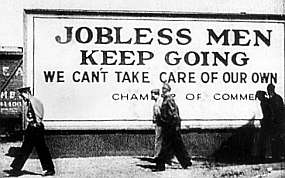
The articles also note that it is megachurches enacting the majority of layoffs.Jobless men, keep going...

While the articles are eye-opening, if you truly want to witness a train wreck, read the comments to the Out of Ur post.

This seemingly innocuous Ur comment was the one that most grabbed me and illustrates everything wrong with American Christian thinking:

Nobody goes into ministry for the money, to be sure, but we have families and college tuitions to pay for just like everyone else, plus many of us have debt from seminaries. A worker is worth his wages. We don’t need much, but fair pay shouldn’t even be a question. Posted by: Mike at May 22, 2010.

Anyone other than me note the extreme concession to status quo in that comment?

This is why the Church in America is failing. We are not asking the hard questions. Instead, we simply relent to the system.

A few questions that immediately spring to mind:

Why do Christians burden their families with outrageous education expenses?

Why aren’t Christians developing church-grown alternatives to higher education?

In what ways does the traditional paid pastoral staff hamper the “laity” from doing the mission of the Church? How is that problem magnified in megachurches?

What percentage of these jobless pastors have stayed on as “laity” at their former congregations? How are those congregations meeting the many needs of the pastors they cut loose?

In what ways does our cultural mindset on traditional employment hamper our ability to be a vital Church?

At what point does Acts 4:32-35 enter into this equation?

When did we stop trying? When did we get to the point that we let society/culture dictate the way we Christians live? Where are the genuine leaders? Where is the dialog on alternatives to status quo?

And isn’t anyone else troubled by this?

At the most granular level, the way we live is broken, yet we keep trying desperately to not only prop it up but also fool ourselves into thinking this is the way it has to be.

All I can say is “Maranatha.”

Fear and the Christian

Standard

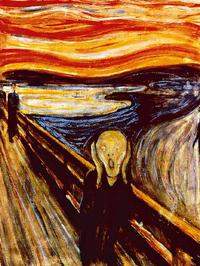
Munch's 'The Scream'One of the hardest confessions to wring out of most Christians regards what we fear. We don’t talk about fear in the Church, in part, because we have created a culture in Christianity that is often afraid (ironically enough) of appearing incompetent in some aspect of the Faith.

Take evangelism, for instance. I think the reason evangelism in this country has practically gone extinct is that many people are scared to death to look incompetent while sharing Christ in any way that borders on apologetics. The reasons for this would probably fill a month’s full of posts here, but needless to say, I think fear is a major reason why American Christians avoid evangelism like the plague.

I think the homogenization that has swept over our churches is largely due to fear. While the Bible equates Christians to sheep, we too often seek out bland flocks, as if the lack of anything distinguishing will somehow allow us to tick a mark off our spirituality checklist while avoiding being too contrarian or countercultural. I mean, the wolves go looking for the oddballs, don’t they?

Beyond competency issues and a desire to not attract too much attention, we still struggle with fear of the future, despite verses like these

Be strong and courageous. Do not fear or be in dread of them, for it is the LORD your God who goes with you. He will not leave you or forsake you.
—Deuteronomy 31:6

He who dwells in the shelter of the Most High will abide in the shadow of the Almighty. I will say to the LORD, “My refuge and my fortress, my God, in whom I trust.” For he will deliver you from the snare of the fowler and from the deadly pestilence. He will cover you with his pinions, and under his wings you will find refuge; his faithfulness is a shield and buckler. You will not fear the terror of the night, nor the arrow that flies by day, nor the pestilence that stalks in darkness, nor the destruction that wastes at noonday. A thousand may fall at your side, ten thousand at your right hand, but it will not come near you.
—Psalms 91:1-7

The LORD is on my side; I will not fear. What can man do to me?
—Psalms 118:6

Fear not, little flock, for it is your Father’s good pleasure to give you the kingdom.
—Luke 12:32

…for God gave us a spirit not of fear but of power and love and self-control.
—2 Timothy 1:7

Keep your life free from love of money, and be content with what you have, for he has said, “I will never leave you nor forsake you.” So we can confidently say, “The Lord is my helper; I will not fear; what can man do to me?”
—Hebrews 13:5-6

and this verse (which we often make into a competency issue)

There is no fear in love, but perfect love casts out fear. For fear has to do with punishment, and whoever fears has not been perfected in love.
—1 John 4:18

I wish I could say that I’m perfected in love, but I’m not. Each day, I pray that I will get closer to that mark by Christ living out more of His life in me, but I am not there quite yet.

I have written much about the times we live in. I think they are scary times, not only because we cannot see what each of us will walk through in the coming days, but also because our leaders (political, intellectual, and spiritual) are increasingly failing us. Too much of the world appears to be coming apart at the seams, and who are we to halt the seam-ripping?

I confess that I am fearful that I will not be able to juggle all the demands that keep hitting my household. One needs almost to be a genius to navigate the twists and turns of the countless little bureaucracies that grip us, and the number of people waiting to jump at us with “Gotcha!” seems infinite. (Honestly, I fear the mailman; he never seems to bring good news, and each letter opens to reveal another “Gotcha!”)

Also, I have long believed that the Church is called by God to be the thick pillow that softens the fall of those who encounter hard times. Sadly, too many in the Church don’t want to rise up to be that pillow. (Let’s be honest: We buy life insurance policies because we don’t believe the Church will take care of our families after we die.) I know that some of my own fears exist for that reason.

Yet, I keep reminding myself of what is true. And Christ is truer than all truths, even the hard ones. So, I keep going back to this verse:

When the righteous cry for help, the LORD hears and delivers them out of all their troubles. The LORD is near to the brokenhearted and saves the crushed in spirit. Many are the afflictions of the righteous, but the LORD delivers him out of them all.
—Psalms 34:17-19

What fears do you struggle with? And how can we pray for the alleviation of those fears?

Faith, the Opposite of Control

Standard

If you were to ask me what one lesson stands out in my life in this last decade, I would point to control.

Fact is, you and I don’t have any. Control is an illusion created by our culture. We in America idolize the self-made bootstrapper, yet if we can’t control whether or not we take our next breath, then ultimately, we are not in control of our lives.

Most people in America, most Christians even, have their minds fogged by the illusion of control. And the illusion is easy to believe because we surround ourselves with gadgets and services that perpetuate it. We read books, especially self-help tomes, that reinforce that we can be masters of our personal kingdoms. We are told that getting ahead is all about our own efforts. Our society holds out a roadmap that shows that if we just work hard enough, we can walk from the mall entrance to Neiman Marcus.

But if you’ve lived long enough, you begin to see what we have been fed about controlling our lives is a lie. Sometimes, no matter how hard we work toward a goal, it never arrives. Sickness intrudes. Randomness strikes. A butterfly in China flaps its wings and a tornado destroys a palatial estate accrued through decades of sweat. In the great mall of life, we end up in Spencer Gifts staring at black light posters instead of negotiating down the price of a Botero at Neiman.

The Great Recession, as this economic downturn has been called, is proving to be a factor in waking some Americans out of the control delusion. People who did everything right, who followed the mall map to a T, still saw their shopping trip of life go awry. Now they sit in the food court sucking down an Orange Julius and not the complimentary Roederer Cristal handed out by the luxury retailers.

I suspect that the next couple years will be an enormous wake-up call to Americans, for many will find themselves progressively sliding down the class ranks. And the resulting anguish will be like nothing our generation has ever seen.

But then, basing our lives on our own ability to control them can have no other outcomes except grief. The expectations run too high.

A few years ago, I read The Black Swan, a fascinating book by Nassim Nicholas Taleb. The author posits that too few people account for the unexpected and that most success is illusory, the product of chance happenings that are all that separate the board room from the mail room. Taleb states that those business celebrities who write books about how they achieved their success might as well have saved all their scribblings and just written, Hey, I got here by dumb luck. When even the secular crowd wakes up to the lack of control we have over our destinies, maybe hope for positive change within our country remains.

What the Bible says:

Again I saw that under the sun the race is not to the swift, nor the battle to the strong, nor bread to the wise, nor riches to the intelligent, nor favor to those with knowledge, but time and chance happen to them all. For man does not know his time. Like fish that are taken in an evil net, and like birds that are caught in a snare, so the children of man are snared at an evil time, when it suddenly falls upon them.
—Ecclesiastes 9:11-12

I have known too many cases where hard work failed to win the day. I have known too many people who did everything right, but they still got steamrolled by events they could not foresee. I know people who made decisions praised as wise by the wisest of the wise, but who still saw that wise choice end in bitter fruit.

We are not in control of our lives. We deceive ourselves when we insist we are.

For the Christian, the answer to the delusion of control is here:

You are not your own, for you were bought with a price.
—1 Corinthians 6:19b-20a

Set your minds on things that are above, not on things that are on earth. For you have died, and your life is hidden with Christ in God.
—Colossians 3:2-3

For this light momentary affliction is preparing for us an eternal weight of glory beyond all comparison, as we look not to the things that are seen but to the things that are unseen. For the things that are seen are transient, but the things that are unseen are eternal.
—2 Corinthians 4:17-18

As I look at the American Church of 2010, I see people struggling to maintain control. We consider ourselves to be our own, masters of imagined destinies that line up more with the American Dream than with having a mind set on the eternal unseen. To such people, the following verse is the strangest in the Bible and is prayed with the least conviction:

Give us this day our daily bread….
—Matthew 6:11

When we have surrendered control of our lives entirely to Jesus, we can pray Matthew 6:11 with joy.

But for too many people, praying such a prayer becomes an issue of abandoning too much control. It asks too much. It asks us to rely on something foreign to us: faith.

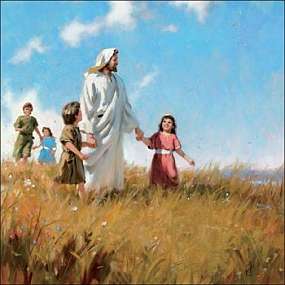
You see, faith is the opposite of control. Faith says, “I do not know what tomorrow will hold. I cannot even control today. Instead, I will live by the Spirit. Jesus leadsI will live with the uncertainty of the world and instead exercise the muscle of faith that I have let atrophy for too long. Christ is in me; therefore, I have hope.”
The times we live in now will tax many people. All the old refuges will fail. The Church must revise the way it thinks about life, putting Christ first and its own finaglings last. We will have to experience what it means to depend on Jesus alone for physical healing because we can no longer control our health care because we can no longer afford doctors and hospitals. It will mean praying for food and expecting to receive it, even when the grocery store shelves are bare. It will mean learning to be thankful for even the smallest blessing we receive in faith from God. It will finally mean learning to move beyond just talking about faith and actually living it.