
Soul Man, Spirit Man – Part 1

Standard

Every once in a while, I encounter a post brewing inside me that I find intimidating because it’s more than I can handle. I’m not as clever, intelligent, or compelling in myself to make the words inside come out as I’d like.

This is one of those posts.

So if you find this to be rambling or nonsensical, it’s all my fault, not the Lord’s.

God’s been teaching me a very tough lesson in the last couple years. I’m not sure I grasp the depth of it, but I know I must if I’m to understand a desperate need within the Body of Christ. That lesson is the difference between the soul man and the spirit man.

One of the failings of Western thought is the weight we give dualism. The Greeks saddled us with a dualistic worldview that split our understanding of reality. It doesn’t matter the two lenses through which we view reality, we have an ideal ingrained in us that we can classify our interactions with reality through glasses that divide our sight along only two lines.

The major failing of our love for all things Greek in Western thought is that things that come in threes prove baffling. We can always use our dualistic glasses to see two of the three parts, but that third is either said to be nonexistent, invisible (and therefore untouchable), or just plain paradoxical.

One of the most obvious ways in which Westerners struggle with dualistic modes of thinking is our inability to grasp the tri-unity of God. '...three, it's a magic number...'Westerners don’t do well with this, whereas non-Westerners that are not burdened by Greek thought come at the Trinity more easily. We can picture God and Jesus, but the Holy Spirit is more nebulous to us. We don’t see Him or portray Him well in our theology. We have a hard time integrating Him. On the other hand, many non-Westerners assimilate understanding of the Holy Spirit more fully.

This also reflects in the reality that Western theologians, while able to at least wrestle with the tri-unity of God, are loathe to discuss the tri-unity of man. Even the best scholars in the West are more likely to see man as body + soul/spirit than as body + soul + spirit.

But the Scriptures seem plain that man was made in the image of God, who is triune. The Bible also speaks differently about the soul and spirit of man. While many of us will readily claim the spirit of man was deadened at the Fall, we’re not as capable of explaining what happens to that spirit at the new birth. We wind up treating soul and spirit as the same thing. We turn man into a dichotomous being rather than a trichotomous one.

The more I weigh this before the Lord, the more I believe our dichotomous view of man as being merely body + soul explains much of the deadness of the Western Church. In fact, I wonder if our spiritual glasses are so attuned to only seeing body + soul that we have been practicing a form of Christianity in the West that is not really Christianity at all.

The upshot? If we do not have a proper understanding of the trichotomous nature of man, then we are going to practice a form of godliness that has no power.

Consider these verses:

The Spirit himself bears witness with our spirit that we are children of God….
—Romans 8:16

For the word of God is living and active, sharper than any two-edged sword, piercing to the division of soul and of spirit, of joints and of marrow, and discerning the thoughts and intentions of the heart.
—Hebrews 4:12

These passages make a distinction between soul and spirit. That distinction is important because failing to split them results in a failure to know how Christians are to live by the Spirit.

When a person is born again, the Holy Spirit quickens the spirit of man. That spirit of man is the conduit by and through which the Holy Spirit operates. It’s our connection to the Lord. If you built a house with no means for connecting into the power grid, how would your run your appliances? The spirit of man connects with the Spirit of God, and that’s how the Christian is powered for service. It’s how we hear God and receive guidance, too.

Those who have not been born again are deadened in their spirits and cannot connect to God. Therefore, they cannot be led of God or discern spiritual things. The true spiritual man, then, is the one who operates out of this connection and allows this “inner redeemed man” to control the outer portions of his life, namely the soul and body.

The soul is a different entity altogether. The soul contains our emotions and thoughts. It’s the primary way we relate to the world and to others in common things. The true spiritual man allows his spirit to take precedent over the soul and guide it, the body, too. The soul, though, is eternal, while the body is not. The soul and body should be driven by the Spirit through the spirit of man.

At least that’s the idea.

But there’s a problem…

When I consider the state of the Western Church, I see the fruit of teaching that man is a two-part entity and not a three-part: people who have substituted the soul for the spirit and subsequently operate out of their souls instead of their spirits. I believe this explains the flailing we see in Western churches:

  • The inability to discern the leading/voice of the Spirit
  • Powerlessness
  • Attraction to dynamic personalities rather than to the spiritually mature
  • Fruitless ministries and programs
  • Rootless, fruitless, wandering Christians
  • The failure of much of our spiritual counseling
  • Evangelistic efforts that never catch on (or people who simply cannot evangelize)
  • Improper understanding of the Scriptures

In fact, I suspect that many of the failures within Western Christianity can be directly traced to our confusing the power of the soul for the power of the spirit.

  • It explains why charismatics get so pumped up by speakers and events that appeal to flash and emotionalism.
  • It explains why so many Christians get fired up by speakers who preach doctrinally-sound  messages that appeal to the intellect, yet never seem to bring about any real change in people’s lives.
  • It explains why so many Christians spend their whole lives trying to find yet another spiritual experience to keep them going from one day to the next.
  • It explains why we have millions of books on Christian topics, yet so little of it sinks in.
  • It explains why so many spiritual gifts that people clam to possess seem so meager or faulty.
  • It explains why so many Christians are silently wondering why things aren’t right in their spiritual lives.

We’re living out of our emotions and our intellect, out of our souls, but the inner man that God says is the true man is still wadded up deep inside of us, dying to get out and actually change our lives.

I’m beginning to wonder how pervasive this problem is. How many of us have spent our entire Christians lives living out of our souls, yet never really knowing what the life of God is because we’re not really channeling it?

The true tragedy here is that so many of us have convinced ourselves that we’re living a Spirit-led life, but we’re not allowing that life to shine through because we have no clue what it actually looks like. The pieces aren’t coming together, so we settle for a life that falls far short of what God desires for us.

In part two of this two-parter, I hope to explore this more. Your comments are greatly welcome.
A Church That Reads the Signs of the Times

Standard

Karl Barth supposedly said that preachers should preach with a Bible in one hand and a newspaper in the other. Given the sorry state of the prophetic voice in the American Church today, perhaps that’s the wisest approach we can take given the circumstances.

Just last week, I read an article in The Wall Street Journal entitled “A Tax Revolt Is Quietly Brewing In Some States.” An excerpt:

On Election Day, Massachusetts will vote on whether to eliminate its state income tax. Advocates hope victory in a place long thought of as a free-spending liberal bastion will pave the way for similar initiatives in other states over the next few years. Critics insist a yes vote would lead to fiscal disaster.

While Americans are focusing on the presidential and congressional races, voters in Massachusetts and other states will decide the fate of dozens of state and local tax and spending issues.

The article goes on to note that several states face this type of citizen-inspired tax repudiation come November and beyond, not just Massachusetts. People are tired of cronyism, waste (studies peg wasted tax monies in Massachusetts at 41 percent of the state budget), and the fact that too many people are on the dole as employees of governmental agencies at all levels. In my state, Ohio, I saw a figure recently that claimed that 37 percent of employed workers in the state worked directly for a local, city, county, state, or federal government agency.

That’s utterly ridiculous. No wonder people are fed up. (Note: I am not against government. Obviously, we need certain government functions like our representative assemblies,  military, and law enforcement. The issue here is one of scope and sprawl and the ability to justify the amount of money it takes to defend and fund that bloat. That’s what has so many people upset.)

But that’s not the point of this post. Can you tell what is? Church, can we read between the lines on this tax revolt issue?

If we can’t, we need to learn. We need to be smarter about these things. If our self-anointed prophets are unreliable, then we need to improve how we comprehend the signs of the times.

What happens when the government is forced to make cuts because of reduced revenues? Social services go bye-bye.

Here’s the $64,000 question: Who will pick up the slack when social services taste the business end of the axe blade?

Too many Christians glamorize the 1930s, ’40s, and ’50s in this country. They look at those years as the golden age of Christianity in America, the age of Norman Rockwell paintings depicting families praying together, the age of Leave It to Beaver and good, solid, Christian values.

But that would be denial.

Because what happened during those glory days was a wholesale abandonment by the American Church of the social services it alone provided the least of these. Christians shirked their duties as they caved to Industrialism and consumerism, jettisoning their responsibility to care for the downtrodden, instead voting to let the government assume that role, a role government was never designed to handle. That, in turn, weakened our resolve as a nation and forced us to suck at a socialistic, governmental teat.

And now some people are sick of the results because it’s hurting them in the one thing they value more than anything else: their wallets.

This I ask: Anyone care to guess how many churches in Massachusetts, or any of those other tax revolt states, are prepared to handle social services when the government can no longer afford to maintain them?

Hmm.

What’s your church’s plan to care for the mentally disabled?

What’s your church’s plan to care for the senior citizens in your community?

What’s your church’s plan to deal with those families who don’t have enough food and must subsist on government handouts that are most likely going away?

What’s your church’s plan?

Our churches don’t have a plan, do they?

Consider this passage of Scripture:

Now in these days prophets came down from Jerusalem to Antioch. And one of them named Agabus stood up and foretold by the Spirit that there would be a great famine over all the world (this took place in the days of Claudius). So the disciples determined, everyone according to his ability, to send relief to the brothers living in Judea. And they did so, sending it to the elders by the hand of Barnabas and Saul.
—Acts 11:27-30

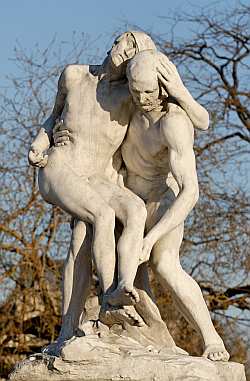
Did the early Church sit idle, only to react too late, or were they proactive? When I hear people saying that the revelatory gifts aren’t for today, 'The Good Samaritan' by François-Léon SicardI ask how they expect to ever be proactive in times of distress. Has the kind of crisis we see here in Acts 11 ever stopped happening? Shouldn’t the Church always be ready to deal with this kind of thing, supernatural revelation or not?
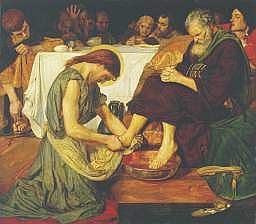
It’s bad enough that we either despise prophecy or we gather false prophets around us, but isn’t it even worse that we get fair warning from secular sources and can’t even react to that? Just how dull are we?

Regular readers are surely tired of me beating these kinds of dead horse issues, but why is it that we are NEVER prepared?

For all those going on and on about an end-times revival, I say this: Here’s your chance. Because no one is more open to the Gospel than the person in dire need of a social service who then finds a born-again Christian ready and willing to help. Nothing verifies the Gospel in the minds of jaded people than to see the Church actually bringing its doing in line with its speaking.

A great opportunity looms before us. Are we going to run with it now or will we once again wait until its too late?


Cleansing the Charismatic Crackup, Final Thoughts

Standard

Over the last few days, thousands of people have come to Cerulean Sanctum looking for answers concerning the meltdown in the charismatic movement in light of what happened at Lakeland. People are searching. They want answers and reassurance.

Here is the word that I have for them. It comes from a prophet who did no miracles but was called the greatest by the One who truly matters:

“He must increase, but I must decrease.”
—John 3:30

John the Baptist said this in context of knowing his ministry was not what mattered in the end. He said it because he knew he was being surpassed, because he understood his place was to shine the light on the Lord and not himself. His curtain had risen, but now it was falling. And John rejoiced in that.

Because John was, above all else, humble.

I do some of my best reflecting in the shower. Something about being alone and naked brings clarity. It’s quiet and peaceful. The whispered voice of God stirs among the waters. Or something like that. Whatever the case, my morning shower has been the birthplace for many a post here.

During Tuesday’s shower the word that God dropped into my heart was humility.

If we are to clean up the mess within the contemporary charismatic movement, above all else, we need to rediscover humility.

We need leaders who have been tested by the twin crucibles of time and tragedy. It’s those folks who speak softly who often possess the most wisdom, but among the noisy clamor of the modern charismatic scene we have drowned them out. We have ignored them because they are not flashy, hip, or “charismatic” in the other sense of the word.

I believe they are the ones who must rise up at this time in history.

We need people who understand the grace of God. People who, like Job, can stand before God and put their hands over their mouths because they understand that they are nothing in the presence of God. Yet that same God offers them mercy because they realize they are dust before Him.

We need people in the charismatic movement who, again like Job, are so concerned with the holiness of God and our tendency as fallen creatures toward sin that they make sacrifices on behalf of others who may have sinned so as to ensure that God has not been slighted. Fostering that kind of mentality will stifle excess before it has a chance to poison others.

I believe that charismatics need to stop promoting those people to leadership positions because of the force of their personalities or the novelty of their ministries. Our servant exampleInstead, we need to seek out those who would otherwise have been forgotten, those who are not shameless self-promoters, but promoters of Jesus Christ. In other words, humble servants.

Do we remember the word servant ? Is it still in our vocabulary? Find me a servant who is dedicated to pouring herself out and who finds her filling not before adoring crowds but before God alone in her prayer closet and I’ll show you someone ready to lead.

Do we understand humility? Have we seen any signs around us that it still exists? Give me a man who would rather be wrong before millions of people than besmirch the character and name of Jesus Christ and I’ll show you a man worthy of his calling.

But where are those people in the charismatic movement in the West?

I see their counterparts in the East every Sunday in my church.  We support a number of native missionaries in Asia through Gospel for Asia, a charismatic missionary organization. Their pictures line the wall outside the sanctuary. For the most part, these are poor people who have nothing but their names written in the Lamb’s Book of Life. They live for Jesus alone. They are nameless, faceless people who have counted the cost and know that He is worthy even as they are not. They are the reason that the Gospel goes forth in power in developing countries even as we in the West flock to the next dog and pony show looking for the next spiritual fix.

They are people who understand that He must increase while they must decrease.

I used to meet people like that here in the States. Not so much anymore, though. Most of us have our own agendas. We squeeze the Lord in when we can, but it’s still mostly about us, about our families, about getting ahead in life.

When I told my Dad that I was going to go into ministry full time, he said something I will never forget: “Then prepare to be poor because you won’t get anywhere in life.” Ouch, right?

Still, that kind of statement doesn’t make humble people flinch because they know their treasure is in heaven, not on earth.

Have we American charismatics counted the cost? A quick look around would answer that question, and not in the positive. We are a proud, selfish people who look down on the publican beating his breast and say, “Thank you, Lord, that I am not like that sinner.”

The problem is we are like that sinner. We’re just not humble enough to admit it.

***

In closing, I wish to offer a few links to other sites with good words concerning the charismatic movement and what can be done to prevent further damage and how we might repair the broken down walls before us:

I like so much of what Frank Viola writes. He has many good thoughts here.

John Piper wades into the mess with his usual sense and sensibility.

Dr. Harold Bussell contributes some excellent thoughts on the evangelical susceptibility to being lured into cults and cult-like activities. Good warnings and wisdom here. In addition, he takes a look at authority issues as well, something that most charismatics need to heed, especially as everyone goes nuts over “coverings.”

On this issue of humility, the best book I have read on the topic comes from Andrew Murray, the South African pastor who oversaw a great revival in that nation during the 19th century. Murray reads like a kinder, gentler Jonathan Edwards, sharing many experiences with Edward’s own during the Great Awakening. Murray, an amazingly prolific author, should be required reading for all charismatics as far as I am concerned. To our great fortune, Murray’s book on humility is online in its entirety.

I mentioned Watchman Nee’s book The Latent Power of the Soul in a previous post in this series. Fortunately, that book, too, is online in its entirety. We can learn much from Nee’s understand of soulish power versus genuine Holy Spirit power. I suspect that if we stripped soulish power out of the contemporary charismatic movement very little Holy Spirit power would be left. And that should alarm us.

Rob McAlpine discusses what it means to be “postcharismatic.” (I believe, though, that it might be better to think of reform as being “precharismatic”. Also, in a case of horrid timing, it seems McAlpine’s publisher in Canada is forgoing releasing his book here in the U.S. on postcharismatic thought.  I would think this would be the perfect opportunity to ride the wave of confusion concerning this blowup within the charismatic movement.)

(Hat tips go to many people, some of whom I owe an apology because I have misplaced their names as sources. Bill Kinnon, though, had several good links at his site.)

Posts in the “Cleansing the Charismatic Crackup” series: