
Authenticity, and How the Church Ignores It

Standard

I think we’re all sick of being marketed to. You would think the Church in America would get this. You would think.

It used to be a joke that the megachurch down the road actually had on its staff a Pastor of Demographics. Now that leading megachurches such as the big daddy of them all, Willow Creek Community Church, have confessed that their entire philosophy is broken and does not produce the desired discipleship results, one would think that churches would get a clue and start moving toward something—anything—more real.

But one would be wrong.

There persists in contemporary churches a disdain for the purity of the simple truths of the Bible and the practices of the ancient Church. We have this business mentality that we like to apply to the way we express Christianity in America, and it taints everything we do.

Though we’re all sick of the slickness of the productions American churches feel they must continually flog, and we’re burned out on prepackaged faith “experiences,” we modern Christians can’t seem to break free of the crapola we force our meetings and practices to conform to. Instead, novelty and entertainment value still reign.

People are dying for authenticity, though. They don’t want to feel marketed to and manipulated. In times such as these, people not only want meaning, they need it for their sanity.

Yet the way we have structured our modern society produces alienation. In America, this is amplified by our national narrative of lauding free-thinkers who beat the system and did it their way without anyone else’s help.

Except the Church of Jesus is not based on being solitary iconoclasts. Ours is a community with with a deep-seated history and a narrative that includes powerful sources of meaning that shouldn’t be subject to constant reappraisal. In its experimentation with being cutting edge, today’s Western Church has purposefully fled that history and abandoned its sources of meaning. That the rest of our culture has already done the same, to its obvious detriment and rot, doesn’t seem to register with church leaders.

The result is the cold, anonymous, sterile stage hall that is called a church building. Stripped of every element of iconography and meaning, it transmits nothing except chilling functionality.

Whereas the early Church celebrated the death and resurrection of Christ in a full course meal that foreshadows the Marriage Supper of the Lamb, we now receive a prepackaged communion unit consisting of a dose of artificial-tasting juice with a flavorless, plastic-enclosed wafer serving as the lid, Communion commidifiedthe Body and Blood fully commodified and stripped of all meaning.

Worship consists of a stubble-faced young man who sings electronically amplified Top 40 songs about how lovely God is, his face twisted in a calculated, video-friendly ecstasy that more resembles passing a kidney stone.

Whereas we once sang from books that had been handled by generations, we now sing from projected images that must also move, the transience of their cascading imagery wiping away memory, even as the movement keeps us from being bored.

And our message of grace and the majesty of who Jesus is gets lost amid the trappings of fixing our existence so that our lives look like a success, even if we feel less and less like one.

Real human beings are out there wondering if anyone truly cares. What we give them instead are carefully constructed and programmed faith inoculations.

People are dying for the authentic. They don’t want an efficient church, but a real one.They want a Christianity that bleeds real blood and makes a difference in the lives of people, not just discussing doing so while it pursues other agendas.

No one talks about the emerging church anymore. That movement died because it became what it protested. And even though it was a functional failure, what the emerging church was fighting for remains a critical need.

People are sick and tired of how the Church in America is practicing the faith. We are burned out of the dog and pony show. Our cynical young people understand this, their cynicism in full fester because no one is listening to them, even when they flee the Church. They want genuine connection to what is lasting and worth preserving.

Making concessions to the world’s processes has failed to root us in a genuine faith; in fact, quite the opposite. Whatever roots we had have been dug up, moved from the forest, and transplanted into a styrofoam coffee cup in someone else’s spiritual trophy case. And that’s no way to live.

I don’t think the Church gets this. It doesn’t see how shallow it has become. It doesn’t value what is real. It doesn’t have any idea what people truly need. Oh, it thinks it knows because its leaders read the latest bestseller on how to grow a church, but that million dollar advice in a $20 tome could not be farther from what is truly needed.

Honestly, I think I’m at the point of giving up. No one listens to those crying, “Danger!” No, instead well-meaning people craft a vision that has no basis in the redemptive narrative that is the Gospel. We have instead found our redemption in what the world says is hip and cool, and we dance to that hypnotic tune, oblivious to a world engaged in a desperate search for what is lasting, meaningful, and justifying.
Humility in Light of the History of Christian Thought

Standard

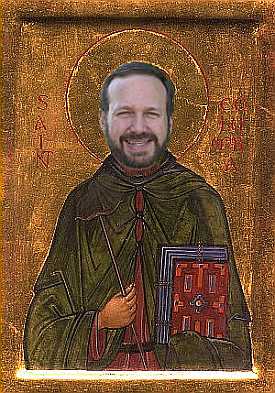
Saint Dan?One of the things that bothers me most about believers in today’s churches, especially Western churches, is our assumption of superiority. Many of us church people display an inflated sense of arrival, as if we are the pinnacle of Christian expression in all of human history.

Those fellow believers in some old cave somewhere who wrote about their experience of the Faith? Morons. Those Middle Ages Christians who hid from “the infidel” and saw their numbers martyred? Know-nothings. Those theologians from the halls of 18th-century European centers of learning? Mental midgets.

Only we get it. Ours is the only understanding of Christianity that matters. The foundation upon which we stand is little more than a pile of spiritual-sounding ideas whose time has passed. Our knowledge and praxis are the epitome of what it means to be a Christian, and no one who came before us has anything to say to us about what to believe and how to live.

Here is the lunkheadedness in that commonly encountered line of thinking…

The predominant eschatology within the United States today is dispensational premillenialism. As an explanation of end times, it is only about 160 years old. The form most widely held, which mirrors what is found in Hal Lindsey’s 1970s-era series of Late Great Planet Earth books, is closer to 60 years old.

What is amazing about this is that nearly all the Christians who have ever lived NEVER believed that explanation of the events of the end. They held another view—one of many, it seems. I once took a class in college that covered 16 different understandings of the events in the Book of Revelation, each understanding predominant in the Church at one time or another.

If you are a betting person, you understand chances are high that not all those forebears were entirely wrong in their interpretations of the Bible and the practice of the Faith.

While it is true we have a bit more knowledge today about science than we once did, even scientific thought changes, and often in ways that reinforce what someone said a hundred years ago rather than last week. But as much as we want our faith to be scientific, most of the questions answered in the Bible are philosophical in nature, and to think what Christians thought 300 years ago has no application today is a grave error.

Every day, I must ask myself how much more of the Holy Spirit I have than say Justin Martyr, Polycarp, Augustine, Thomas Aquinas, Jan Hus, Martin Luther, Jonathan Edwards, Alfred Edersheim, and so on. The answer? Probably less. Much less.

And I would suggest that given the reality of the presence of God in the lives of those long-deceased men of faith, you are not looking so good yourself. Yet you and I somehow think we know more about God, Jesus, the Holy Spirit, and the Christian Faith than they ever did because our teaching today is SO much better than it was in their day.

Hardly.

If anything, I find myself brought low by the reality that I know almost nothing. While there is no glory in ignorance, I am at least humbled by the truth that I am not the final authority on most things that pertain to the Christian Faith. People from the past, many centuries dead, can still speak to me today through their writings. And chances are—to the betting man, at least—they have more to say to me (and to you) than I care to give them credit. Perhaps I should read them to see what they knew and how they lived in light of that knowledge.

What is worse than a puffed-up Christian who thinks he knows everything—unless it is one who discounts the wisdom of those who went before him? And isn’t that what most blowhards do? Don’t most think they are the ones who have arrived?

More and more, a hand clasped firmly over the mouth seems to be the response of the wise. We know less than we think we do. Better to rejoice humbly and be quiet than to remove that hand and show our arrogance despite how little we actually comprehend.

When the Bridge Is Out–How to Deal with Lost People God’s Way

Standard

They called him Farmer John, and that was OK by him. He had a farm. His name was John. He was a practical man, and the appellation made sense to him.

Farmer John was the sort that didn’t say much, but when he did, people listened. He’d been around long enough so that his voice in town meetings carried some weight. Some folks would toss around the word wise when talking about John, but he preferred practical. Folks can say lots of things, but no one ever considered practical a bad thing, so in John’s eyes, practical won out.

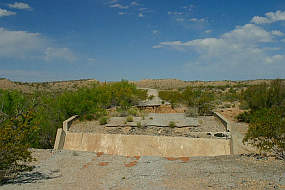
Practical was not what that semi driver had been when he decided to take a wrong turn off the highway and down that old gravel road a month back. The supposedly abandoned road ran past Farmer John’s house and crossed a gorge via a bridge John believed must’ve been built when Chester A. Arthur was president.Bridge out Along with Arthur, most folks had let the bridge slip into the Sea of Forget. Seems the bridge suffered a bout of amnesia, too, because the sudden application of a semi filled with ball bearings across its surface made the bridge forget its own sole purpose for being, and the whole thing collapsed into the gorge.

A knock on Farmer John’s door that morning revealed a rather sheepish truck driver who somehow escaped a 200-foot freefall into the gorge, though the man’s conveyance had not fared as well. The county took one look at the wreckage, chalked it all up to rare misfortune, and left the whole mess sitting at the bottom of the gorge to rust.

When John happened to mention the empty space where a bridge had once been, the county engineers looked at him and said, “No one comes by here anyway.” They didn’t even bother to put up a “Bridge Out” sign, which John thought was rather an impractical way of dealing with a missing roadway over a 200-foot-deep gorge. “Budget cuts,” one of the engineers said with a laugh.

John stared at the place where the bridge had been. He then trudged the half mile down the road to his barn and found the biggest sheet of plywood he had. He painted “Danger—Bridge Out” on it, lugged it back to the gorge, and propped it up on the gravel road with a couple small boulders. It wasn’t art, but then he was a farmer and not Picasso. Still, it served its purpose, and if he himself should be careless some day and in the grip of a “senior moment” forget the missing bridge, the sign might just help him too.

One day, Farmer John heard wheels spinning on gravel.

Outside his window, John saw the unmistakable plume. He walked down to his drive to where a red Camaro hunkered. In his youth, Farmer John had once owned a Camaro, but it proved less practical than a tractor for farming purposes, so he sold it. Still, he knew a Camaro when he saw it, even if it was “one of them new ones.”

A young man with tossled hair popped his head out the driver’s window and said, “I think I’m lost.”

John replied, “If you’re here, I’m certain of it.”

“But my GPS said to turn here if I wanted to get to Frederickstown,” the man said.

“Wrong is wrong,” said John as he walked up to the driver’s window, “even if a computer says otherwise.” He looked at the man and added a couple beats later, “And perhaps especially if a computer says.”

The man pulled the GPS from its suction-cupped holder, popped open the glove compartment indignantly, and tossed the device inside. He turned back to John. “So where does the road go?”

“Nowhere you want to be,” John said, “unless you don’t like yourself or your car too much. Bridge out.”

The man laughed. “Look, I’m lost. I know it. How do I get to Frederickstown?”

“Go back out to the highway.” John motioned with his good hand, drawing in the warm, summer air. “Take a left. Drive until you see the Exit 77 sign. Take that exit, then hang another left. Twenty minutes and you’re there.”

But the man kept looking down the gravel road.

“Son, I’ve lived here more decades than you’ve been breathin’,” John said, the serious creeping into the many lines on his face. “You go down that road there, and it will not end well for you. I know the way you need to go. If’n you need, I can ride with you down to that exit and you can let me off there. I’ve got no problem walkin’ back.”

The man’s countenance seemed to soften, and his head swiveled back to the highway. “That’s a kind offer, but I think I’ve got it. Thanks.”

The old farmer extended a hand. “John.”

The young man gripped it. “Steve. Thanks, John.”

“God bless you, Steve.”

The young man nodded and shifted the car into reverse, the throaty growl of the engine a familiar sound to the old farmer. John waved, stood in place, and watched his visitor shift again, make a left, and enter the highway.

A pheasant called in the distance, and by the time John’s eyes returned from where it might be hiding to the place the Camaro had been a heartbeat before, both the car and its driver were out of sight.

***

Most people are headed toward the gorge, and the bridge is out. Christians know this. How we respond to lost people makes all the difference in whether they listen to our warnings or not. Frankly, we’re not sharing what we know as well as Farmer John did.

Rescue those who are being taken away to death; hold back those who are stumbling to the slaughter. If you say, “Behold, we did not know this,” does not he who weighs the heart perceive it? Does not he who keeps watch over your soul know it, and will he not repay man according to his work?
—Proverbs 24:11-12 ESV

John was wise enough to know others would come down that road. He knew how it would end, even if others pretended not to. He didn’t want to see anyone end up dead at the bottom of the gorge. People mattered to him.

Why do you see the speck that is in your brother’s eye, but do not notice the log that is in your own eye? Or how can you say to your brother, ‘Let me take the speck out of your eye,’ when there is the log in your own eye? You hypocrite, first take the log out of your own eye, and then you will see clearly to take the speck out of your brother’s eye.
—Matthew 7:3-5 ESV

John was wise enough to know that in a weak, forgetful moment, he too might drive into the gorge unless he set up a warning. He dealt with his own failings first. This granted him the right to speak to other people’s weaknesses.

In addition, John didn’t question the preceding part of the man’s trip or how he had come to end up in his driveway. All he knew was that the man was going the wrong way, and that steering him the right way was the best approach. Then John offered that better way.

…but in your hearts honor Christ the Lord as holy, always being prepared to make a defense to anyone who asks you for a reason for the hope that is in you; yet do it with gentleness and respect…
—1 Peter 3:15 ESV

John kept to the main and the plain. He didn’t rail against the man’s head turning back to the gravel road. He was gentle, respectful, and genuinely concerned. No, he didn’t back down, but he didn’t yell,  cause a scene, or draw too much attention to himself. He shared what he knew and did it simply.

Do nothing from selfish ambition or conceit, but in humility count others more significant than yourselves. Let each of you look not only to his own interests, but also to the interests of others.
—Philippians 2:3-4 ESV

John not only gave directions, he offered to ride with the stranger down to the proper exit to ensure he was going the right way. Even though the walk back might be considered an inconvenience to some, to John it was part of caring for this man God put in front of him.

If we Christians keep these four verses in mind whenever we deal with lost people, our interactions with them will be as God wills them to be.

This isn’t hard. Farmer John didn’t do anything impractical or wild. When dealing with lost people, we don’t need to either. John kept it simple. So should we.