
My Hope & Prayer for 2008

Standard

I have a hope and prayer for 2008 that I wish to share. It started off from a series of negative experiences, but I want to make it positive because I believe the positive word comes from the heart of God.

I’m late to the show on the book Simple Church by Rainer and Geiger. Judging from Amazon’s rankings of the book as #1, #2, and #3 in various evangelical categories, it’s still hot long after its release in 2006. I’m also amazed at the number of strongly approving reviews. Amazed. In fact, if I could sum up my review, I would describe the book in one portmanteau word: Craptacular.

That encapsulates almost all the hottest books on “How to Do Church” that I’ve read in the last few years. The same hot churches are held up for mimicking. The same church problems are cited (correctly, I might add—the one nod I’ll give these books). But the solutions are always wrong. Always. Nearly all are just business principles given a good shellacking of Christianity to make them look smooth and shiny. Honestly, if Google and The Gap are the models for effective churches, all is lost. (That author Tom Rainer is the head of Lifeway Christian Stores should not surprise anyone.)

What is my biggest problem with all of these modern “How to Do Church” books? Every last one of them offers solutions that can be instituted without the Lord. The fixes are universally man-made. This, universally, makes them the arm of flesh. And the arm of flesh will always fail. Always.

But one fix never fails.

That fix is not a thing, but a person. We know Him as the Holy Spirit. He will lead us gently if we allow HimHe’s perfect. Unlike one craptacular, modern, “How to Do Church” book after the other, the Holy Spirit guides into all truth. Not some truth, but all truth. He’s the ultimate source for making the Church all She can be.
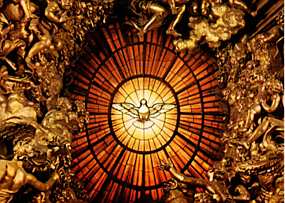
Here’s how I can save you hours of reading lame books on how to fix your church and turn it into the church God desires. You only need to listen to the Holy Spirit.

I suspect that’s not a very satisfying answer for some people. You can’t make money selling curricula, church models, and seminars by telling church leaders they need to dump all their craptacular books and start listening to the Holy Spirit. But that’s what church leaders need to do.

A church is made up of too many diverse people for a “How to Do Church” book to succeed. If you read the Bible closely enough, you’ll realize that it doesn’t even attempt to provide all the solutions to how a church should operate. Yes, some general ideas exist, but when it comes down to the specifics, that’s where the Holy Spirit comes in.

Take this passage:

Now there were in the church at Antioch prophets and teachers, Barnabas, Simeon who was called Niger, Lucius of Cyrene, Manaen a member of the court of Herod the tetrarch, and Saul. While they were worshiping the Lord and fasting, the Holy Spirit said, “Set apart for me Barnabas and Saul for the work to which I have called them.” Then after fasting and praying they laid their hands on them and sent them off.
—Acts 13:1-3

No “How to Do Church” book is going to give you that. They’ll tell you a process by which you have to funnel everyone, but they won’t get down to this level of leadership.

Why not send Lucius? Or Manaen? Why send that guy who used to persecute the Church, that Saul character?

I would suspect that at the board meeting of your typical church, simple, complex, traditional, emerging, or whatever, the process would dictate who got chosen and for what purpose. What God thinks and the ones He would choose would probably be far down the list. Too dicey to depend on the Holy Spirit; just let the established process make the decision instead. We send the ones WE think are best, the ones who best fit our idea of who should go for the given job. And aren’t we the ones deciding what that job is anyway?

Give me a thousand copies of the bestselling Christian leadership books out there and I’d burn them all than trust one over what the Holy Spirit thinks. Why then, do our church leaders trust books so much and God so little?

The Holy Spirit provides perfect answers to intractable problems. He also provides specific answers for dealing with specific people in specific situations. He alone makes a church what it should be. He alone makes genuine disciples out of wrecked people.

We need to stop this craziness and get back to the Lord. If our churches are not run by the guidance of the Holy Spirit, then they are not churches. We must also keep the Scriptures ever before us, but with the understanding that people—sadly—can use the Bible to justify all manner of leadership styles that rely not one iota on the Holy Spirit. These “How to Do Church” books quote a million Scriptures, but they use the Scriptures to support their foregone premises, rather than seeing what it actually says. And what it actually says is that we’re blowing it if we’re not dependent on the Spirit for guidance.

My hope and prayer for the Church for 2008 is that we find a way to get back to depending on the Holy Spirit to guide our churches. And not just lip service, but genuine dependence so that we don’t do a thing unless the Spirit confirms that thing one way or another.

How do we get there?

1. Know the Scriptures—We’ve got to really know them,our leaders especially. The Holy Spirit calls to mind the Word of God, but if the reserves aren’t there, we won’t hear.

2. Holiness—It’s time to get serious about holiness. That means dropping out of the world’s game. That means being a people separated unto the Lord. You want to hear from the Holy Spirit? You want your church to prosper? Then tear down the altars and purify the temple. That never fails.

3. Waiting—The Holy Spirit answers on His time, not ours. Just because our society is enslaved to busyness doesn’t mean our churches must be. We must stop trying to force things to happen that aren’t in God’s playbook.

4. Humility & Repentance—We must repent and humbly admit that we’ve attempted to take the world’s ways and make them the Church’s. But what fellowship have Christ and Belial? None. We cannot continue to swallow fleshly business practices within our churches. Those ways end in ashes.

5. We must desire the leading of the Holy Spirit—The Holy Spirit leads where Christ is hungered and thirsted for. He is faithful to those who desire to hear from Him. The Lord does not leave His people adrift. He never has and never will. However, we did not believe this, so we gave up on His leadership and instituted the world’s. It’s time to get back to the Lord and desire Him above all.

I wrote this several days before it posted because I cannot escape the message. The Church that is not led by the Holy Spirit is utterly directionless, not matter how smoothly it may operate. God has a better way. My hope and prayer is that we rediscover that leadership by the Holy Spirit in 2008.

May you find the Lord in 2008, and know his guidance, when you seek Him with all your heart.

I Don’t Know—And I’m Better for It

Standard

Went out caroling last night with the youth and others from my church. A good time. I enjoy lending my voice to worthy causes.

It worries me, though, that a lot of today’s young people don’t know the traditional Christmas hymns (you know, the ones that talk about Jesus) as well as they seem to know “Rudolph, the Red-Nosed Reindeer” or “Rockin’ Around the Christmas Tree.” When we took a request from a carolee to sing “Rudolph,” the singing gusto went up noticeably, particularly from the youngest carolers.

I noticed that same trend last year at a St. Nicholas Day sing that we do with some friends. The younger crowd stumbled through the old Christmas hymns but were in full voice for the secular songs. Worst of all, despite the fact that the vast, vast majority of Christmas songs played in our own home are sacred, our son seems to stumble through those, while somehow knowing all the lyrics to “You’re a Mean One, Mr. Grinch.” This startles me because, as far as I know, he’s never seen The Grinch Who Stole Christmas. And to hear him singing that ubiquitous ditty about the Heat Miser and Cold Miser from A Year Without a Santa Claus, which I’m nearly positive he’s never seen, makes me wonder whether I should give him a tin-foil hat for Christmas.

Last night, I saw Rolling Stone magazine’s list of the Top 100 songs of 2007. After perusing the list, I quickly realized I’d finally reached geezerhood; I recognized less than a fifth of the artists on that list. Worse, I recognized not a single song.

A running joke in my family deals with my encyclopedic knowledge of all sorts of ridiculous facts, the kind of savanthood that would place me on Jeopardy! or Who Wants to Be a Millionaire. millionaire_or_not.jpgIn fact, my wife’s family heartily encouraged me to try out for Millionaire in its heyday. I saw one show, one early one featuring the million dollar question “How far is the earth from the sun?” a question I thought most second graders were supposed to know, then wrote off the show.

At some point in that one show, they asked an earlier question about some rap group, and I thought that would be my Waterloo if I ever tried out. I used to have an extensive knowledge of popular music, but somehow that got petrified around 1995, and after that it’s been all downhill. And don’t even get me going on these one-hit hip-hop wonders that sprout up today.

Ironically, my father-in-law convinced me to attempt the syndicated version of Millionaire. My standard reason for holding that request at bay would be that I had no clue on who these hip-hop artists are, and inevitably I would get a question asking me about what the “Z” in “Jay Z.” is supposed to stand for and I’d be clueless. Still, the insistence wore me down.

When I finally called the contestant testing number, I sat patiently awaiting my first question. That question: “Rearrange the following letters to spell the name of this popular rap group.” I spent so much time laughing hysterically that I didn’t even hear the letters. So I bombed on the first question. You know, that very fateful question I knew would be my undoing. Needless to say, I suspected I wouldn’t get a question about Marcel Proust or Carl Fabergé.

And this is what all this blabbering means so far: I don’t know—and I’m better for it.

With 2008 just around the bend, I can honestly say that the new year won’t find me worried about the latest movie releases. Couldn’t tell you the Oscar-worthy films from this year, either. I don’t know what they are—and I’m better for it.

People drop names of celebrities. Blogs talk about this star or that. I stand in line at the grocery store and must face down a rack of tabloids that trumpet which strumpet of the moment’s having an illegitimate child, who’s divorcing whom, and shocking pictures of “here today, gone tomorrow” stars without their makeup. You know, the beautiful people. I don’t know who they are—and I’m better for it.

I can’t tell you what’s happening on Lost or 24. To me, TV doesn’t matter except for the rare event like 9/11. I can’t tell you the last TV show I watched. I don’t know the latest shows—and I’m better for it.

I walked into a bookstore the other day and recognized few names on the “New and Notable” shelf. Even the book world seems to be otherwordly lately, like some alternate plane of existence that somehow intersects the plane of my life at only one or two points. Euclid would not be happy with the mangling that gives his geometric precisions, I’m sure. The point remains: I don’t know the latest books and authors—and I’m better for it.

I’m also losing touch with the blogosphere. I haven’t had the opportunity to read too many other blogs lately. I should suspect that a few people feel the same way about this one. Such is life.

All I know lately is that the Church in America has this obsession with culture that borders on the unhinged. We’re either slaves to it or we’re fighting it so hard that it distracts us from what is true, ultimately making us just a different type of slave. We seem to either love bathing in culture, especially under the guise of relevance, or as some sort of immunity potion, as if immersing ourselves in it will somehow mitigate its effects.

Here’s what the Bible says about all this:

But whatever gain I had, I counted as loss for the sake of Christ. Indeed, I count everything as loss because of the surpassing worth of knowing Christ Jesus my Lord. For his sake I have suffered the loss of all things and count them as rubbish, in order that I may gain Christ…
—Philippians 3:7-8

I think, as I look back over this year, that the one spiritual truth that emerges more than any other is that nothing else matters but Jesus. Peter once asked the perfect rhetorical question, “Lord, to whom shall we go?” We seem to be unsure how to answer that question. To the culture? To all the things we know? To our houses packed with things we can’t take with us and only tie us down to earth?

What does a church look like that lives only for Jesus? That desires only to know Him, forsaking all the cultural ties that bind and hamper?

I can tell you this much: that church would be a glorious thing. I pray that I live long enough to see it this side of heaven.

So I don’t know about a bunch of perishable things—and I’m better for it. Let’s pray we can all be better for it sooner than later.

The Condition of Your House and Mine

Standard

This morning, I planned on going back to reading Philippians as part of the Bible reading plan I talked about earlier this year, when the Lord redirected me elsewhere: to Haggai of all places.

Haggai.

That’s probably not a book in the Bible that you’ve spent much time perusing. I really only am familiar with one well-known passage out of Haggai, and then I even forgot it was in Haggai. I thought it was in Isaiah:

The silver is mine, and the gold is mine, declares the LORD of hosts.
—Haggai 2:8

So I cleared the cobwebs off my mental filing cabinet and stashed that passage in the Haggai folder.

But what struck me from the redirection I received this morning was the following passage. I think it fits perfectly in the theme that’s been running here for the last several weeks:

“Is it a time for you yourselves to dwell in your paneled houses, while this house lies in ruins? Now, therefore, thus says the LORD of hosts: Consider your ways. You have sown much, and harvested little. You eat, but you never have enough; you drink, but you never have your fill. You clothe yourselves, but no one is warm. And he who earns wages does so to put them into a bag with holes.
—Haggai 1:4-6

The state of our spiritual temple?Context: the Jews had returned to the land after captivity in Babylon, had restored much of their old land, but the temple lay in ruins. God didn’t appreciate that the people had restored their former dwellings, but left his dwelling place a shambles.

Notice the contrast here of working hard and receiving little, while the house of God lies neglected. The people ran after their own satisfaction, but it was never enough. Meanwhile, God dwelling place rots.

Most of us reading this post are seasoned Christians. We know the lingo and know enough Bible to be dangerous. I’m sure most know about the symbol of houses in Scripture. I’ll lay out a premise anyway.

God never intended to live in a house built by human hands. His intent, before the spirit inside of Man departed at the Fall, was to have His Spirit animate us and lead us:

Yet the Most High does not dwell in houses made by hands, as the prophet says, “‘Heaven is my throne, and the earth is my footstool. What kind of house will you build for me, says the Lord, or what is the place of my rest? Did not my hand make all these things?'”
—Acts 7:48-50

After the death and resurrection of Christ Jesus, our dead spirits were made alive when we repented and believed in Him. Now the Spirit of God can return to the home intended from the beginning:

Do you not know that you are God’s temple and that God’s Spirit dwells in you? If anyone destroys God’s temple, God will destroy him. For God’s temple is holy, and you are that temple.
—1 Corinthians 3:16-17

And more than just you and more than just me, the Spirit of God dwells in the sum of us, His collective people. This explains the necessity of the Church. (Evangelicals forget this truth to the detriment of the Church Universal: Jesus isn’t just a personal Jesus.) While God restores each of us by dwelling in us individually, he also dwells in the community of the saints:

So then you are no longer strangers and aliens, but you are fellow citizens with the saints and members of the household of God, built on the foundation of the apostles and prophets, Christ Jesus himself being the cornerstone, in whom the whole structure, being joined together, grows into a holy temple in the Lord. In him you also are being built together into a dwelling place for God by the Spirit.
—Ephesians 2:19-22

So while it is important to understand Haggai’s prophecy in terms of its original context, we must not ignore God’s reasonings behind it and what those reasonings mean for us today.

How many of us continue to build our houses, our little worlds, in the physical but neglect the spiritual house of God? You, I, and us together are that spiritual house. We are the dwelling place of God, His temples.

It saddens me that men and women will spend thousands of dollars and hours decorating their homes, but spend so little time resurrecting the ruined house that is their spiritual lives. We live in McMansions on the outside, but we’re content to let God dwell in the dump that comprises our inner lives, the house in which He came to dwell so long ago when we first came to Christ.

And what is the result of this?

You have sown much, and harvested little. You eat, but you never have enough; you drink, but you never have your fill. You clothe yourselves, but no one is warm. And he who earns wages does so to put them into a bag with holes.

That last sentence just slays me. A bag full of holes. If that doesn’t describe the state of the American Church today, I don’t know what does.

If we’re to restore the ruin that comprises our spiritual house, the dwelling place of God, then we need to get serious about what distracts us from that purpose. We’ve been talking about materialism and discontent the last few weeks. We’ve looked at how overconsumption makes us sick, not only in our bodies but in our souls. In short, we’ve examined how well we’ve “paneled our houses” as Haggai notes, while the house of God lies ignored.

The refugees who’d returned to the land got the message of Haggai and repented:

Then Zerubbabel the son of Shealtiel, and Joshua the son of Jehozadak, the high priest, with all the remnant of the people, obeyed the voice of the LORD their God, and the words of Haggai the prophet, as the LORD their God had sent him. And the people feared the LORD. Then Haggai, the messenger of the LORD, spoke to the people with the LORD’s message, “I am with you, declares the LORD.” And the LORD stirred up the spirit of Zerubbabel the son of Shealtiel, governor of Judah, and the spirit of Joshua the son of Jehozadak, the high priest, and the spirit of all the remnant of the people. And they came and worked on the house of the LORD of hosts, their God, on the twenty-fourth day of the month, in the sixth month, in the second year of Darius the king.
—Haggai 1:12-15

Th people took seriously the word of the Lord. They turned from picking out new drapes for the kitchen and worked to rebuild the most important house in their community: the temple of God.

The results?

Now then, consider from this day onward. Before stone was placed upon stone in the temple of the LORD, how did you fare? When one came to a heap of twenty measures, there were but ten. When one came to the wine vat to draw fifty measures, there were but twenty. I struck you and all the products of your toil with blight and with mildew and with hail, yet you did not turn to me, declares the LORD. Consider from this day onward, from the twenty-fourth day of the ninth month. Since the day that the foundation of the LORD’s temple was laid, consider: Is the seed yet in the barn? Indeed, the vine, the fig tree, the pomegranate, and the olive tree have yielded nothing. But from this day on I will bless you.”
—Haggai 2:15-19

If we wonder why so little spiritual prosperity shows up in your life and mine, if we go to the vat of wine and find twenty measures instead of the fifty we thought were there, perhaps we’ll understand why now.

What’s the state of your spiritual house? Are you spending all your time on the material in your life, neglecting the dwelling place of God? Should you be surprised when the spiritual reserves aren’t there in times of trouble (or even in times of plenty)?

God isn’t going to contend with Man forever.