
The State of the Miraculous in a World of Unbelief

Standard

One of the hallmarks of the final days, as noted by Scripture, is a horrifying level of unbelief.

Jesus said it Himself:

“Nevertheless, when the Son of Man comes, will he find faith on earth?”
—Luke 18:8b ESV

The end of all things depicted in the Book of Revelation shows that even when all of the earth is afflicted by the outcomes of supernatural wrath, mankind refuses to believe:

The rest of mankind, who were not killed by these plagues, did not repent of the works of their hands nor give up worshiping demons and idols of gold and silver and bronze and stone and wood, which cannot see or hear or walk, nor did they repent of their murders or their sorceries or their sexual immorality or their thefts.
—Revelation 9:20-21 ESV

There are some today who want to cast aspersions on the Kingdom of God and its many miraculous components, and they want to question how the Holy Spirit works in believers. Oddly, many doing so call themselves Christians. Though they claim to abide by the authority of Scripture and not by personal experience, they regularly challenge the miraculous in the Bible’s pages by asking where all the miracles are today. And they ask why those Christians who still believe in the miracles that are the hallmark of the Kingdom can’t always manufacture those miracles when such is demanded.

These naysayers like to point fingers at the ones who still have faith that supernatural works can occur through the ministrations of simple believers filled with God’s Holy Spirit. When a miracle does not happen, the naysayers often mock those who still believe in the miraculous.

But what the naysayers never take into account is the power of unbelief within a community. They do not ask how it is possible for the Revelation passage above to be true, that despite all the unrepentant have seen and experienced, the recipients of unprecedented levels of supernatural wrath remain in the grips of the powerful delusion that is unbelief.

We turn to the authority of Scripture to explain what happens when an entire community is gripped by unbelief:

[Jesus] went away from there and came to his hometown, and his disciples followed him. And on the Sabbath he began to teach in the synagogue, and many who heard him were astonished, saying, “Where did this man get these things? What is the wisdom given to him? How are such mighty works done by his hands? Is not this the carpenter, the son of Mary and brother of James and Joses and Judas and Simon? And are not his sisters here with us?” And they took offense at him. And Jesus said to them, “A prophet is not without honor, except in his hometown and among his relatives and in his own household.” And he could do no mighty work there, except that he laid his hands on a few sick people and healed them. —Mark 6:1-5 ESV

Jesus, the Son of Man, who was filled in all His being by the Holy Spirit, who was the sinless Messiah and Alpha and Omega, could do no mighty work in a community filled with unbelief.

When we consider the times we live in and the supposed paucity of miracles we see, do we ever ask if the reason for the lack of the miraculous is because the community around us is mired in unbelief?

Do we ask ourselves what a community of genuine belief can do when all unbelief has been thrown off?Christ and the Community
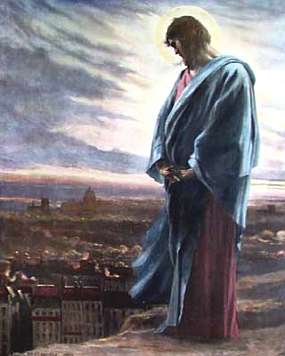
Do we ever think that the miracle denied the faithful person is because everyone around that faithful person does not believe?

Or do we blame the faithful person?

Or worse, do we blame God?

The question of the miraculous today never takes into account the crippling power of unbelief, especially when multiplied throughout a community. And those who would question the miraculous never ask if their unbelief and the unbelief of those they gather around them is what stands in the way of miracles.


The Church and the “Hot Mess”

Standard

And [Jesus] came to Nazareth, where he had been brought up. And as was his custom, he went to the synagogue on the Sabbath day, and he stood up to read. And the scroll of the prophet Isaiah was given to him. He unrolled the scroll and found the place where it was written, “The Spirit of the Lord is upon me, because he has anointed me to proclaim good news to the poor. He has sent me to proclaim liberty to the captives and recovering of sight to the blind, to set at liberty those who are oppressed, to proclaim the year of the Lord’s favor.” And he rolled up the scroll and gave it back to the attendant and sat down. And the eyes of all in the synagogue were fixed on him. And he began to say to them, “Today this Scripture has been fulfilled in your hearing.”
—Luke 4:16-21 ESV

Michael, a reader, commenting on my post “Lonely Christian Men,” wrote:

“I come to church broken from the week, and who wants to talk with that ‘hot mess’? Who wants to be dragged down by reality, what with the up-tempo music, extra-foamed latté, and positive message? Sunday seems to have become the day to ignore the struggler, unless you want to invite them on the next men’s retreat.”

Sadly, whatever it is that struggler is dealing with, even if he should accept the invitation, his struggle won’t likely be addressed on the men’s retreat.

Here’s how  the online Urban Dictionary defines hot mess:

A person who is a handful; he/she is a piece of work, and/or a colorful character.

Every church has a few folks best described as such. Truthfully, not a one of us escapes that label, for each of us is probably a hot mess at some point or other in life.

I’m sure many of us have had that same experience as Michael, where we feel as if we’re messing up church by our very presence. Our being there on Sunday is a downer for everyone else because we’re the ones chained to a 10-ton weight we can’t escape. And no one else wants to deal with our load. This makes for the worst alienation imaginable. Because if the Church doesn’t care, who will?

Gordian KnotI think we live in an age where people are burned out of dealing with others who face difficult situations. I also think we’re seeing a multiplication of problems. It’s not enough that someone is facing cancer, but the cost of the treatments is also creating a possible home foreclosure AND the patient is caring for decrepit, elderly parents who live with her. Life, once simpler, now resembles the Gordian Knot. And everyone has his or her own Gordian Knot, small or massive, to untie.

Still, the question remains: If the Church doesn’t care, who will?

In the opening Scripture above, Jesus spoke of why He came. That purpose never left Him. Nor has He abandoned it now that He has ascended to glory. The problems He addressed remain, but it is the Church that must now take on Jesus’ task. We proclaim. We heal. We liberate. We are there when no one else is.

I know everyone is busy. Perhaps busyness is the root problem. Nonetheless, we can’t leave the hot mess to stew. If we aren’t doing those liberating works in the lives of broken, hurting people that Jesus addressed in His reading from Isaiah, then we’ve forgotten what it means to be the Church.

We need each other, folks. Now more than ever. None of us escapes being a hot mess at some point in life. None of us wants to be the downer at the party. But this side of heaven, the Church isn’t tasked with being a 24/7/365 party. It’s meant to be a respite, a source of healing, and a place and people that help others encounter God and help get their needs met.

Have we forgotten what we’re about?

Too Much Grace?

Standard

One of my projects for the summer was to read the New Testament out loud with my son. We finished a couple days after summer ended.

I’ve read through the entire Bible a few times, and through the New Testament more times than I can remember. But I had not read straight through the New Testament in perhaps five years. That was certainly too long, but we have a tendency in the Church to break down everything into acceptable chunks rather than dealing with larger wholes, so I suspect my failing is more common than not.

This time through the NT, one theme kept hitting me in the face. John sums it up:

Everyone who has been born of God does not commit sin, because His seed remains in him, and he cannot sin, because he has been born of God.
—1 John 3:9 MKJV

Whiter than snowWe Protestants love to talk about grace. At one point, we loved to talk about holiness too. Today, we don’t talk much about that second one at all.

What struck me hard in my read-through of the NT this time was that every writer of every book warned the Church about sin. Believers were commanded not to sin. Believers were warned of the consequences of sin. The writers were pretty darned serious that Christian faith and sin cannot coexist. The Book of Revelation holds nothing back regarding what happens to those who sin and those who do not.

The Bible makes it clear that we believers are commanded not to sin. We are also commanded on the flip side: to be righteous. If this is a command, then it must be something we have some control over.  If we are told, “Don’t do that!” or “This you must do!” then some means exists for us to take action or else the command is pointless.

Some might argue that these commands sound too much like New Testament Law. Maybe. But they are there in the pages of the NT nonetheless.

I see Christians today excusing all manner of bad behavior under the blanket of grace. We seem to have room for all manner of grace for all manner of sin. I’m not sure we have the same room for holiness though.

When Jesus says that calling your brother a fool is murder, and the Bible says God won’t let murderers inherit His kingdom, do we take that seriously? Do I even have to ask that question? Because the answer today seems to be that we don’t. At all. Or else we believers would look more distinct from the unrighteous hordes who have chosen the wide, sin-strewn way that leads to destruction.