
Equipping the Saints: Murder in the Church

Standard

Talk to enough Christians and it’s apparent that whatever is wrong with the world is also wrong with believers. Not a person reading this doesn’t know a dozen Christians who struggle constantly with their Faith, staggering from one ditch into another.

For years, I used to be on a team at church who prayed for folks who came up after the service. The stories I’ve heard…more hair-curling than a beauty salon. What I’ve learned in those times makes for discernment that never fails and a word of wisdom that always applies.

What did I learn? It’s in these words of Jesus:

For whoever would save his life will lose it, but whoever loses his life for my sake and the gospel’s will save it.
—Mark 8:35

The reason many Christians suffer needlessly is because we don’t know what it means to die to self. Nearly every problem we make for ourselves we make because we’ve skirted the cross and gone on our own merry way.

Consider any issue facing the American Church today. Below the surface, the crux of that issue goes back to one thing: not enough dead-to-self Christians.

Take the phrase “not enough are dead to self ” and see how remarkably it answers the following questions:

Why aren’t Christians more interested in evangelism?

Why do so few Christians know the Bible?

Why are Christians so prayerless?

Why do so few Christians serve their neighbors?

Why do so many Christians look just like the world?

Why do so many Christians get divorces?

Why do our Christian youth apostasize in such large numbers while in college?

Why are Christians making so little impact on our society and culture?

The number of such questions that can be answered with “not enough are dead to self ” accumulates rapidly.

A chilling verse:

For many, of whom I have often told you and now tell you even with tears, walk as enemies of the cross of Christ.
—Philippians 3:18
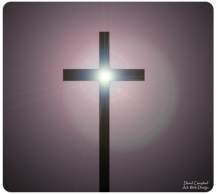
The Cross...I’m sure each of us could draw up a list packed with names of people or groups we would deem enemies of Christ.

But notice Paul’s phraseology. He chooses his words carefully. He did NOT say “enemies of Christ” but “enemies of the CROSS of Christ.”

That hits harder because it hits closer to home. In fact, such enemies may populate our churches. Worse yet, they may be you and me.

Paul concludes:

Their end is destruction, their god is their belly, and they glory in their shame, with minds set on earthly things.
—Philippians 3:19

Sounds like America 2009, doesn’t it?

What else explains the crossless preaching from our pulpits that tickles so many ears?  What else explains Christians who can’t seem to abide even the lightest correction or systematic discipleship? What else explains Christians who look just like the world?

Simple: They haven’t been to the cross.

Perhaps one Christian in 1,000 can say the following without risk of perjury:

But whatever gain I had, I counted as loss for the sake of Christ. Indeed, I count everything as loss because of the surpassing worth of knowing Christ Jesus my Lord. For his sake I have suffered the loss of all things and count them as rubbish, in order that I may gain Christ and be found in him, not having a righteousness of my own that comes from the law, but that which comes through faith in Christ, the righteousness from God that depends on faith– that I may know him and the power of his resurrection, and may share his sufferings, becoming like him in his death, that by any means possible I may attain the resurrection from the dead.
—Philippians 3:7-11

Jesus makes the the dividing line even more obvious:

So therefore, any one of you who does not renounce all that he has cannot be my disciple.
—Luke 14:33

And that dividing line is the cross.  The cross is death to anyone who lays hold of it with both hands:

But far be it from me to boast except in the cross of our Lord Jesus Christ, by which the world has been crucified to me, and I to the world. For neither circumcision counts for anything, nor uncircumcision, but a new creation.
—Galatians 6:14-15

Set your minds on things that are above, not on things that are on earth. For you have died, and your life is hidden with Christ in God.
—Colossians 3:2-3

But for those who die at the cross, a new hope exists:

I have been crucified with Christ. It is no longer I who live, but Christ who lives in me. And the life I now live in the flesh I live by faith in the Son of God, who loved me and gave himself for me.
—Galatians 2:20

Therefore, if anyone is in Christ, he is a new creation. The old has passed away; behold, the new has come.
—2 Corinthians 5:17

The saying is trustworthy, for: If we have died with him, we will also live with him…
—2 Timothy 2:11

Here’s one of the strongest spiritual truths: People who aren’t dead to self are nigh unto useless for the Kingdom. Most of what they do for God will be of the flesh, and that junk neither lasts nor produces genuine fruit.

But a man or woman dead to self and alive to Christ is unbounded. You can’t shame such people because you can’t shame the dead. You can’t hurt the dead because they feel no pain. You don’t have to dance around the willfulness of the dead because, hey, no will of their own; they pretty much do whatever you tell them.

And that’s the kind of person God will use immensely.

If we want to talk about equipping the saints, we also have to talk about de-equipping them of themselves.

Too few Christian leaders are bold enough to tell people to their faces that the sole reason for the majority of their annoyances is that they aren’t dead to self. Too few Christian leaders have the cajones to go up to lingerers at church and say, “The reason you’re useless for God is because you have no idea what it means to be dead to self. Maybe if you stopped crawling off the altar God would use you to fix the problems in His church that you’ve been griping about for decades.” Or something to that effect.

If people get offended, too bad. It’s one of the signs they’re not dead to self. Sadly, the cemeteries are filled with the bodies of those who walked away from God because He didn’t fulfill their expectations. And each one of those people left because they couldn’t get past the cross and dying to self. Isaiah, in one of the most potent verses in Scripture, describes such people vividly:

“Woe to him who strives with him who formed him, a pot among earthen pots! Does the clay say to him who forms it, ‘What are you making?’ or ‘Your work has no handles’?
—Isaiah 45:9

You can tell when someone isn’t dead. While a dead body reeks of decay, a person not dead to self reeks of something far worse: pride.  Meanwhile, the sweet aroma of the Christian who is dead to self is that of humility, the first fruit of the image of Christ.

If we aren’t getting people to the cross, then all the equipping in the world will be worthless. If the raw material we’re hoping to see molded into the image of Jesus isn’t dead first, we might as reevaluate our fancy-dancy educational programming until it is.

Will that be hard? Heck, yeah! But it’s the only way that achieves great results for the Kingdom.

The Error of the Unstrung

Standard

I’ve got no strings

To hold me down

To make me fret, or make me frown

I had strings

But now I’m free

There are no strings on me

Hi-ho the me-ri-o

That’s the only way to go

I want the world to know

Nothing ever worries me

I’ve got no strings

So I have fun

I’m not tied up to anyone

They’ve got strings

But you can see

There are no strings on me

If you don’t remember that ditty from your childhood (or parenthood), it’s sung by Pinocchio in the classic Disney film.

I hear this song a lot lately. As I’ve listened to the Church in America over the years, I hear it voiced by a growing group of Christians who are ecstatic that they’ve dropped out of the institutional Church.

You know these folks. They talk about how much freer they are now that they no longer attend Sunday morning services. Now that they’re not part of a local assembly, they talk about all the things they can do for the Lord that they could not do before or were made to feel guilty for doing by the institutional Church police. Theirs is a louder and louder voice.

I was almost one of those people. Fed up with the way churches operated, I wanted to mold a loose affiliation of church-shunners who felt exactly as I did, a hand-chosen group of friends who could pal around together in Christ and buck the established institutional system that had grown so lethargic and monolithic.  Strings? I didn’t want to have any strings on me, especially institutional Church strings.

But as I have mellowed in the last few years, I have come to realize the problem of being unstrung.

An unwillingness to be herded plagues the American psyche . As the world’s iconoclasts, no one has the right to tell us what to think or how to behave. If we don’t like something, no force from heaven or hell can dissuade us. Rugged individualism defines us. We are the ultimate bootstrappers, devoted to me, myself, and I. I don’t need you and you don’t need me, and that’s the way the American religion works.

Strange as it may seem, that same mentality reigns in those people who deem the institutional Church unworthy. And just as I cannot support the errors of the American religion, I am fully convinced that abandoning the traditional church in this country is a grave mistake.

When the Lord formed His Church after Pentecost, it was a ragtag group of misfits. You had widows, orphans, Roman politicians, prostitutes, Jewish zealots—the ultimate mishmash of classes, races, and temperaments. And that’s exactly how God desired the Church to be.

Can you imagine what it must have been like for the Pharisee who had just come to Jesus to sit down with whores and Romans? How stretched, right? Do you think that man grew on the inside?

When one of us decides that we don’t want to be a part of the traditional local church, we lose something exceptionally valuable: the test of dealing with people we may not especially like.

We see a bit of this in the consumeristic action of church shopping. We hop and shop from church to church looking for one that best fits our desires, the one filled with people most like us. (Oddly enough, people who eschew the institutional Church are often the most vocal against church shopping. )

At a time in American history when it seems as if everyone considers himself or herself a victim, when we walk around as open wounds expecting some jerk to pour salt on us, when intelligent debate is no longer possible between people without the wailing and gnashing of teeth, and other people just plain suck, people who drop out of church only add fuel to that fire of misanthropy.

So while some may think they are truly spiritual by saying goodbye to what most of us recognize as church, I wonder if those dropouts are missing out on vital, God-ordained character building.

A few years ago, David Wayne of Jollyblogger interviewed a pastor from the country of Georgia. When David asked that pastor about church shopping and hopping, the pastor was shocked. In his country, church people were born into a church and were buried in its cemetery. What about discord and disagreements? David wondered. The pastor gave a simple answer: People were forced to work out their differences because they were fellow members of the Body of Christ.

When Christians drop out of church, we shun the vital truth that Christian character is built on dealing with one’s differences within a body of believers comprised of people who are not exactly like us. In fact, we may not even like many of those people.

But the Kingdom of God does not allow us to pick and choose who will be in it. God desires us to learn how to live with people who would ordinarily bug the heck out of us. That is part of our growth as Christians.

When I see people dropping out of church and proclaiming how free they now are, I can’t help but think that their supposed freedom comes at a steep cost, pinocchio.jpgthe cost of learning to find common ground with people they would not have chosen to be in their Christian clique.
Pinocchio had a cranium filled with sawdust when he sang how free he was from being tied to anyone. Is that how we wish to be?

When I hear people who have dropped out of church, they almost invariably talk about how they now get together with their handpicked friends, people just like themselves, for fellowship. I find that sad because I gain valuable lessons in my inner man when I must deal with a wide swath of diverse fellow believers I did not handpick.

God desires that I learn to love brothers and sisters in Christ who are ignorant, lazy, judgmental and stubborn—which may even be how others perceive me. He also desires that I share in the lives of people who are much smarter, more loving, and deeper in the faith than I am—people I might ordinarily avoid because they make my own walk with Christ appear so tepid.

Would I choose to hang with Christian 80-year-olds,  sports nuts, quilters, teens, auto mechanics, infants, and the like if it were not for the institutional Church? Probably not, but God asks me to anyway, forcing the issue by keeping me in the local church.

No matter where others fall on the spectrum of Christian maturity and social graces, all have something to teach me that is valuable. And I have in them people whose problems I might not ordinarily encounter, but for whom Christ desires I intercede and bear burdens. It is in those burdens found in people who are not like me at all that I learn what it means to seek all solutions in Christ alone.

The world around us is fragmenting into tribes, and God help us all when tribes clash. But the Church is not to be this way. We are called to get along, no matter what our fellow Christians may be like.

Sadly, when we drop out of church and go our own unstrung, “enlightened” way, we avoid this lesson. And we are poorer in spirit for doing so.

Blest be the tie that binds

Our hearts in Christian love;

The fellowship of kindred minds

Is like to that above.

Before our Father’s throne

We pour our ardent prayers;

Our fears, our hopes, our aims are one

Our comforts and our cares.

We share each other’s woes,

Our mutual burdens bear;

And often for each other flows

The sympathizing tear.

When we asunder part,

It gives us inward pain;

But we shall still be joined in heart,

And hope to meet again.

This glorious hope revives

Our courage by the way;

While each in expectation lives,

And longs to see the day.

From sorrow, toil and pain,

And sin, we shall be free,

And perfect love and friendship reign

Through all eternity.

— John Fawcett, “Blest Be the Ties that Bind”

The Real Sins of Sodom

Standard

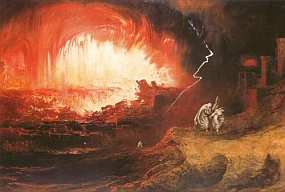
'The Destruction of Sodom & Gomorrah' by John MartinOn Monday,  I wrote concerning Christians who err by judging the failings of others while simultaneously forgetting to examine themselves to check for their own complicity in those failings.

Today, I want to look at the notorious city of Sodom.

Long the hallmark of wickedness, Sodom is repeatedly held up in the Bible as an example of how NOT to live. And if you’ve been around American Evangelicalism long enough, you’ve been drilled on the exact reason God destroyed Sodom. (Hint: We get the word sodomy from this particular association.)

If you’re still lost on the reason, Genesis 19 is the standard text. Lot’s life in the city and what befalls him, his divine guests, and his immediate family are laid out for all to see, as are the despicable actions of the denizens of the city of Sodom:

The two angels came to Sodom at evening. Lot sat in the gate of Sodom. Lot saw them, and rose up to meet them. He bowed himself with his face to the earth, and he said, “See now, my lords, please turn aside into your servant’s house, stay all night, wash your feet, and you will rise up early, and go on your way.” They said, “No, but we will stay in the street all night.” He urged them greatly, and they came in with him, and entered into his house. He made them a feast, and baked unleavened bread, and they ate. But before they lay down, the men of the city, the men of Sodom, surrounded the house, both young and old, all the people from every quarter. They called to Lot, and said to him, “Where are the men who came in to you this night? Bring them out to us, that we may have sex with them.” Lot went out to them to the door, and shut the door after him. He said, “Please, my brothers, don’t act so wickedly. See now, I have two virgin daughters. Please let me bring them out to you, and you may do to them what seems good to you. Only don’t do anything to these men, because they have come under the shadow of my roof.” They said, “Stand back!” Then they said, “This one fellow came in to live as a foreigner, and he appoints himself a judge. Now will we deal worse with you, than with them!” They pressed hard on the man Lot, and drew near to break the door. But the men put forth their hand, and brought Lot into the house to them, and shut the door. They struck the men who were at the door of the house with blindness, both small and great, so that they wearied themselves to find the door. The men said to Lot, “Do you have anybody else here? Sons-in-law, your sons, your daughters, and whoever you have in the city, bring them out of the place: for we will destroy this place, because the outcry against them has grown great before Yahweh that Yahweh has sent us to destroy it.”
—Genesis 19:1-13 (WEB)

Cut and dried, right? Homosexuality was the primary reason God destroyed Sodom.

Well, maybe not.

I was reading in Ezekiel today and came across the following passage. The context is that God is chastising His chosen people for being even more sinful than the wicked nations that surrounded them:

“Behold, everyone who uses proverbs will use this proverb about you: ‘Like mother, like daughter.’ You are the daughter of your mother, who loathed her husband and her children; and you are the sister of your sisters, who loathed their husbands and their children. Your mother was a Hittite and your father an Amorite. And your elder sister is Samaria, who lived with her daughters to the north of you; and your younger sister, who lived to the south of you, is Sodom with her daughters. Not only did you walk in their ways and do according to their abominations; within a very little time you were more corrupt than they in all your ways. As I live, declares the Lord GOD, your sister Sodom and her daughters have not done as you and your daughters have done. Behold, this was the guilt of your sister Sodom: she and her daughters had pride, excess of food, and prosperous ease, but did not aid the poor and needy. They were haughty and did an abomination before me. So I removed them, when I saw it….”
—Ezekiel 16:44-50 (emphasis mine)

What is fascinating about this passage is that God explicitly names what it was about Sodom that caused Him to destroy them:

1. Pride
2. Excess food
3. Prosperous ease
4. Lack of love for the poor and needy
5. Haughtiness
6. Practicing an abomination

While not explicitly named, the abomination that was practiced surely included homosexuality.  Exchanging heterosexual practice for homosexual is an abomination because it mocks the created order and the character of God. (I have written about this previously in “Sex and the Created Order.”)

But for us Christians in America who love to hold out the homosexual agenda as the worst possible thing to happen to our country, please note the five explicitly named sins that preceded the sixth.

I can wait while you read the list again.

When I read those top five, they nearly define American Evangelicalism circa 2009.

The pride of having somehow “arrived” with our Christian radio stations and our Jesus T-shirts, the Time and Newsweek cover articles proclaiming our ascendancy, and the whole of our Evangelical subculture that seduces us into thinking that we are somehow living in the world but are not of it

The gluttony evident by the number of morbidly obese “saints” who never met a pantry they didn’t like or an all-you-can-eat buffet they could ignore, and the hording of food that allows us to feel safe and well insulated against the “childish” idea of “Give us this day our daily bread”

The vacation homes, McMansions, iPhones, Playstations, spa trips, Christian cruises, and amassed luxury that we so often attribute to God’s imprimatur on our “righteous” lifestyles

The blind eye we turn to the destitute, the alien, and the least of these—the very ones who signify Christ Himself

The self-reverential belief that we are better than those around us who do not show the same outward manifestation of our blessings, and the certainty of heaven for us because we alone have done it right while our clueless neighbor has done every last shred of it wrong

Five devastating, explicitly named indictments of God against Sodom, yet for some reason, all we can think about is the sixth, because that final one applies to the other guy—you know, the flambouyant one with all the Streisand CDs.

Dear God, bring us to repentance before it is too late.