
Community,Politics, and Pastoral Shenanigans

Standard

Election Day is only days away and news breaks of the Ted Haggard scandal, conveniently timed (as the whistleblower himself notes) to cause the most political fallout. 

Ugh.

We've been talking about community here lately, and while this post isn't part of the "Being the Body" series we're in, it's close. It's a tale about what happens when folks are removed from real community.

For the less media inclined, Ted Haggard, now the ex-leader of the National Association of Evangelicals and the ex-pastor of a huge Colorado megachurch, has fallen in some sort of scandal, causing him to resign both those roles. The allegations that brought Haggard down are unseemly, and I don't want to go into them here. But Haggard claims that some parts of them are true and, for the purposes of this post, that's enough.

The Godblogosphere is loaded with commentary on the Haggard situation. Everyone is weighing in with the reasons why this happened, but the analysis is the same tired lament focused on the usual suspects.

Recently, I reviewed a book by David Fitch called The Great Giveaway. One of the chapters dealt with pastoral sin, pointing the finger not so much at the pastors, but at the system we've created in our churches that sets the pastor apart as some kind of CEO, celebrity, or otherwordly figure with no ties to the rest of the church body. I believe that Fitch's analysis is far more accurate than what we're seeing discussed on the Godblogs.

A few points:

1. We've created a cult of celebrity around our most noted pastors. That kind of proto-idolatry only sets them up for failure because we no longer allow them grace to fail in the small things before they become larger.

2. Failure and sin are natural parts of the human condition. All have sinned and fall short of the glory of God, as we know. This includes our pastors, but we act as if it doesn't. Our mental disconnect sets up pastors for further failure.

3. Because of these factors, pastors find themselves separated from healing community. They cease to be fellow brothers within our church communities.

4. God institutes community for correction, even of leaders, yet our cult of pastoral celebrity destroys the natural workings of the correction. This places pastors outside the community and outside of the community's ministry TO them.

So once again, we see what happens when we do not allow the natural workings of godly community to police, protect, and encourage—even the pastorate.

While I do not condone what Haggard appears to have done, I'm not outraged. If anything, I feel sorry for what our kingmaker attitude has done to the pastorate. Unless we reform our communities, stop treating pastors as superhuman, get off our judgmental attitudes, and get back to recognizing that ALL the sheep have gone astray (not just some), we'll continue to see more high-profile pastors fall. We've got to be grace-filled communities that recognize the sin in our own leaders and allow them to receive grace from us, rather than blackballing them, stripping them of their ordination, and so on. With the constant threat of the "laity" turning on them like a pack of vicious dogs, pastors are all too likely to go into "coverup mode." No wonder the small sins wind up turning into monstrosities.

And don't believe that it can't be your favorite big-name pastor. I'm seeing a lot of people claiming their man is immune, all the while dancing on the ashes of Haggard's ministry. That's sickening, frankly. And unless we get wise to the fact our crippled views on community are what make stories like Haggard's possible, we'll continue to treat these pastors like they're a ruling class, rather than as sinful brothers in need of grace, just like we are.

We don't talk politics on this blog, but I wanted to drop that for one second to talk about this Tuesday's election.

I live in a state racked with pain. Ohio is in serious trouble. Our current Republican administration in this state is rife with malfeasance and failed agendas. The Republican governor has been an unmitigated disaster. His failures have resulted in Ohio being anathema to businesses of all sizes, driving many out of the state and attracting nothing to take their place. Now Ohio, the birthplace of more presidents than any other state, is in dire condition economically. We're the number one state for job losses, one of the worst of the worst signs of trouble.

I've noted in recent months through one of the series I did that I'm what they term a Crunchy Conservative. While much of what I believe politically sounds Republican, I oppose the Republican Party on many environmental, employment, and social issues.

This political season has underscored for me that we're drastically in need of some kind of reform in government. The Republicans don't represent the average family when they put big business ahead of the environment and small businesses. They don't represent the average family when they make all sorts of claims about supporting the family, but their final interest only comes down to supporting the richest one percent of families out there.

The Democrats, on the other hand, mouth some sort of allegiance to the little guy, but their party is responsible for supporting nearly every social evil imaginable.

And in the end, it seems like they're all liars anyway.

I believe that the same problem of making kings out of our pastors has soiled our politics. While politicians say they're part of the community, the community they're a part must only be millionaires and hedonists. I'm divulging no new truth here when I say that most people aren't like that. But the demographic on Capitol Hill doesn't reflect the common man out struggling to live in America 2006. It represents CEOs and loud-mouthed deviants.

My current rep is gung-ho about putting a nuclear waste site in a poorer area of the state not far from my home. Remember, I live in OHIO, not the Sonora Desert. She claims to be a part of my community, but I've got to wonder how any sane person would consider putting nuclear waste in a populated area with a high water table upstream from a major American city. I've got to wonder what PAC got to her and for how much. Isn't that sad?

She's a Republican. I don't know how I can vote for her, though. Her Democratic opponent supports a number of grievous moral sins. I can't vote for the opponent, either.

In short, no one represents most of the people I know in this district. Though they would vehemently protest my assessment, the candidates in this election aren't really part of our community. They're a part of some other class of people entirely who don't get us as much as we don't get them.

Sounds like some of the pastors in our churches, doesn't it?

I'm not sure what we can do about the problems in politics, but we can start doing a better job in our churches of allowing our pastors to fail in our community just as we ourselves are (or should be) allowed to. We need pastors who are like us, too, not outsider glamour boys who seem more attuned to politics than pulpits. 
Our Obsession with Labels

Standard

"Teacher," said John, "we saw a man driving out demons in your name and we told him to stop, because he was not one of us."

–Mark 9:38 NIV 

The phosphors weren't even dark on my monitor before someone challenged me to come out of my hiatus. In short turn, two more incidents cried out, begging me to post, taunting me to spurn my self-imposed break. Curiously, all three possessed a common thread: an obsession with labels.

Nathan Busenitz posted excerpts from an old interview in which the normally sane John MacArthur threw a rod and proudly declared that all Christians are dispensationalists. Just like he is. If they were truly honest with themselves, that is.

Hmm. I wonder how R.C. Sproul and Vern Poythress took that news.

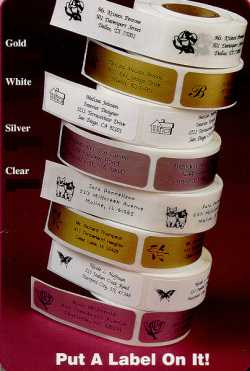
Last time I checked, there wasn't a Darbyite bone in my body, but that's beside the point. MacArthur felt the need to assign a label to all of Protestantism that he uses to refer to himself. But like Lay's Potato Chips, you can't stop at one. "Dispensationalist" doesn't cover it all. Go ahead, put a label on it!In Johnny Mac's case, he's a Reformed Calvinist Cessationist Credobaptist Dispensationalist. I'm sure if we delved deeper we could determine if he's an Infra- or Supralapsarian. He probably supports the use of grape juice over wine, so add Teetotaling to the list of labels.

Boy, that's a lot of labels. 

The second confrontation with labels came inside Cerulean Sanctum, when my repost on homeschooling got a number of commenters hot and bothered. At issue was my innocent comment about homeschooling my son. "No," came the righteous response from a couple people, "you are most definitely NOT homeschooling your son. You're doing a public e-school at home, but that's not the same as homeschooling." 

Seems I can't even label myself correctly. Other people have to step in and do it for me.

Even if I should concede that the critics are correct on the jots and tittles of this particular letter of the law, still the issue of labels raised its ugly head. We have to know who's right and who's wrong. Judging by the vociferous (and verging on venomous) response my self-labeling received, "hellaciously wrong" was the correct answer.

And lastly, within hours of my final pre-hiatus post, a respected Godblogger took me to task for my hesitancy to toss labels around. He objected to the "About My Theology" portion of my "About Cerulean Sanctum" page, wherein I state the following:

I'm "Reformational," meaning I completely affirm what came out of the Reformation. Labels are difficult and I tend to eschew them, so I'm not "Totally Reformed" in the strict five-point Calvinist manner that many Godbloggers are, but I lean more toward the theology of Martin Luther.

My insistence that I don't like labels didn't sit well. The gist of this blogger's post channeled Lucy Van Pelt and labeled me the Charlie Brown of the Godblogosphere. You know, wishy washy. (Though I somehow got a few points for being honest about it!) 

What is it with the American Church's obsession with labels?

I find it nearly impossible to find much emphasis on labels in the New Testament, particularly the Gospels. Let's take a look at the disciples' attempts to label:

"Teacher," said John, "we saw a man driving out demons in your name and we told him to stop, because he was not one of us."

–Mark 9:38 NIV

Not one of us. That's a classic in the labeling community, isn't it? We use the "not one of us" label more than any other. We insist on dividing, creating schisms, and call our obsession "discernment."

But how did Jesus address John's labeling of this man?

"Do not stop him," Jesus said. "No one who does a miracle in my name can in the next moment say anything bad about me, for whoever is not against us is for us."

—Mark 9:39-40

Jesus' response: Tactful rebuke coupled with a complete overhaul of terms. Better still, he narrowed the label further (which we'll discuss further down.)

I'm sure the disciples' labeling the man taxed Jesus' patience—at least a bit—since mere verses before the disciples engaged in another common labeling practice:

They came to Capernaum. When he was in the house, he asked them, "What were you arguing about on the road?" But they kept quiet because on the way they had argued about who was the greatest.

—Mark 9:33-34

Here we have the flip side of "not one of us," the "we're the best" label. Of course, with such a label, someone must fall into the category of "not the best," or as we more commonly see it enunciated, "scum of the earth."

Any guesses as to Jesus' response? Yes, tactful rebuke coupled with a complete overhaul of terms. Detect a pattern here?

In fact, the more one looks at the labeling practices of the people Jesus encounters in the New Testement, the more we see that people do a lousy job of godly labeling. The Roman centurion labeled himself "unworthy," but Jesus labeled him "faithful." The Pharisees were dying to label the man born blind or his parents "sinners." Jesus said no, "glory of God." Most people would label the priest and the Levite "godly," but Jesus reserves that label for the hated Samaritan who stops to help the man robbers left for dead.

Jesus repeatedly turned labeling on its head. While we have a penchant for a plethora of labels we use to determine who's greatest and who's one of us, plus all the subdivisions within those, Jesus stuck with only two:

  • For Us vs. Against Us
  • Sheep vs. Goats
  • Wheat vs. Tares
  • Found vs. Lost 
  • Saved vs. Unsaved
  • Faithful vs. Unfaithful 
  • Believers vs. Unbelievers 

If Jesus stuck to such simplified labeling, what about the Church He founded? 

If we examine the early Church, we WON'T find the apostles straining for a name for the burgeoning movement of Christ followers in Jerusalem. No one's angling for a label at Pentecost. It's not till Chapter 9 of Acts that we hear the label "the Way" applied. And it's in Antioch in Acts 11:26 that the movement gets a label that sticks, Christians. That label came in 45 BC, twelve years after the founding of the Church!

You see, the early Church had a job to do. They didn't have time to waste labeling themselves or others. As far as they were concerned, the labels Jesus used met their needs. Stick to the basics.

So why is it that Christians today feel compelled to resort to so many labels—and so obsessively?

I believe part of the problem lies in our modernistic tendency to condense everything we encounter into easily knowable parameters. We take comfort in thinking we comprehend what an item is by its labels. Unfortunately, we can attach all the labels in the world to someone or something and still miss the whole picture. For instance, we can label each part of a peacock—forehead, lore, beak, wings, primaries, secondaries, tertiaries, scapulars, coverlets, feet, etc.—but utterly miss the beauty and majesty of it.

If a family member died, would we be mortified if a Reformed Calvinist Cessationist Credobaptist Dispensationalist Supralapsarian Teetotaler knocked on our door and offered to grieve with us even though we were Arminian Pentecostal Holiness Lordship-Salvation Pedobaptists who drank a glass of wine for our stomach every day just like Paul advised Timothy? I doubt it.

Why all the fuss then?

I'm sick of labels, personally. I'm a Christian; that's the only label I wish to be known by. As to other labels, Jesus offers nothing but rebuke. The older I get, the more I understand that truth.

Time to stop the obsessive labeling. We're only hurting the cause of Jesus Christ by loving our labels more than each other.

Despising the Rocket Kid

Standard

You can learn a lot from a six-year-old's soccer game.

Though I never participated in organized team sports as a child, just about every kid's in them today. Who wants their kid to be the one sitting at home lamenting that the neighbor kids are all missing, away at baseball games or soccer practice? Plus, as an only child, my son needs the communal aspect of team sports. (Though I agree with Randy Frazee that organized sports for kids are hurting our community in the long run.)

Last Saturday, my son's undefeated Blue Thunder team took on a chief rival, the Red team. Their last meeting wasn't a blowout by any means, but the outcome never lay in doubt. My son's team has two guys who outplay most of the other kids in the league by a large margin. One has superior ball control and the other has a howitzer for a leg. Both have a furious set of wheels. Amazingly, at least at this level of soccer, they pass to each other well, a 1-2 punch that KOs most teams.

Prior to Saturday, the team coach (Howitzer's dad, of course) told me he'd never lost a game, and he intended to keep it that way. That he's ridiculously tough on his son made it hard for me to relate to the guy. Plus, I think kids need to develop the skills to deal with losing rather than developing a win-at-any-cost mentality.

So onto the battlefield these sub-4' titans strode. At the end of the first quarter, the score was 5-1.

But not in our favor.

Seems last time these two teams played, Red's star player, a speed demon, wasn't feeling up to snuff. Here's to the Rocket Kids...But this time, he not only showed up healthy, he'd found another gear. He ran like someone had strapped a rocket to his back.  Our best two players, no slouches in the speed department, got more than their share of good looks at Rocket Kid's cleats.

Rocket Kid lacked the ball control or the leg of our best two guys, but that didn't matter. He blew by our entire team like they were standing in semi-congealed Jell-o. Shellshocked Blue Thunder parents stood on the sidelines shouting hysterically to our team to "Stop that kid!"

The sun shone on Red that day. While our own Howitzer singlehandedly tied it up later on, a ten kid scrum at our end of the field resulted in a dying bird goal against us. No joy in Mudville— six to five.

Coach Never-Lost-A-Game, who at the end of the first quarter boasted a deer in the headlights expression and bits of half-chewed ballcap between his teeth, seemed relieved to have walked away with a one-point loss. He actually had a smile on his face. I liked him more after the game than before. Maybe we all learned something that day.

I say all this to make a point. When you've got a Rocket Kid on your team, all is well with the world. More often than not, you'll win the game. It's a great feeling to know that his effort will no doubt win you the championship.

God's put Rocket Kids in the Church, too. They may not have great ball control or a killer leg, but they're out in front, leading the charge for the rest of the team. More often than not, they score.

But something's strange about the American Church's attitude toward the Rocket Kids who play on our team. Instead of cheering Rocket Kids on, we tend to despise them. We point out their lacks, their faults. Secretly, we may even wish they'd go away for no other reason than they make the rest of us look bad.

We're despising the Rocket Kid.

In the Church, Rocket Kids minister in ways that may make others uncomfortable. Rocket Kids have big ideas that break long-held traditions. Rocket Kids are so far out in front, those of us better labeled "Pedantic Kids" can't understand what they're about. Rocket Kids demolish conventional thinking.Rocket Kids look foreign to us, almost as if they're playing on the wrong team. Rocket Kids bring change, and change makes us feel unprepared, even ignorant.

I don't need a word of knowledge to know that some reading this will immediately fall back into a familiar "He's asking us to endure heretics in our midst."

Here's my simple answer to that.

Let's consider world missions.  The conventional wisdom for years looked like the following:

  • Teach American (or British) missionaries the culture and language of an unreached people group, then plunk them down in the mission field to evangelize those people.

But at some point in time, a Rocket Kid thought this:

  • Bring a Christian who speaks his unreached people group's native tongue (and understands the global language of English) to the United States for training, then send him back to evangelize his own people.

Now I don't have a Wayback Machine to whisk me to the seminary classroom where the Rocket Kid behind that idea first proposed it. However, I can imagine what the rest of the class thought: they despised the Rocket Kid and his crummy idea.

No doctrine lay mangled on the theological floor as a result of that Rocket Kid's paradigm-shifting idea, though. But he suffered for it, I'm certain. Chances are, that change in missiology may have even shattered ideas of racial superiority within some sectors of the Church. Today, you won't find a missiologist worth his salt who would support the first proposition over the second.

We've got to stop reflexively busting the the chops of Rocket Kids in our churches. Just because we're staring at their backs as they press on ahead of us doesn't mean we shoot them so we can catch up.

Sometimes I wonder if we Evangelicals are like the oppressive government Handicapper General in Kurt Vonnegut's extraordinary story from 1961, "Harrison Bergeron."  (It's worth reading the story—it's brief.) We want status quo and lowest common denominator rather than Rocket Kid concepts. Rocket Kids blow past us with big ideas and paradigm-busting practices, and we're too busy, shotguns blazing, to discern the Holy Spirit speaking truth to us.

Rocket Kids walk into gay bars to minister to the lost people there. Rocket Kids question economic injustices perpetrated on the poorest of us. Rocket Kids take unpopular stands against the status quo. Rocket Kids see the flower growing in the crack in the sidewalk that others miss. Rocket Kids believe that Christ bids us come and die, and they walk out that death daily, no matter what other people think.  Rocket Kids are misunderstood, opposed, and hated in their time, sometimes even by "The Church," but go on to be enshrined in the pantheon of Christian greats.

How much would it cost us to listen to our Rocket Kids, even if we don't understand them, to see if what they might have to say is worthwhile? What if we drew alongside that Rocket Kid, much like Priscilla and Aquila took Apollos under wing, and helped him or her fuel the rocket? Are we more afraid that someone might leave us—pedantic and ordinary as we are—in the dust? Perhaps we're still standing on the sidelines yelling, "Stop that kid!"

God forbid that I should hold anyone back. I don't want to see the Church despise and stifle Rocket Kids. I want to engage Rocket Kid ideas and see if God is speaking truth to me through them.

More than anything, I'm glad we've got Christian Rocket Kids on our side. The worldly have their own Rocket Kids, so we need to treasure and encourage ours to the glory of Jesus Christ. Because, in the end, Jesus Christ made Rocket Kids for a reason.