
Are You a Hamster?

Standard

Douglas Groothuis strides to the plate (in his recent post, “Against Multi-tasking”) and takes a mighty swing at an issue I’ve blogged about more times than I care to admit. Noting that our society is like a videotape stuck on fast forward play, with people favoring inhuman virtual worlds they can easily manipulate at a press of a button, he says:

Reality demands an attentiveness that multi-tasking does not allow. Human beings especially tend to be opaque and mysterious beings, whose inner recesses are not easily discerned. We can push a key and make the computer or cell phone do something. We cannot push a key and understand or help change a human being. That kind of being requires more attention, more patience, more suffering. This is because we are made in God’s image and likeness, yet we are fallen and disoriented by sin’s manifold manifestations. We are sinners in need or reorientation according to truth (that which describes reality). Some of the most important truths about ourselves and others and about God himself are not easily fathomed—or when fathomed, they are not easily remembered. The discerning of these truths requires attentiveness, patience, and studiousness. These truths demand, as Pascal noted, being quiet in our own room without distractions or diversions. Conversations concerned about truth and virtue require the engagement of two people who are attending, respecting, and responding to one another without mediation.

Dead. Spot. On. Here’s his summation:

If all this is true and important, several things follow. We need to slow down and become less efficient and effective, at least as these terms are defined by popular culture. We need to unplug more often, endeavoring do just one thing at a time and to do one thing at a time well. Perhaps we should simply listen to music in order to discern its nature, structure, and aesthetic value. This requires a one-pointed immersion into its sonic reality. Just listen and think. Maybe we should simply listen to another person, laboring to exegete his or her soul and bring our soul to bear on another’s pain, yearnings, and boredom. Perhaps we should read the Bible in book form and not jump from text to text to image to image as we do while “reading” it in cyberspace. (Is that really reading or merely retinizing?) Maybe we need to talk to someone on the phone and not listen to music while talking, not type an email while listening, not exercise while listening. Maybe much should change—within and without. Much should change if we think truth is being lost, relationships are being cheapened, and virtues are being soiled by our incessant dividedness, fragmentation, and alienation known as “multi-tasking.”

And…there’s the whiff.

Great stance. Fluid form. Eye on the ball. But it’s a “K” nonetheless.

I know Groothuis is blogging and it’s not a doctoral dissertation on the subject, but the Church has got to provide better answers. Groothuis has a stellar mind and I’d love for someone in his position to develop this more in the company of other great Christian thinkers and leaders. For all our sakes, it must be developed more than telling us to unplug from our devices and stop multi-tasking.

Take the average person who…

  • Gets up at 5 AM for work, showers, gets dressed
  • Eats a quick breakfast
  • Reads the Bible for a few minutes and tries to fit in a couple minutes of prayer
  • Commutes forty-five minutes to work through snarled traffic
  • Starts work at 7:30 AM
  • Skips lunch or eats quickly in the cubicle
  • Bails from work ten hours after starting
  • Drives forty-five minutes home through snarled traffic
  • Changes clothes
  • Sits down to eat dinner at around 7 PM
  • Manages to play a couple minutes with the kids
  • Helps put the kids to bed
  • Manages about fifteen minutes alone doing something personally worthwhile
  • Squeezes in a few minutes of talk and possibly a prayer with the spouse
  • Gets ready for bed
  • Hits the hay at 10 PM
  • Repeats

That’s now the existence for a huge number of people in the United States. Given that, I must ask when we find the time for the “single-tasking” Groothuis insists we need?

That schedule I just listed is what needs to be fixed. Church leaders wonder why folks won’t commit to more volunteer activities. Businessman on a Hamster WheelI’ve got to ask if any of the leaders in the Church today understand that kind of schedule and its ubiquitousness. If they do, and they hate it as much as the people stuck in it, then why is the Church in America not doing a single thing to reform that kind of schedule?

Honestly, the disconnect blows my mind. To his credit, Groothuis nails the problem beautifully. But when we start decrying the lack of singlemindedness to deconstruct the finer points of a Beethoven sonata while simultaneously asking people to work the kind of schedule most do, I’ve got to wonder, Did we just step off the planet?

This evening, my wife and I collapsed on our couch and talked for five minutes about the truth that people are exhausted when they end their day, but not in the good way that comes from physical labor, the kind that is capped by a sweet rush of endorphins and peace in the nerves. No, the exhuastion that afflicts us today is stress-induced, the kind that blurs all thoughts and makes pushing a button the sum total of all we can muster before we slump into bed to worry about the next day, fitfully tossing and turning as the digits flicker by in rapid succession on the nightstand alarm clock.

Today’s Christians can’t start talking about depth of meaning and greater purpose if at the very core of what we do each day there’s nothing but a treadmill stuck on the “Verge of Insanity” setting. Talking on the phone while we read our e-mail is a symptom of a greater problem because choosing to talk on the phone now, followed by reading the e-mail later, simply isn’t an option for a lot of people. We’ve got to fix the hectic madness we must obey or else risk a trampling by the mad rush of the rest of the world.

Who is speaking to the greater whole of our daily scheduled existence? Who is bold enough to provide viable solutions for getting at the root of our modern work lives that command such extreme chronological attention? Will our pastor be the one to explain to our bosses why we refuse to carry a corporate-mandated cellphone guaranteed to ring at least a half dozen times each weekend (and at least twice during each evening?)

It’s time to stop talking in theoreticals. And no more Band-Aids for severed limbs, either.

I would issue this challenge to Douglas Groothuis, a much smarter man than I am: How can Christians find a more Christ-honoring means of practical living than the system we have now in place—the one that is killing us, wrecking our families, and destroying our churches? How do we step out of society’s hamster wheel? Why is the Church in America not speaking to this? Why are there no answers other than the simpleminded ones we repeatedly offer but which continually fail to fix this issue?

If people are not living the abundant life because of the system of living we have created, then for the sake of the Kingdom of God we better find a way to beat the system.

Now, where do we start?
Notable Authors You (Regrettably) Never See Mentioned on Christian Blogs

Standard

A random walk through the Christian blogosphere is an enlightening experience that effectively takes the pulse of the technically-abled side of the Church. From even a short visit to a few blogs, one could argue that Christian bloggers don't seem to span the gamut of Christian thought and that's probably close to the truth. In the wake of GodBlogCon, a few brave souls have asked whether or not the Christian blogosphere is in a homogeneous funk, and I would have to agree that it is.

As one of the precious few charismatics actively blogging, I'd like to remedy this just a tad by suggesting that perhaps there is more to read out there than flows from the pens of C.S. Lewis, N.T. Wright, D.A. Carson, John MacArthur, and C.H. Spurgeon. As much as they are routinely quoted by what seems to be 97.5% of the Christian blogosphere, there are outstanding authors who are never mentioned, yet they had profound ministries that stretched across the globe.

For the betterment (and broadening) of Christian thought, I present three authors whose underrepresentation in the Christian blogosphere only serves to diminish our conversation.

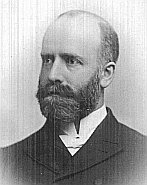
R.A. Torrey
For anyone attending the GodBlogCon, it was sponsored by the Torrey Honors Institute at Biola University. Considering all the hoopla around this event, R.A. Torrey Picno one bothered to shed some light on the man who lends his name to that Institute, Reuben Archer Torrey.
A gifted author, teacher, pastor, and evangelist, Torrey not only served as Dean of Biola for twelve years, but was also D.L. Moody's handpicked successor to that great evangelist's church and what later became Moody Bible Institute. (An outstanding bio can be found here and at Wikipedia.)

Torrey, a true charismatic, penned an outstanding treatise on the Holy Spirit that I've routinely recommended to people, The Person & Work of the Holy Spirit. Many have commented that his works on prayer are some of the finest written, and you can find a free version of one of those prayer writings and a few of his other works at the Christian Classics Ethereal Library (a site everyone should have bookmarked.)

Torrey authored over forty books, many still in print. Such a talented and gifted man of God we'd all be hard pressed to equal. He deserves to be read and quoted from liberally.

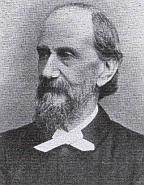
Andrew Murray
While many of the writers that are usually referenced in the Christian blogosphere have a fiery and impassioned message along the lines of the Apostle Paul, Andrew Murray is more in the gentle, loving, and profound mold of the Apostle John. Andrew Murray PicPerhaps it is because of Murray's soothing pastoral heart that he's not ripe for controversy, but I contend that in an age when so many Christians are at odds, Murray's vast output of writings are more needed than ever. (Bio of Murray here and at Wikipedia.)
This post came about because of yesterday's reference to abiding in Christ. For those seeking to do just that, there is no equal in books on the subject than Andrew Murray's Abide in Christ (free online version here.) He, too, penned a classic on prayer, With Christ in the School of Prayer. I'd also recommend his book Humility, one of the best ever written on the topic. And like Torrey, Murray endorse modern day charismata, having overseen the miracle-filled South African Revival of 1860, an event that changed his life. He later was a key player in the Keswick movement that fueled both the great missionary thrust at the turn of the 20th century and the Welsh Revival. You can find free versions of many of his writings scattered thoughout the Internet, but the CCEL, again, is a fantastic resource for Murray.

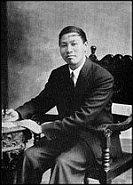
Watchman Nee
I can think of few great men of the Faith whose writings have eluded more people than Watchman Nee. Perhaps it's his distinctly Asian view of Christianity, but no matter the reason, Watchman NeeNee is a man wholly surrendered to the Lord and his writings have profound depth. What else can be expected from a man who spent the majority of his Christian life locked up in solitary confinement in a Communist prison cell? Many today would claim that Nee's devotion to the Lord is the reason the Chinese house church movement is still going strong. (Nee bio here and at Wikipedia.)
Nee's The Normal Christian Life is a book every Christian should read, and it's one of the scant few worthy of inclusion in the Essential Reading sidebar of Cerulean Sanctum. Packed with wisdom on living out faith in Christ, it's a classic exposition of Romans. (CCEL has a free online version here.) I also heartily recommend his look at Ephesians, Sit, Walk, Stand. Having read several of Nee's books, I can promise that anything he writes will be fresh and will challenge you with godly wisdom from a different perspective than what you might be used to. A tragically underrepresented author in Christian blogging.

Other great writers do exist. C'mon folks, let's put a few different players out on the field!

The American Church’s Five Most Pressing Needs

Standard

The CrossIf you haven’t already noticed, this blog is about the Church, especially the American variant. In my search for an authentic 1st century faith in a 21st century framework, I’ve come to the conclusion that there are about two dozen ways in which American churches have gone off the path. For anyone new here, this blog isn’t about complaining about the problems; it exists to galvanize believers into action to remedy those shortcomings.

Over the years, folks have asked me many times what I think are the most pressing of those two dozen problems that are afflicting today’s Church in America. Rather than go into detail about all of them, I’ll list the five I believe are key:

5. We need to “de-materialize.”

No one can serve two masters, for either he will hate the one and love the other, or he will be devoted to the one and despise the other. You cannot serve God and money.
—Matthew 6:24 ESV

As for what was sown among thorns, this is the one who hears the word, but the cares of the world and the deceitfulness of riches choke the word, and it proves unfruitful.
—Matthew 13:22 ESV

And he told them a parable, saying, “The land of a rich man produced plentifully, and he thought to himself, ‘What shall I do, for I have nowhere to store my crops?’ And he said, ‘I will do this: I will tear down my barns and build larger ones, and there I will store all my grain and my goods. And I will say to my soul, Soul, you have ample goods laid up for many years; relax, eat, drink, be merry.’ But God said to him, ‘Fool! This night your soul is required of you, and the things you have prepared, whose will they be?’ So is the one who lays up treasure for himself and is not rich toward God.
—Luke 12:16-21 ESV

If there’s a sign of the times in the Church today, it’s that we’re possessed by things. Our desire is for what worm, moth, and rust destroy and not for what is eternal. This is the great deception of the Enemy that we should trade eternal riches for earthly ones. The Church in America is caught up in the materialism of an age that cries, “More!” Rather than simplifying our lives, we clutter them. Death purges all materialism; everyone dies a pauper in the eyes of God save for the ones who abide in Christ and gain His riches forever.

4. To be real disciples, we need to abide in Christ.

Now as they went on their way, Jesus entered a village. And a woman named Martha welcomed him into her house. And she had a sister called Mary, who sat at the Lord’s feet and listened to his teaching. But Martha was distracted with much serving. And she went up to him and said, “Lord, do you not care that my sister has left me to serve alone? Tell her then to help me.” But the Lord answered her, “Martha, Martha, you are anxious and troubled about many things, but one thing is necessary. Mary has chosen the good portion, which will not be taken away from her.”
—Luke 10:38-42 ESV

Abide in me, and I in you. As the branch cannot bear fruit by itself, unless it abides in the vine, neither can you, unless you abide in me. I am the vine; you are the branches. Whoever abides in me and I in him, he it is that bears much fruit, for apart from me you can do nothing. If anyone does not abide in me he is thrown away like a branch and withers; and the branches are gathered, thrown into the fire, and burned. If you abide in me, and my words abide in you, ask whatever you wish, and it will be done for you. By this my Father is glorified, that you bear much fruit and so prove to be my disciples. As the Father has loved me, so have I loved you. Abide in my love.
—John 15:4-9 ESV

The Church in America is troubled by many things that have little eternal value. We get caught up in quibbles and quandaries when we should be caught up in dwelling at the feet of Jesus. What draws us away from real discipleship is our desire to explore the boundaries rather than staying near the Master. This means that no deviation from the words of Christ is allowed, nor should we allow those words to be perverted by those who seek to corrupt them. We need only one thing in our lives: to abide in Christ.

3. We need to put into practice what the Lord has taught us.

But be doers of the word, and not hearers only, deceiving yourselves. For if anyone is a hearer of the word and not a doer, he is like a man who looks intently at his natural face in a mirror. For he looks at himself and goes away and at once forgets what he was like. But the one who looks into the perfect law, the law of liberty, and perseveres, being no hearer who forgets but a doer who acts, he will be blessed in his doing. If anyone thinks he is religious and does not bridle his tongue but deceives his heart, this person’s religion is worthless. Religion that is pure and undefiled before God, the Father, is this: to visit orphans and widows in their affliction, and to keep oneself unstained from the world.
—James 1:22-27 ESV

Go therefore and make disciples of all nations, baptizing them in the name of the Father and of the Son and of the Holy Spirit, teaching them to observe all that I have commanded you. And behold, I am with you always, to the end of the age.”
—Matthew 28:19-20 ESV

Therefore encourage one another and build one another up, just as you are doing. We ask you, brothers, to respect those who labor among you and are over you in the Lord and admonish you, and to esteem them very highly in love because of their work. Be at peace among yourselves. And we urge you, brothers, admonish the idle, encourage the fainthearted, help the weak, be patient with them all. See that no one repays anyone evil for evil, but always seek to do good to one another and to everyone. Rejoice always, pray without ceasing, give thanks in all circumstances; for this is the will of God in Christ Jesus for you. Do not quench the Spirit. Do not despise prophecies, but test everything; hold fast what is good. Abstain from every form of evil. Now may the God of peace himself sanctify you completely, and may your whole spirit and soul and body be kept blameless at the coming of our Lord Jesus Christ.
—1 Thessalonians 5:11-23 ESV

Then the righteous will answer him, saying, ‘Lord, when did we see you hungry and feed you, or thirsty and give you drink? And when did we see you a stranger and welcome you, or naked and clothe you? And when did we see you sick or in prison and visit you?’ And the King will answer them, ‘Truly, I say to you, as you did it to one of the least of these my brothers, you did it to me.’
—Matthew 25:37-40 ESV

For though by this time you ought to be teachers, you need someone to teach you again the basic principles of the oracles of God. You need milk, not solid food, for everyone who lives on milk is unskilled in the word of righteousness, since he is a child. But solid food is for the mature, for those who have their powers of discernment trained by constant practice to distinguish good from evil.
—Hebrews 5:12-14 ESV

Why do we need the basics taught to us over and over again? Because we are not putting those basics into practice. The reason we’re not moving on in maturity and taking America for Christ is that our outward service isn’t growing with what we know. Knowledge puffs up, but love builds up, and love is what drives us to put our faith into action—love for the Lord and for those who so desperately need Him. And who is it that loves the Lord? The one who has His commandments and keeps them.

2. We need to develop a true Christian counterculture that questions all worldly systems and seeks to live outside them.

To what then shall I compare the people of this generation, and what are they like? They are like children sitting in the marketplace and calling to one another, “‘We played the flute for you, and you did not dance; we sang a dirge, and you did not weep.’ For John the Baptist has come eating no bread and drinking no wine, and you say, ‘He has a demon.’ The Son of Man has come eating and drinking, and you say, ‘Look at him! A glutton and a drunkard, a friend of tax collectors and sinners!’ Yet wisdom is justified by all her children.
—Luke 7:31-35 ESV

See to it that no one takes you captive by philosophy and empty deceit, according to human tradition, according to the elemental spirits of the world, and not according to Christ.
—Colossians 2:8 ESV

Do not be conformed to this world, but be transformed by the renewal of your mind, that by testing you may discern what is the will of God, what is good and acceptable and perfect.
—Romans 12:2 ESV

When the world sings, why is it that most Christians dance to the tune? Why do we so easily conform to the culture around us without asking if the very culture itself is bankrupt? Christians blindly follow far too many systems that have their origins outside the perfection of Christ’s wisdom. Certainly, we question the blatantly antichrist ideas that infuse the modern world, but only if they don’t benefit us. Far too often do we assent to ways of living simply because we’ve been too lazy to discern their deadly outcomes or we’re too comfortable with what they provide—even if what those systems provide isn’t as good for us as what Christ has purchased. Living counterculturally forces our dependence off of ourselves and onto the Lord and the community of Faith He has created for His good purpose.

1. We need to return the cross to its central place in the message of salvation.

For I decided to know nothing among you except Jesus Christ and him crucified.
—1 Corinthians 2:2 ESV

For Christ did not send me to baptize but to preach the gospel, and not with words of eloquent wisdom, lest the cross of Christ be emptied of its power. For the word of the cross is folly to those who are perishing, but to us who are being saved it is the power of God.
—1 Corinthians 1:17-18 ESV

I have been crucified with Christ. It is no longer I who live, but Christ who lives in me. And the life I now live in the flesh I live by faith in the Son of God, who loved me and gave himself for me.
—Galatians 2:20 ESV

Then Jesus told his disciples, “If anyone would come after me, let him deny himself and take up his cross and follow me. For whoever would save his life will lose it, but whoever loses his life for my sake will find it.
—Matthew 16:24-25 ESV

Many of our churches no longer preach the cross. The cross demands too much for the majority of people, so they bypass it altogether. As a result, we have too many fleshly, half-baked disciples who may be deceiving themselves as to the truth of their actual conversion. What could be more deceptive than to believe that Jesus is ours without a trip to Gethsemane? Only by that journey can we take that next step in making our calling and election sure. Preachers who do not preach the cross are not preaching the Gospel. If they were, we’d have a whole lot fewer megachurches and a whole lot more folks who have died to the world and are now doing great things for the King and His Kingdom.

As I see it, if we address these five needs on the Church today, we’ll be living out exactly what the Lord desires of us.

Disagree? Are there other priorities you would substitute? Drop a comment below and let me know what you think.