“Unshackling the American Church” Series Announcement

Standard

Rarely do I read a book that leaves me saying “Amen” after every sentence. More amazing is the fact that this book, while it does deal with Christian thought and living, resides in the Politics section of your average secular bookstore. So dead-on accurate is the content, though, that I’m considering starting a new category of Essential Reading in my sidebar just to house it.

Long-time readers know that I take great care to avoid bringing politics into this blog. But this book is not so much a tome on politics as it is on living a sacramental lifestyle that goes beyond the glitz and gloss of modern-day Evangelicalism in America to a new vision of life that is truly ancient.Rod Dreher's Crunchy Cons

The book? Crunchy Cons by Rod Dreher.

Dreher’s released one for the ages. In fact, this book is so good that I’m hacked off at him for writing it because what he’s penned is the next book I had planned to write (although mine was aimed more squarely at the Church).

The gist of this book explores a little-known tribe living in the United States: Political conservatives, usually Evangelical Christians, who are dropping out of the rat race by going back to traditional ways of life that existed in pre-Industrial-Revolution America. Anyone who’s caught my epic The Christian & the Business World series is well-acquainted with my views on the dire need for Christians to rise up and question our lifestyles, the non-stop, community-destroying, materialistic live-for-today zeitgeist we’ve adopted indiscriminantly.

As the subtitle proclaims, the book gathers under its wings the disenfranchised out there who firmly believe that conserving the family unit, better stewarding creation, restoring genuine community, and overseeing local market economies by restoring America’s agrarian heritage, will recapture the essence of what it means to live a full life that honors God, family, neighbor, and country.

Weeping is not my normal reaction to reading anything, but this book has so far uncorked a torrent in me. And while too many Christians in America brush all this off as utopian nonsense—even as they adjust the volume on their latest in a string of iPods and munch on genetically-modified tasteless veggies—I’m imploring readers of this book to check it out, if only for the first few chapters.

Despite the finale of the subtitle, I’m personally not interested in saving the Republican Party, but I am for saving conservative values—even if truly conservative values look more like some of the elements of the Left than the Right. The kind of conservativism championed by Edmund Burke in no way bears any resemblance to the “free-markets-at-any-cost” stupidity we see enshrined by today’s GOP, but that’s okay. If enough of us drop out of the prevailing societal madness, someone will notice and want to court our vote.

Though Dreher’s beaten me to the punch, I know that you know I’ve been talking these points for a while, so in concert with my reading of Crunchy Cons, I’ll be starting a series called “Unshackling the American Church” that will further examine many of the issues I’ve touched on at Cerulean Sanctum, ideas that dovetail with Dreher’s book.

Stay tuned. I promise a mind—and possibly soul—altering ride.

***

Other posts in the “Unshackling the American Church” series:

Killing the Messenger

Standard

I met with a friend the other day for lunch. He's a good man with plenty of God-given vision for the Kingdom, but he's discouraged.
My friend is discouraged for many of the same reasons I discuss in posts here at Cerulean Sanctum. He sees the problems in the American Church today, but rather than dwelling on them, he works toward solutions. He loves the Church and wants only the best for Her, yet he's had a rough time finding a place that will appreciate his talents. Instead, he's found a lot of the business world in the Church, where people in leadership positions, when confronted with problems, would rather let innocent underlings die by the sword than to be responsible men and fall on it themselves.

As I listened to my friend, it struck me how alike we are in what we see and understand. It's like we were thinking the exact same thoughts at the exact same time. I found myself nodding my head the second he opened his mouth to talk about an issue because I knew precisely what he was going to say; I would have said it that same way, too.

The difference between the two of us is that my friend is still actively pursuing a life in the ministry. I, on the other hand, tired of the gamesmanship, the unwillingness to look beyond the ordinary, and the perpetual confrontations with people lacking vision, got out.

I don't say that with any malice toward any one person or any single church. The cumulative barrage is what hurts over time, particularly for those people who by God's design are the square pegs in the round holes.

Not too long ago, I interviewed for a pastoral position at a respected church. The pastor was clearly a man who pushed the envelope and was wholly unsatisfied with the status quo. I didn't agree with every move he made, but you could tell he was on the right iconoclastic path. Sadly, during my first interview, I realized his board did not share the same vision.

When asked how I defined "spiritual growth", I made the mis-step of defining my view by opening with what it was so obviously not: keisters in seats. On this, the pastor and I wholeheartedly agreed. Someone forgot to clue the board in, though. The laser death beams that drilled about two dozen holes in me revealed the truth. To the board, it was ALL about packing 'em in.

Same planet, different worlds.

I really don't know how those folks get in positions of power in our American churches, but somehow they do. You can stamp folks like that out of a mold, put a certain regional dialect on their lips, and plop them in church leadership roles around the country—sometimes I think that's how they're made, devilishly manufactured in secret government cloning tubs in a lab outside Poughkeepsie.

For those godly people who have a better vision, the small-minded are everywhere. More often than not, they're standing in the way, doing everything they can to secure their own kingdom at the expense of the bigger Kingdom.

But what to do?

My friend and I were on the same path at one time, but broken and battered, I got off. Am I happy with that decision? Not really. It leads to the inevitable question of what might have been. But then I see my friend, a man wholly sold out to God, and I see the utter discouragement on his face and I wonder. More than anything I pray that some church that hasn't been infiltrated by small kingdom people will recognize the goldmine, will see the prophet, and turn him loose to do the thing that God so desires to do through him.

You can't peer into the holy depths of a Jeremiah and know every emotion of his every day. Who understood him except God? Who consoled him except his Creator? To not seek the approval of men is to exact a cost that too few of us are willing to pay. Certainly small-minded, small kingdom people can't understand that cost.

More than anything else, I pray that God would blow those small kingdomites off their perch, like a carpenter blows sawdust off his work. I've seen too many godly people shot down in flames, not because they were wrong, but because they were so excruciatingly right about problems and the solutions needed to fix them that no one could tolerate their correctness.

Opposition from the world is to be expected. But opposition from the Church? That's a sting no anesthetic will soothe.

Today, I'm sad for my friend. I wonder why so many good people suffer at the hands of the very people they seek to serve.

Hmm. Sounds achingly familiar, doesn't it?

{Image: The Stoning of Stephen by Pietro da Cortona}

Leonard Ravenhill

Standard

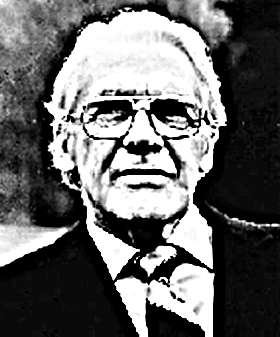
Leonard RavenhillMatt Self over at The Gad(d)about, besides having the common sense to pick drums over all other musical instruments, also has the brains to quote Leonard Ravenhill. Good for Matt. The American Church needs to hear more Ravenhill.

If you haven’t been around Cerulean Sanctum very long, you’ll get to know Ravenhill soon enough. He and A.W. Tozer are the “patron saints” of this blog. No one in the last century wrote blistering words like Tozer and no one preached with more fire than Ravenhill. That they were friends in real life is the icing on the cake.

I don’t do a lot of imploring on this blog, but if you’ve never heard Ravenhill preach, I implore you to go to SermonIndex.net and check out the Ravenhill section at this link (with videos at this link).

Ravenhill was more than a preacher, though; he may have been the last true English-speaking revivalist with roots that went back to the Welsh Revival. He passed away in 1994, and one of the greatest losses in my own life is that I mismarked a calendar and missed him preaching at a local church. He passed away not too long afterward.

Yet he lives on in his teaching tapes, and most of them are incendiary. Not only did Ravenhill handle the Scriptures in a way unmatched today, but he could draw parallels and bring two disparate Biblical concepts together like no other preacher I’ve ever heard. He not only knew the ins and outs of the Bible, but hundreds of hymns, too. Best of all, he had a solid understanding of how the charismata work today. He was the total package. Listening to him is so convicting I find it hard not to keep from rending my clothes and pouring ashes on myself. If you want to know that “Sinners in the Hands of an Angry God” may have sounded like to Jonathan Edwards’ listeners, check out few of the highest-rated Ravenhill sermons on SermonIndex.net, especially those before he was slowed by a stroke in the mid-1980s.

God knows that we need another like him to rouse the Church in 2006.

And though it’s a shame to limit the breadth of Leonard Ravenhill’s wisdom to a few zingers, I’ll end with some of his more pithy statements:

The only time you can really say that ‘Christ is all I need’ is when Christ is all you have.

If Jesus had preached the same message that ministers preach today, He would never have been crucified.

A popular evangelist reaches your emotions. A true prophet reaches your conscience.

The last words of Jesus to the church (in Revelation) were ‘Repent!’

A true shepherd leads the way. He does not merely point the way.

Your doctrine can be as straight as a gun barrel…and just as empty!

John the Baptist never performed any miracles; yet, he was greater than any of the Old Testament prophets.

I doubt that more than two percent of professing Christians in the United States are truly born again.

Our God is a consuming fire. He consumes pride, lust, materialism, and other sin.

There are only two kinds of persons: those dead in sin and those dead to sin.

[Concerning the darkness that has enveloped most of Christendom:] When you’re sitting in a dark room, you can either sit and curse the darkness, or you can light a candle.

Children can tell you what Channel 7 says, but not what Matthew 7 says.

Some women will spend 30 minutes to an hour preparing for church externally (putting on special clothes and makeup, etc.). What would happen if we all spent the same amount of time preparing internally for church, with prayer and meditation?

Maturity comes from obedience, not necessarily from age.

What good does it do to speak in tongues on Sunday if you have been using your tongue during the week to curse and gossip?

The Bible is either absolute or it’s obsolete.

Why do we expect to be better treated in this world than Jesus was?

Today’s church wants to be raptured from responsibility.

Testimonies are wonderful. But so often our lives don’t fit our testimonies.

[Concerning one of the new movements in the church that was causing a stir among Christians:] There’s also a stir when the circus comes to town.

My main ambition in life is to be on the Devil’s most wanted list.

You can’t develop character by reading books. You develop it from conflict.

When there’s something in the Bible that churches don’t like, they call it ‘legalism.’

We can’t serve God by proxy.

We must do what we can do for God before He will give us the power to do what we can’t do.

There’s a difference between changing your opinion and changing your lifestyle.

Our seminaries today are turning out dead men.

How can you pull down strongholds of Satan if you don’t even have the strength to turn off your TV?

Everyone recognizes that Stephen was Spirit-filled when he was performing wonders. Yet, he was just as Spirit-filled when he was being stoned to death.

If a Christian is not having tribulation in the world, there’s something wrong!

[Concerning the fixation that today’s church has with numbers, with growth at any price:] The church has paid a terrible price for statistics!

Any method of evangelism will work if God is in it.

Church unity comes from corporate humility.

You can have all of your doctrines right, yet still not have the presence of God.

Many pastors criticize me for taking the Gospel so seriously. But do they really think that on Judgment Day Christ will chastise me, saying, ‘Leonard, you took Me too seriously’?

You can know a lot about the atonement and yet receive no benefit from it.

If the whole church goes off into deception, that will in no way excuse us for not following Christ.

You never have to advertise a fire. Everyone comes running when there’s a fire. Likewise, if your church is on fire, you will not have to advertise it. The community will already know it.