

Why America Is No Longer Great

Standard

When you write a published title to anything and call it “Why America Is No Longer Great,” you must establish a baseline for greatness in a nation. Most Americans today have in their minds a vague concept of what greatness looks like. As someone nearly a half century old, the image I envision mirrors that of the old Ronald Reagan “Morning in America” ad, considered by many to be the finest political ad ever created—though I admit that recalling ads is perhaps a sign of the greater problem.

Fact is, there are no inherently great nations. A nation is nothing more than a collection of people and their work and ideas.  So it’s the people who must be of some Olympian caliber if we are to test the definitions and say that a nation is great.

But then, defining a nation as great by claiming its people must be is something of a bait and switch. People, in and of themselves, are not great. No inherent greatness exists in fallen men and women.

Fact #2: Only God is great. To the extent that people reflect God’s greatness, will they be great, and subsequently their nation.

All greatness comes from God. Period.

This past week, we watched a major political party suffer a seizure over the omission and re-addition of a lone reference to God in the party platform. In addition, many in that party could not see fit to acknowledge the spiritual home of two major religions. That party’s whitewashed faith statement reads like something espousing liberal use of a rabbit’s foot, four-leaf-clover, and upright horseshoe.

The opposing party, on the other hand, refers to God often. That said, it’s hard to escape the feeling that the party does so in the same manner that a pimply-faced teen guy drops mention that he and the high school’s much-admired football QB are chums, the trolling for chicks barely contained and obvious. One thinks that for all the talk of faith by that other party, a quick drain of the trust fund would reduce that faith to zero.

Changed in 1956 from E Pluribus Unum, the official motto of the United States of America is In God We Trust. You wouldn’t know it from the character of Americans today though. Sure, we talk a great deal about God, but the nature of Americans as practicing God-fearers that so impressed visiting Europeans in the early 19th century is largely vapor today. Instead, we seem to be obsessed with a thousand petty ideals that have as much to do with God as ichthyology has to do with cyclery. I would suspect that a contemporary visit from de Tocqueville would elicit an astonished “What the hell happened?”—though in the French equivalent, of course.

Maybe hell IS what happened.

The truth is simple: Because we Americans are no longer a God-fearing people, we don’t reflect God’s greatness as we should. Therefore, we, as a people, are no longer great. And neither is our nation.

Do any great nations exist? By the definition I offer, probably not. I say probably because the concentration of truly God-fearing people on this planet seems to be shifting to the East. One could make a case for South Korea. Oddly, at least to most Americans, China is emerging as a land of great faith, with its revival-fueled churches.

And yet, even in the nations of the East, one can see the rot that infected the heart of America taking root. Materialism and self-centeredness are growing at a frightening rate, as America foists its fallen ideals on other parts of the world.

Because we once understood that God alone is great, Americans once reflected greatness. And because the people mirrored greatness, so did America the Nation.

I wish I could say that America was still great. Perhaps our nation can be again. But that will happen only if We The People turn, with all humility, back to God.
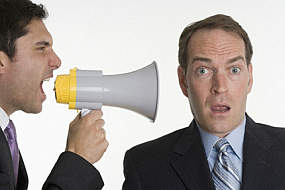
The Gong Show–Or When We Christians Don’t Have Enough Sense to Stifle It

Standard

I don’t blog as much as I used to. Part of that is because life intrudes more than it once did and age is proving me less adequate to the task of addressing all those intrusions.

But there is another reason: I simply don’t have as much to say. Past posts have addressed—and sometimes even well—the thoughts I felt the Lord wanted me to share. Nowadays, I don’t have that same spiritual prompting to opine on the latest scandal, lack, or cultural sickness.

Most of this increased silence has come about through wisdom. I’ve been more chastened by the vicissitudes of life and by the Lord’s discipline. The angry, young prophet isn’t as angry as he once was. If anything, I feel more compassion for people. They really are, for the most part, sheep without a shepherd.

Still, the Godblogosphere is filled with the opinionated. Amplified YammeringIt’s a sad commentary on our age, but it’s the highly opinionated who get the most site hits. Some writers feel they must contribute their thoughts daily to keep faithful followers faithful and ensure the meager revenue stream keeps flowing. Recently, a well-known Christian blogger felt obligated to opine on the legacy of the not-quite-at-room-temperature-yet Chuck Colson.

I say “had to” because one got the sense that the blogger was struggling with the entire commentary. I suspect that was for a good reason. The resulting blowback wasn’t pretty.

Jesus says this:

“Truly, truly, I say to you, the Son can do nothing of his own accord, but only what he sees the Father doing. For whatever the Father does, that the Son does likewise.”
—John 5:19 ESV

I’ve written in the past about the most neglected verses of the Bible (here, here, and probably elsewhere too),  but the above verse is certainly one of the most ignored, particularly in application in the lives of Christians.

The reality of Christianity that sets it apart from all other religions is the inner presence of the Holy Spirit. Christians are to be supernatural people led daily by God, who dwells inside of them, guiding, empowering, and sealing for Heaven.

What should then distinguish the Christian from all other people on earth is the Christian, when confronted with addressing a spiritual need, speaks only what the Spirit says and only when the Spirit says it.

If this is critical to walking in true faith and in proper practice, how is it then that so few Christians ever learn to listen to the Spirit?

As it applies to this topic of speaking/writing, is the Holy Spirit always asking us to comment on this or that? Or is He more often silent (in which case we should be silent as well)?

It is not by coincidence that the Spirit chose the following as the opening of a certain line of thinking by Paul:

If I speak in the tongues of men and of angels, but have not love, I am a noisy gong or a clanging cymbal.
—1 Corinthians 13:1 ESV

I believe with my whole heart that the key to being a Christian in 2012 is to do only what the Holy Spirit reveals the Father is doing. This applies to our commentary on life as well. Then we can be assured that what we say is from God and is fittingly gracious.

The plague of the Western Church today is too much talk and not enough walk. We seem to lack even the common sense of pagans when it comes to shutting our traps for a moment. Instead, we feel driven to pontificate on this topic and that. Given how poor much of that pontificating is, I suspect the Holy Spirit has little to do with inspiring it and much more our own inflated sense of importance.

Various Spring Thursday Musings

Standard

A variety of thoughts on this sunny April Thursday:

+ I was thinking how power is the modern equivalent of will. We want to have power over all aspects of our lives, with powerlessness one of the most hated of all hateful ideas. But if we take Christ’s “not my will, but yours, be done” and do the word swap, how would it impact the way we live? What does it mean to surrender power to a higher authority in a society where individualism reigns and each person demands the right to control his or her life?

+ In keeping with that thought, whatever happened in the Church to the concept of corporate sin? And how are we worse off for its loss?

+ There is something odd happening in the Church when thousands (or even millions) of American Christians are lamenting Rick Santorum’s leaving the presidential race. A few months ago, not one person was clamoring for Santorum to be president, and yet when it appears he will not be, people are disappointed. As for Mitt Romney, one can say the same thing. I mean, who was screaming for him to occupy the White House? All this becomes even more puzzling when one considers my previous thoughts on power.

+ Not a day goes by when I don’t consider that the general emotional outlook of this country is nowhere near as healthy as it was when I was younger. Yes, yes, yes, “the olden days were better” someone will quote at me with a wink, but still.

+ I get the feeling also that in the rush to be good Christians, we have forgotten Jesus.

+ Now that everyone is on Facebook (and a few lonely souls inhabit Google +), can any of us say our interpersonal relationships are better?

+ Along those lines, the last of my small groups stopped meeting. I used to be part of four or five at a time. Now, none. That makes me sad. Looks like I’ll be bowling alone.

+ So far, 2012 has been a lovely year weatherwise. But here in SW Ohio, we were in the 80s in February, 70s in March, and now 60s in April. Should we expect snow in July?

+ Why is it that so few people seem to be able to commit to anything anymore? What happened to a person’s word? Does that concept mean anything today?

+ It’s sad, but the people who seem to do the most Bible study are often the ones who miss the most obvious portions of the Bible. Or they try like the dickens to explain away the hard parts (or the parts they are failing to live up to) by going all systematic theology on us. Anymore, I don’t have a lot of interest in what the self-labeled scholars are saying. And when someone recommends a recently written book on Christian subjects, my reaction is meh, since I rarely read any that make any astute points that challenge the status quo (or they fail to provide workable solutions when they do post a challenge). In short, people just aren’t using Holy Spirit sense, which is the only kind of spiritual insight that matters.

+ Right now, Alan Knox at The Assembling of the Church is writing one of the best Christian blogs on the Internet. He should be a regular read for everyone, because he is not afraid to touch verboten subjects and question the crazy way we Christians practice the Faith.

+ At The Voice of One Crying Out in Suburbia, Arthur Sido is regularly writing some insightful posts in the same vein as Knox’s.