At a time of the year when Americans lose their collective minds and buy throwaway gifts for senseless reasons, the Scriptures say this:
And behold, a man came up to him, saying, “Teacher, what good deed must I do to have eternal life?” And he said to him, “Why do you ask me about what is good? There is only one who is good. If you would enter life, keep the commandments.” He said to him, “Which ones?” And Jesus said, “You shall not murder, You shall not commit adultery, You shall not steal, You shall not bear false witness, Honor your father and mother, and, You shall love your neighbor as yourself.” The young man said to him, “All these I have kept. What do I still lack?” Jesus said to him, “If you would be perfect, go, sell what you possess and give to the poor, and you will have treasure in heaven; and come, follow me.” When the young man heard this he went away sorrowful, for he had great possessions. And Jesus said to his disciples, “Truly, I say to you, only with difficulty will a rich person enter the kingdom of heaven. Again I tell you, it is easier for a camel to go through the eye of a needle than for a rich person to enter the kingdom of God.”
—Matthew 19:16-24
At the risk of being accused of blasphemy, I’m going to say that the above passage is a nonstarter for most Christians, especially in America. 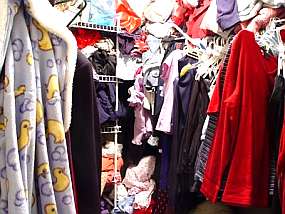 We’ve heard it so often that it simply drains out of ears before it reaches our souls. We don’t think we’re rich, nor do we believe that our possessions own us. And we certainly don’t ponder for one moment that Jesus is speaking to us in his address to the rich, young ruler.
Despite the fact that there’s probably not a person reading this post who is not among the world’s top 5 percent in wealth, most of us don’t consider ourselves rich. The inequitable percentage of the world’s goods that Americans consume compared to the size of our population is just another example of damnable statistics. We read Ron Sider’s Rich Christians in an Age of Hunger, and though it tugs at our heartstrings, we feel it would best challenge someone richer than you or I.
Fine. I realize this issue is a nonstarter.
But the Bible says this, too:
And this gospel of the kingdom will be proclaimed throughout the whole world as a testimony to all nations, and then the end will come. “So when you see the abomination of desolation spoken of by the prophet Daniel, standing in the holy place (let the reader understand), then let those who are in Judea flee to the mountains. Let the one who is on the housetop not go down to take what is in his house, and let the one who is in the field not turn back to take his cloak….”
—Matthew 24:14-18
Any warning from Jesus is worth heeding. His words are truth and life.
Now I’m sure the preterists out there will take issue with any contemporary usage I attempt to draw from this passage, but I’m ignoring them. When I read this passage out of Matthew I see an underlying truth: Jesus wants us to live lightly. In other words, you and I need to be nimble.
But when I look at most Christians today, we are anything but nimble. We’re the slowpokes in DeMille’s The Ten Commandments, dragging out of Egypt an oxless oxcart cart bulging with every last good we own, even as the Red Sea threatens to collapse on Pharaoh’s army nipping at our heels.
The average Christian household today is a massive burden. And it is so because we bury ourselves under stuff. We live in too-big houses filled to the rafters with ten of everything. (Even as I type, a basket near my desk overflows with a dozen highlighters. Don’t ask me why.)
And it’s not just simple stuff like highlighters, but racks and racks of clothing and shoes. We buy bookcase after bookcase to store books we no longer read or reference. Stuff accumulates to the point that we can’t find room to live amidst it all. We created the storage industry so that even in a tiny town like mine, they keep building more and more places to store people’s stuff. {Insert classic George Carlin standup routine here.}
That tendency to keep our overflow stored in larger and larger spaces was addressed by Jesus:
And he said to them, “Take care, and be on your guard against all covetousness, for one’s life does not consist in the abundance of his possessions.” And he told them a parable, saying, “The land of a rich man produced plentifully, and he thought to himself, ‘What shall I do, for I have nowhere to store my crops?’ And he said, ‘I will do this: I will tear down my barns and build larger ones, and there I will store all my grain and my goods. And I will say to my soul, Soul, you have ample goods laid up for many years; relax, eat, drink, be merry.’ But God said to him, ‘Fool! This night your soul is required of you, and the things you have prepared, whose will they be?’ So is the one who lays up treasure for himself and is not rich toward God.”
—Luke 12:15-21
If the state of the American Church is any indicator, we are rich in stuff and not rich toward God. Yes, God was the one who gave that rich man all that bounty. It’s what the man did with it that condemned him. We must never forget this.
For this series, I started with this issue rather than saying we must seek Jesus first because sometimes you have to clear the room of the giant pink-polka-dotted elephant before one can see anything else. And our excess in America is one honkin’ big pachyderm. I heard on NPR this weekend that sales of goods to WalMart alone accounts for 15 percent of China’s entire GNP. Whether that figure is true or not, it’s scary because we all know that it may very well be true.
This year has been a time of God telling me that we have got to lighten the load. In truth, you and I are beholden to what we own. We cannot live in the nimble way demanded by the Gospel. We are not prepared to get up and go when God tells us to. Because we live in America, our hearts are divided between the Lord and our possessions, no matter how much we protest.
If we want to fix Christianity in America, we Christians MUST lighten our loads.
A baker’s dozen practical actions to consider:
1. Stop buying more stuff. Just stop. You and I don’t need more stuff, period. Especially electronic gizmos. I am constantly amazed at the Christians online who have gone through multiple generations of cellphones, iPods, and laptops. Why? The number of Christian blogs where the blogger comments, “I just replaced my old _______ with the latest one,” is staggering. What’s more staggering is that the thing replaced is often only a couple years old. And nine times out of ten, the thing replaced is not something anyone needs to live. Yet somehow that thing just had to be replaced. Our parents got by without cellphones, so why do our kids each need one? You grew up okay, right? Let the Bible dictate how we live, not a Verizon commercial.
2. Use items till they wear out. The shoes I’m wearing are eight years old. My best dress shoes are 22 years old. My favorite pair of slacks was 15 years old before the vacuum cleaner accidentally ate them. I’d say the average age of items in my closet is 11 years old. And in my garage sits the soon-to-be 17-year-old truck. Meanwhile, I’m writing this on an 8-year-old computer—yeah, ancient.
Christians are called to be frugal and wise, not the leaders in fashion. We’re not supposed to listen to the world’s siren call. If our stuff is old, that’s fine. If that means people don’t like us because we’re not hip, that’s their problem. (And no crying about having to be hip to evangelize people, either. The Holy Spirit is the same yesterday, today, and forever, so He doesn’t need your Prada bag to reach your girlfriends.) God looks on the heart, not the label of your brand new Armani jacket.
3. Reevaluate what items we truly need to live. Start asking why we need this or that “essential” item. Instead of always plotting what we might gain from purchasing an item, let’s consider what we might lose instead. Honestly, with all too many “essentials” today, the loss is greater than the gain. We end up working longer and harder to afford the essentials billed to us “timesavers.” How stupid! And often, the item we think of as essential interferes with building community between ourselves and other people. In the end, the item we can’t do without may very well drag us down
4. Find other ways to access desirable items without buying them and holding on to them. For instance, must we buy the latest Christian book? Or can we order any book we want to read from our local libraries through interlibrary loans? I know that my little rural library has pulled books for me to read from seminaries and Bible colleges all over the country. I read them, absorb what I can, and then I put into practice what I can. If I can’t put into practice what I read right after I read it, why would I think that having it on my bookshelf (a bookshelf I had to buy, mind you) would make any difference?
Can a highly desirable item be shared with others outside our immediate family? It bothers me that so few Christians entertain that thought—or reject it as “socialism” or an impediment to their right to consume whatever they wish whenever they wish it. If we did learn how to share better, all of us would be beholden to a lot less stuff. We could work less (since we wouldn’t need to make as much money), devote more time to the Lord’s work, learn lessons in Christian community, and enjoy simpler lives.
5. Say no to redundancy. We own duplicates of so many things. It’s as if we’re always in Plan B mode, afraid that God won’t provide for us should our only set or lone item go on the fritz. I know one Christian blog that discusses Bibles, where readers often show off their massive stacks of leather Bibles, each costing $50 or more. I don’t understand why, especially when believers around the world are crying for Bibles yet cannot afford to own one. (I know this is especially true in China.) I know that we own four different sets of plates. Some of those were inherited, but it still does not make much sense to own that many. When some people have none, why do we have multiples?
Our tendency toward redundancy also means that we are more likely to buy a number of cheap items that will not last rather than one of an expensive item that will. We need to reward quality, even it means owning less of a quality item. (See also #7.)
6. Learn generosity. The generous person cannot be owned by things. Period.
7. When we divest, give to the genuinely poor in a way that builds the Kingdom. Jesus asked the rich young ruler to divest himself of most everything he owned and give the money to the poor. If we sold just our excess alone, I think it would go a long way. That’s how rich we are.
When we choose to sell our excess or to donate items, we should find ways to invest it in the Kingdom. Rather than simply dump items at the Goodwill or the Salvation Army stores, I believe it would be more Kingdom-minded if we were to find on our own a family in need that we could support, and in more ways than just handing over money or our excess goods. We should instead befriend the folks in that family and work to help them get out of the poverty trap. We should make certain they know about Jesus, and not just by sharing the Gospel in words. Growing up, I remember that many churches adopted Vietnamese refugee families, but today we do little of that same work for the poor among us. That needs to improve.
8. When we must buy, choose high-quality items from local craftsmen. I am wholly convinced that living simply is not just living with less but owning items that are better built and crafted. So little of what we own today will ever be classified as antiques because it won’t survive. It’s artless, cheap junk. I purchased what I thought were quality oak chairs a few years ago to replace the broken chairs at our kitchen table, only later to realize the new chairs came from China. Ten years later, none survive intact. Contrast this with the Ethan Allen chair I’m sitting on as I write this. My parents bought it for me when I was 11.
While I am certain everyone reading this will provide an exception, I believe that local craftsmen are more likely to produce goods that last than the garbage coming out of China that we so readily consider “a deal.” In addition, buying locally made goods supports the local community and allows us the blessing of knowing the very people who make the goods we own, building relationships. It keeps money local, too, and resists the multinationals, who drive consumption, greed, fear, and envy.
9. Leave the Joneses to the Joneses. Keeping up with them will only keep us away from the Kingdom of God. They’re building their own worldly kingdoms that will perish. Our aim as Christians is to build an imperishable one. So don’t just give that ideal lip service; live it. If people think less of us for failing to keep up, that’s their problem. If we are still trying to please men, then we should not be servants of Christ. Because in the end, Christ’s view of us is all that matters.
10. Don’t judge other people by their possessions. Those who attempt to live simply err when we judge others for what they own. This traps so many Christians. But we must remember that simplicity takes many forms, and just because someone drives a BMW tells you nothing about how they acquired it or how long they expect to drive it. If a $50,000 car lasts for 25 years while a $25,000 car lasts for only 10, then the pricier car may be worth it. My own closet is filled with clothing from L.L. Bean, not a cheap retailer, but I acquired it mostly through gift certificates gained through promotional programs, meaning I paid about $75 for what amounts to $1,000+ of clothing. The designer dress the fashion plate at church wears may have been purchased from a consignment shop or from the racks of Goodwill. We just don’t know.
As Christians, we are to mind our own households and let others mind theirs. So rather than peeking over the fence at the next guy’s fancy stuff, let us ensure that we are doing all we can to live simply ourselves. God will certainly deal with the other guy in His own way and time.
11. Consider downsizing the house. Our houses are too big. Because nature abhors a vacuum, and so do we, we proceed to fill those homes with all manner of stuff we don’t really need. Stuff that costs money to repair and maintain. Stuff that ultimately drains us and imprisons us.
Some are learning in this economy that they overbought their house. That’s a hard lesson that no one wants to learn. Truth is, we all may. I suspect that most of us live in houses that are more than we can afford or maintain. We must remember that choosing to be being downwardly mobile is not a negative, especially if it makes us more like Jesus.
12. Get in the prayer closet and get real with God about this issue. Ask God for insights by the Spirit as to what is won or lost by the possessions we own or intend to buy. Ask God for a discerning mind that will not cave to Madison Avenue. Ask to be made poorer in goods so that we may be richer in spirit. Ask for an attitude of gratitude. Ask for humility. Ask for a heart that is undivided. Ask to be made more like Jesus.
Most of all, we must pray for our children. They are the ones most easily enslaved by the world’s idea of wealth. Any plan of simplicity we undertake as families will be least understood by our children, as it means they will have less than their peers. I guarantee, even if they are born again, children will not grasp the benefits of simplicity if it means they must do without the latest hot item that their peers, even their church peers, own. We must also prepare for the incidentals of simplicity with our children. Case in point, a child without a cellphone will suffer socially if his or her peers all own one. The ramifications of simplicity and its impact on our children is one of the greatest battles we will fight to keep from being owned by the world’s systems. The promise is that a child raised in the way of simplicity will better cope with loss (and gain), will more greatly appreciate Christian community, and will find the narrow path that avoids the world’s highway to destruction.
13. Be grateful to God and rely on His provision alone. The bedrock underlying consumerism in the United States consists of greed, fear, and envy. See any positives in those three?
As Christians, those three sins must become increasingly foreign to us. Yet we work so hard to ensure that the very spiritual transformation God desires of us when it comes to those sins is thwarted by our confidence in our own selves to provide.
If anything, this economic collapse must teach us that none of us is that innately powerful to keep the entire world at bay by creating our own home fortress. Even the most controlling people suffer loss. Better that we learn gratefulness for even the smallest thing. Better that we learn to pray “give us this day our daily bread.” Grateful people who lean on God for His provision can never truly suffer loss.
More than ever, the call to Christians everywhere is to learn to live with less, to be more generous to the poor, to consider how living with less builds community with other believers, and to rely on God alone for our provision.
May we do more than listen.

 High in the hollers of ’50s-era Kentucky, God’s grace rains down on a team of boys and one determined coach in an Appalachian school destined for destruction. In Mountain Reign, author Joseph Lacy blends the best of sports fiction with a touch of the divine as he follows the hardcourt exploits of roundballers who don’t know when they’re outgunned.