
Stupid Hymn Tricks

Standard

Always on the lookout for God-centric music that is intelligent and beautiful, I encountered a song a few weeks back that reminded me of hymns gone by. The melody was easily sung and the lyrics that I caught on first hearing were great.

Or so I thought.

The song in question is Fernando Ortega's "Our Great God" as performed with Mac Powell off the City on a Hill—Alleluia CD. Beautiful song and very hymn-like. HymnalThe chord transitions from major to minor keys are lovely and the production on the CD is exquisite. Best of all, because the phrasing is simple and the meter consistent, it is easy to sing, unlike many of today's recent worship music offerings. And the tune is so adaptable that you could sing a thousand other old hymns to it, including "Amazing Grace."
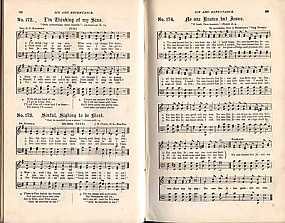
Here's the first line:

Eternal God unchanging, mysterious and unknown

  • God is eternal—check
  • God is unchanging—check
  • God is mysterious— (to the extent that His thoughts are higher than ours and His ways are sometimes hard to understand) check
  • God is unknown—Uh oh

I guess no one checked with the Bible on that last one:

So Paul, standing in the midst of the Areopagus, said: "Men of Athens, I perceive that in every way you are very religious. For as I passed along and observed the objects of your worship, I found also an altar with this inscription, 'To the unknown god.' What therefore you worship as unknown, this I proclaim to you. The God who made the world and everything in it, being Lord of heaven and earth, does not live in temples made by man, nor is he served by human hands, as though he needed anything, since he himself gives to all mankind life and breath and everything. And he made from one man every nation of mankind to live on all the face of the earth, having determined allotted periods and the boundaries of their dwelling place, that they should seek God, in the hope that they might feel their way toward him and find him. Yet he is actually not far from each one of us, for "'In him we live and move and have our being'; as even some of your own poets have said, "'For we are indeed his offspring.' Being then God's offspring, we ought not to think that the divine being is like gold or silver or stone, an image formed by the art and imagination of man. The times of ignorance God overlooked, but now he commands all people everywhere to repent, because he has fixed a day on which he will judge the world in righteousness by a man whom he has appointed; and of this he has given assurance to all by raising him from the dead."
—Acts 17:22-31 ESV

The true light, which enlightens everyone, was coming into the world. He was in the world, and the world was made through him, yet the world did not know him. He came to his own, and his own people did not receive him. But to all who did receive him, who believed in his name, he gave the right to become children of God, who were born, not of blood nor of the will of the flesh nor of the will of man, but of God. And the Word became flesh and dwelt among us, and we have seen his glory, glory as of the only Son from the Father, full of grace and truth. (John bore witness about him, and cried out, "This was he of whom I said, 'He who comes after me ranks before me, because he was before me.'") And from his fullness we have all received, grace upon grace. For the law was given through Moses; grace and truth came through Jesus Christ. No one has ever seen God; the only God, who is at the Father's side, he has made him known.
—John 1:9-18 ESV

But, as it is written, "What no eye has seen, nor ear heard, nor the heart of man imagined, what God has prepared for those who love him"— these things God has revealed to us through the Spirit. For the Spirit searches everything, even the depths of God.
—1 Corinthians 2:9-10 ESV

Thomas said to him, "Lord, we do not know where you are going. How can we know the way?" Jesus said to him, "I am the way, and the truth, and the life. No one comes to the Father except through me. If you had known me, you would have known my Father also. From now on you do know him and have seen him." Philip said to him, "Lord, show us the Father, and it is enough for us." Jesus said to him, "Have I been with you so long, and you still do not know me, Philip? Whoever has seen me has seen the Father. How can you say, 'Show us the Father'? Do you not believe that I am in the Father and the Father is in me? The words that I say to you I do not speak on my own authority, but the Father who dwells in me does his works.
—John 14:5-10 ESV

God is NOT unknown. He has been revealed. This is one of the distinguishing marks of the Christian faith: God is knowable through the Person of Jesus Christ. What we have in this song is rank postmodernism raising its ugly head. It's that attempt to sound religious by saying God is lurking on the outskirts of the universe, inscrutably doing whatever it is an inscrutable god does.

Jesus said that God is knowable because He (Jesus) is knowable, having revealed God in His very Person. Paul clearly addresses the "unknown god" fallacy, though, saying that while some may worship unknown gods, Christians do not. John writes that Jesus Christ made God known.

Now I'm not so charged by this song. The "unknown" lyric also reveals that the intention of the "mysterious" is not so much to say that God is higher than us, but to shroud Him in fog. It sounds like a vain attempt to restore the veil in the temple.

I don't want anyone in my church singing that God is unknown, so I guess "Our Great God" is out. Too bad.

How's about it folks; what songs or hymns out there strike you as being doctrinally suspect? Your comments are most welcome!
Hidden Messages of American Christianity: “Pastor O’Gill and the Little People”

Standard

Pastor O'Gill and the Little PeopleThis is the fourth in a series of posts covering the hidden messages that sneak into American churches’ proclamation of the Gospel. For more background, please refer to this post.
Ugh. Yeah, that title’s a woefully forced play on the old Disney flick about leprechauns. Hey, I can’t be a fount of creative wit every day, right?

Some “little people” who came out in droves when I asked for a suggestion of other hidden messages in American Christianity. Oddly enough, they were the least likely people to shout out a suggestion, but shout they did. In fact, I was afraid that if I did not post concerning their plight, I might be beaten to death by a shillelagh.

I’m not sure I can quote a Scriptural passage detailing the necessity of introverts for the Church, but neither can I make much case for all the raging extroverts who occupy just about every position of prominence in many churches.

There’s no doubt that I’m a raging extrovert. For most of my life I was deemed “intimidating”: 6’4″ 215 lbs, “Boeing 747 at takeoff” in vocal decibel strength (and nearly as constant as the traffic on Runway #2 at San Francisco International), and an “Oh yeah? Prove it!” kind of attitude. Got something to say that everyone wants said, but no one’s got the testosterone to say it? Ask Dan; he’ll say anything. In fact, we can’t shut the guy up. (Please, someone, anyone, find his off switch! We’re begging!) Now that I’ve crossed forty, I finally learned my lesson. Now I try to listen at least as well as I yammer. Nor does the limelight offer the same temptation it once did.

To the average introverted person, though, Dan circa 1985 was either the kiss of death or an object of awe—in the same way that the Space Shuttle Challenger explosion or an attack of flesh-eating bacteria inspires horrifying, sickening awe. “I…can’t…look…away! And the goggles, they do nothing!” What does this have to do with hidden messages in American Christianity? Well, here’s an exchange that actually occurred recently (in HEAVY paraphrase):

Dan: Some people are intimidated when they walk into a church. And even when they’ve grown accustomed to it, you still need to personally ask them to volunteer for things.

Extrovert #1: Preposterous! Why, no one has to ask me to do anything—I’m just there. And nine times out of ten, I’m leading the whole shebang! Why when I was in Desert Storm—

Extrovert #2 (loudly inserting a word edgewise): Well, in the thirty years I’ve been a member of this church—and that was before any of you were here, I might add—I’ve never heard such a thing!

Introvert #1 (taking his life in his hands): Uh, if I may interrupt, the reason you’ve never heard such a thing is that you’re always talking.

Introvert #2: {Silent nodding.}

Talk to any expert on this subject and they’ll tell you that America is the most extroverted country in the world and the complete converse of the rest of the world. We’re about 75% extroverts and 25% introverts. I think only the Australians approach that level of in-your-faceness.

There are plenty of sources out there that claim that the American church is increasingly becoming Hollywood-lite, a non-stop exercise in entertainment, but this is not the place for me to go down that path. All I can add is that as the need to make ourselves (supposedly) appealing to the world increases, our level of extroversion increases proportionately. A spectacle then, by definition, must be an expression of unrestrained extroversion. Is it any wonder then that today’s churches are noted for their stages rather than their altars?

When Pastor O’Gill stands up and tells the congregation to “Meet and greet your neighbor” or to “Pass the peace,” I’m certain a few hardcore introverts are wondering if they’re lucky enough to be in a church that has one of those “defibrillators for dummies” that are cropping up here and there. Worse yet, be the introverted visitors who are asked to stand up and introduce themselves to the gawk-eyed regulars! O’Gill then offers that church life revolves around small groups where real sharing (an introvert’s worst nightmare) occurs. And lastly, one of the worship committee gets up to say that there’s a lack of Scripture readers who can be called upon at a moment’s notice to read the weekly passages during the service. Oh, thank goodness. All the extroverts raised their hands—another bullet dodged.

(Megachurches are an odd thing for introverts, though. So big that the agoraphobia kicks in or so big that one can get lost in the crowd, get in and get out, with no one hurt? No way to tell. Maybe a little of both.)

Still, somewhere between the blare of a John Eldredge-inspired movie clip on the massive stage-flanking screens and the plethora of people clapping and raising their hands up for God (and everyone else) to see, introverts have got to be wondering if the message of the Church is “Next week, we’re gonna make you dance in the aisles, too.” And this is an Episcopal church!

Yeah, the tone of this post is a little lighter, but that’s only because I’m coming from that grossly overcompensated for extroverted side of the church. I can live in that world, though the spectacle of it sometimes makes even me a little queasy. Yet no matter how you look at it, nearly everything the Church does in 2005 is geared to people who talk first and ask questions later. Quiet is anathema in our sanctuaries on Sunday, as if reflection before the Lord is a diabolical plot hatched up by monks—Roman Catholic monks.

Not all people do relational well. While women outperform on the interpersonal side of things—the side that points to some level of extroversion—men don’t like all that hugging and chatting. When we see that churches today are about 62/38 female to male with that ratio growing more disproportionate, could it have something to do with the fact that extroversion and feelings are hailed by the American Church of 2005 while introversion and thinking are dwindling away in the message? In addition, the extroverted, anti-intellectual way we conduct many of our churches may be contributing to the dearth of Christian intellectuals today (who are typically men whether we like it or not.)

Let’s look at this another way. What’s the scariest possible Christian church denomination for an introvert? Pentecostals. Most comfortable is an old school Presbyterian or Episcopal church. To an introvert, there’s probably people ready to speak in tongues or hankering to jump a pew in that Pentecostal frenzy, whereas in the Episcopal church they may even let you sit in the narthex instead of the sanctuary if you ask meekly enough. Yet what is the trend in many of those old school churches? Well, no worse words could be heard than the pastor proclaiming from the pulpit, “Next week we begin our new contemporary praise and worship service. We permit you to raise your in hands worship, too.” Where can a true introvert go?

I hear the Orthodox Church is growing….

In all seriousness, while the message may be that we want all people to join in the community of saints, our delivery, and the message we’re proclaiming—even if we say it nicely—is that only extroverts need apply. We don’t know how to reach the introverts in our churches. We may have droned on so long that they may actually have had something to say that is vitally important to the health and welfare of the congregation, but we missed it amid the noise.

I’m not an introvert. I understand, however, that some of the pillars of our churches are those people who serve unseen. They’re not the glamour boys who hog the spiritual spotlight, but they’re the old men who have an intercessory prayer ministry only they know about, a ministry that has prayed over every person in the church at least once. They’re the folks who may be the only one sitting at the hospital bed, lending quiet comfort to the ill. No one notices them come in or leave, but they were there. Perhaps they, too, prayed powerful prayers that shook the gates of heaven.

We extroverts, the majority, are sending the wrong message in the church to people who are introverts. We need to step back and see if there are betters means for incorporating the types of spiritual exercises that appeal to introverts. We have to understand how the ways in which introverts can minister can benefit us all in the Church. We may have to stop assuming that because we gave a blanket greeting to a small collection of people on Sunday, we sufficiently greeted the introverts. We need to stop talking for a second and start listening. God sometimes speaks in whispers, so even He has an introverted side, too.

As much as this post has been a defense of introverts and the necessary ministry they bring, as an extrovert I must ask this of introverts: Meet us halfway. We’ll promise to tone down the frantic extroverted message we’re shilling if you’re willing to understand that community only works if you’re actively involved in the life of the church on all levels.

Deal?

That Strong Hand

Standard

This is a break from the “Hidden Messages of American Christianity” series.

I’m at that age where I think about mortality more readily. There’s something about reaching your forties that the aura of invincibility has totally worn off. I turned 43 a few weeks ago and my middle brother joins me in that fifth decade this weekend.

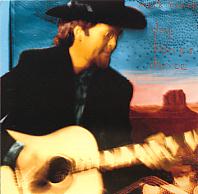
I seem to like a lot of dead authors and musicians, especially those that shuffled off this mortal coil before their time. Keith Green has long occupied my pantheon of greats, Rich Mullins and I attended the same church for a while, and Mark Heard penned the one Christian song that I wish I had written. Dry Bones DanceGreen never made it to 30 and Mullins and Heard were barely into their 40s.

After a long while searching for a pristine example of Heard’s Dry Bones Dance, I was able to find an unopened copy. Evidently it’s in print again—lucky me. This makes the second CD I’ve purchased in the last three years. (Note to young guys: You won’t believe me, but you start getting burned out on music. Somewhere along the line you’ll be fifty and playing nothing but old Coldplay albums, harkening back to your youth. Trust me on this one. I’m still stuck in that era from 1976-1991. I hear “More Than a Feeling” or “Wheel in the Sky” and start getting all misty-eyed.)

My copy of this outstanding zydeco/country/pop/folk album from 1990 arrived today and I can’t stop playing it. I never got into all of Heard’s stuff, but this collection is superior. My hard drive is just about fried from looping through it all day—I burned it to iTunes almost immediately.

Why such passion? Like I mentioned a few paragraphs ago, this album contains what I consider to be the best lyrics ever written in a CCM song. That song is “Strong Hand of Love”:

Down peppers the rain from a clear blue sky
Down trickles a tear on a youthful face
Feeling in haste and wondering why
Up struggles the sun from a wounded night
Out venture our hearts from their silent shrouds
Trying to ignite but wondering how

We can laugh and we can cry
And never see the strong hand of love hidden in the shadows
We can dance and we can sigh
And never see the strong hand of love hidden in the shadows

Young dreamers explode like popped balloons
Some kind of emotional rodeo
Learning too slow and acting too soon
Time marches away like a lost platoon
We gracefully age as we feel the weight
Of loving too late and leaving too soon

We can laugh and we can cry
And never see the strong hand of love hidden in the shadows
We can dance and we can sigh
And never see the strong hand of love hidden in the shadows

Mark Heard – 1990 Ideola Music

I told my wife that I want this song played at my funeral. I can promise you that even if I go at 109, I would still want to have others know that the Father’s Strong Hand of Love is always there, even in the shadows.

Too many of us love too late and leave too soon. God knows how much of my life has been lived with regrets. All those years consumed by the locusts and still I’m picking them off me.

Far too maudlin for the Christmas season? Jesus was born to die and so are we. What gets us through to the end is seeing the Strong Hand of Love hidden in the shadows.

May this season be filled with us noticing that Strong Hand more than we ever have before.

Have a great weekend.