
Grieving Answers to Prayer

Standard

Then [Job's] wife said to him, "Do you still hold fast your integrity? Curse God and die." But he said to her, "You speak as one of the foolish women would speak. Shall we receive good from God, and shall we not receive evil?" In all this Job did not sin with his lips.
—Job 2:9-10 ESV

I came back from the men's retreat I was on this weekend, but I did not return as I had hoped. Instead, I came back home weeping on the inside.
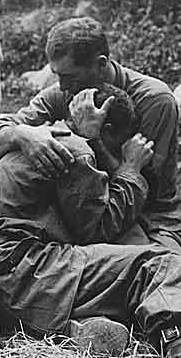
Grief
This is not the fault of the good men I grew closer to this weekend, but it has everything to do with the knowledge that even in the midst of good company, people truly do grieve alone. And I'd be lying if I claimed I was not grieving.

How long I've been grieving is a more difficult assessment. Or even what I'm grieving. Grief doesn't always announce itself or its intentions, we just know it's there, brooding. However, having the opportunity to get away and think a little may have jarred loose a few answers to both questions of "How long?" and "What?"

I'm grieving answers to prayer.

I'll say right away that you won't find a doctrine on this anywhere in the Scriptures. If you're the kind of person who detests what you might perceive as extrabiblical conjecture, then reading on will only anger you, so better stop right here and skip to another post. For anyone else, all I ask of you is to listen with the Spirit.

Anyone would think another a fool for grieving those answers to prayer that led to sustained blessings, and he'd be right. What's hard is dealing with answers to prayer that resulted in a firm No. Harder still is the answer that led to blessings that were later taken away before they bore fruit.

The accident that renders the promising athlete a quadriplegic. The new husband who loses his bride to an aneurysm only a month after their wedding. The career dream that was reached, only to be snatched away. The ministry that failed. The stillborn child.

We grieve them, don't we? Olympic glory. A love built for the future. The dream we put our sweat into all these years. The heeded call of God put into action. The child of hope. Once they seemed so beautiful in our thoughts and prayers, but what now? There is only grief.

It's popular in many Christian circles to counsel people that it's perfectly fine to get mad at God. But what of Job's response? He called such advice foolish and did not sin with his lips by giving in to such hellish temptation. Grief, though, was permitted, and so he grieved in the sackcloth of his acquired poverty and the ashes of his dreams.

Job's question is a penetrating one: Shall we receive good from God, and shall we not receive evil? As for me, I believe Job is right, but I must also believe that grief is allowed when the prayers of the righteous result in something other than their intentions.

I was once told the story of a teen who was one of those extraordinary few who God revealed the purposes of her life. He gave her an enormous burden for the African people, so much so that her whole heart was given to missions at a young age. Upon graduating from high school, she worked hard to raise support and was richly blessed by the many people who loved her and caught her vision. When she was selected to join a team going to the African interior, the joy was palpable. She boarded the plane, set foot in Africa, and promptly died from a fever within days.

As far as anyone knows, she never got to share the message of Christ with anyone there. Thousands had prayed for her, hoped for her, and supported her. But what of all those prayers?

I used to think there was always a lesson in happenings like this, but I'm not certain I do any longer. Some things just are and perhaps all we can do is grieve those answers to prayer that we do not understand. I know people who have driven their faith into the ground looking for a lesson from some horrid injustice that pierced them, but what if there is no lesson other than the way of suffering? What if grief is its own lesson?

Some things make no sense. I know that I reflexively must understand why something is the way it is. None of us says, "Thy will be done!" easily, particularly when that will seemed to lead to ruin. Why did that bright girl with a heart as big as the world start and end her journey the same week? My only response is grief for a prayer answered in a way I cannot comprehend.

We in our household appear to be receiving an extra portion of these questions whose only answer is grief. The way of the cross? I would like to think so. Maybe this is the ultimate meaning and source for that manner of grief, but like a fog it rolls in and obscure everything else before burning off in a shimmering morning that paints diamonds on the grass.

Let us accept good and endure evil. And may our faces be turned to the Son.

Are You a Hamster?

Standard

Douglas Groothuis strides to the plate (in his recent post, “Against Multi-tasking”) and takes a mighty swing at an issue I’ve blogged about more times than I care to admit. Noting that our society is like a videotape stuck on fast forward play, with people favoring inhuman virtual worlds they can easily manipulate at a press of a button, he says:

Reality demands an attentiveness that multi-tasking does not allow. Human beings especially tend to be opaque and mysterious beings, whose inner recesses are not easily discerned. We can push a key and make the computer or cell phone do something. We cannot push a key and understand or help change a human being. That kind of being requires more attention, more patience, more suffering. This is because we are made in God’s image and likeness, yet we are fallen and disoriented by sin’s manifold manifestations. We are sinners in need or reorientation according to truth (that which describes reality). Some of the most important truths about ourselves and others and about God himself are not easily fathomed—or when fathomed, they are not easily remembered. The discerning of these truths requires attentiveness, patience, and studiousness. These truths demand, as Pascal noted, being quiet in our own room without distractions or diversions. Conversations concerned about truth and virtue require the engagement of two people who are attending, respecting, and responding to one another without mediation.

Dead. Spot. On. Here’s his summation:

If all this is true and important, several things follow. We need to slow down and become less efficient and effective, at least as these terms are defined by popular culture. We need to unplug more often, endeavoring do just one thing at a time and to do one thing at a time well. Perhaps we should simply listen to music in order to discern its nature, structure, and aesthetic value. This requires a one-pointed immersion into its sonic reality. Just listen and think. Maybe we should simply listen to another person, laboring to exegete his or her soul and bring our soul to bear on another’s pain, yearnings, and boredom. Perhaps we should read the Bible in book form and not jump from text to text to image to image as we do while “reading” it in cyberspace. (Is that really reading or merely retinizing?) Maybe we need to talk to someone on the phone and not listen to music while talking, not type an email while listening, not exercise while listening. Maybe much should change—within and without. Much should change if we think truth is being lost, relationships are being cheapened, and virtues are being soiled by our incessant dividedness, fragmentation, and alienation known as “multi-tasking.”

And…there’s the whiff.

Great stance. Fluid form. Eye on the ball. But it’s a “K” nonetheless.

I know Groothuis is blogging and it’s not a doctoral dissertation on the subject, but the Church has got to provide better answers. Groothuis has a stellar mind and I’d love for someone in his position to develop this more in the company of other great Christian thinkers and leaders. For all our sakes, it must be developed more than telling us to unplug from our devices and stop multi-tasking.

Take the average person who…

  • Gets up at 5 AM for work, showers, gets dressed
  • Eats a quick breakfast
  • Reads the Bible for a few minutes and tries to fit in a couple minutes of prayer
  • Commutes forty-five minutes to work through snarled traffic
  • Starts work at 7:30 AM
  • Skips lunch or eats quickly in the cubicle
  • Bails from work ten hours after starting
  • Drives forty-five minutes home through snarled traffic
  • Changes clothes
  • Sits down to eat dinner at around 7 PM
  • Manages to play a couple minutes with the kids
  • Helps put the kids to bed
  • Manages about fifteen minutes alone doing something personally worthwhile
  • Squeezes in a few minutes of talk and possibly a prayer with the spouse
  • Gets ready for bed
  • Hits the hay at 10 PM
  • Repeats

That’s now the existence for a huge number of people in the United States. Given that, I must ask when we find the time for the “single-tasking” Groothuis insists we need?

That schedule I just listed is what needs to be fixed. Church leaders wonder why folks won’t commit to more volunteer activities. Businessman on a Hamster WheelI’ve got to ask if any of the leaders in the Church today understand that kind of schedule and its ubiquitousness. If they do, and they hate it as much as the people stuck in it, then why is the Church in America not doing a single thing to reform that kind of schedule?
Honestly, the disconnect blows my mind. To his credit, Groothuis nails the problem beautifully. But when we start decrying the lack of singlemindedness to deconstruct the finer points of a Beethoven sonata while simultaneously asking people to work the kind of schedule most do, I’ve got to wonder, Did we just step off the planet?

This evening, my wife and I collapsed on our couch and talked for five minutes about the truth that people are exhausted when they end their day, but not in the good way that comes from physical labor, the kind that is capped by a sweet rush of endorphins and peace in the nerves. No, the exhuastion that afflicts us today is stress-induced, the kind that blurs all thoughts and makes pushing a button the sum total of all we can muster before we slump into bed to worry about the next day, fitfully tossing and turning as the digits flicker by in rapid succession on the nightstand alarm clock.

Today’s Christians can’t start talking about depth of meaning and greater purpose if at the very core of what we do each day there’s nothing but a treadmill stuck on the “Verge of Insanity” setting. Talking on the phone while we read our e-mail is a symptom of a greater problem because choosing to talk on the phone now, followed by reading the e-mail later, simply isn’t an option for a lot of people. We’ve got to fix the hectic madness we must obey or else risk a trampling by the mad rush of the rest of the world.

Who is speaking to the greater whole of our daily scheduled existence? Who is bold enough to provide viable solutions for getting at the root of our modern work lives that command such extreme chronological attention? Will our pastor be the one to explain to our bosses why we refuse to carry a corporate-mandated cellphone guaranteed to ring at least a half dozen times each weekend (and at least twice during each evening?)

It’s time to stop talking in theoreticals. And no more Band-Aids for severed limbs, either.

I would issue this challenge to Douglas Groothuis, a much smarter man than I am: How can Christians find a more Christ-honoring means of practical living than the system we have now in place—the one that is killing us, wrecking our families, and destroying our churches? How do we step out of society’s hamster wheel? Why is the Church in America not speaking to this? Why are there no answers other than the simpleminded ones we repeatedly offer but which continually fail to fix this issue?

If people are not living the abundant life because of the system of living we have created, then for the sake of the Kingdom of God we better find a way to beat the system.

Now, where do we start?

Notable Authors You (Regrettably) Never See Mentioned on Christian Blogs

Standard

A random walk through the Christian blogosphere is an enlightening experience that effectively takes the pulse of the technically-abled side of the Church. From even a short visit to a few blogs, one could argue that Christian bloggers don't seem to span the gamut of Christian thought and that's probably close to the truth. In the wake of GodBlogCon, a few brave souls have asked whether or not the Christian blogosphere is in a homogeneous funk, and I would have to agree that it is.

As one of the precious few charismatics actively blogging, I'd like to remedy this just a tad by suggesting that perhaps there is more to read out there than flows from the pens of C.S. Lewis, N.T. Wright, D.A. Carson, John MacArthur, and C.H. Spurgeon. As much as they are routinely quoted by what seems to be 97.5% of the Christian blogosphere, there are outstanding authors who are never mentioned, yet they had profound ministries that stretched across the globe.

For the betterment (and broadening) of Christian thought, I present three authors whose underrepresentation in the Christian blogosphere only serves to diminish our conversation.

R.A. Torrey
For anyone attending the GodBlogCon, it was sponsored by the Torrey Honors Institute at Biola University. Considering all the hoopla around this event, R.A. Torrey Picno one bothered to shed some light on the man who lends his name to that Institute, Reuben Archer Torrey.
A gifted author, teacher, pastor, and evangelist, Torrey not only served as Dean of Biola for twelve years, but was also D.L. Moody's handpicked successor to that great evangelist's church and what later became Moody Bible Institute. (An outstanding bio can be found here and at Wikipedia.)

Torrey, a true charismatic, penned an outstanding treatise on the Holy Spirit that I've routinely recommended to people, The Person & Work of the Holy Spirit. Many have commented that his works on prayer are some of the finest written, and you can find a free version of one of those prayer writings and a few of his other works at the Christian Classics Ethereal Library (a site everyone should have bookmarked.)

Torrey authored over forty books, many still in print. Such a talented and gifted man of God we'd all be hard pressed to equal. He deserves to be read and quoted from liberally.

Andrew Murray
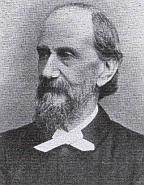
While many of the writers that are usually referenced in the Christian blogosphere have a fiery and impassioned message along the lines of the Apostle Paul, Andrew Murray is more in the gentle, loving, and profound mold of the Apostle John. Andrew Murray PicPerhaps it is because of Murray's soothing pastoral heart that he's not ripe for controversy, but I contend that in an age when so many Christians are at odds, Murray's vast output of writings are more needed than ever. (Bio of Murray here and at Wikipedia.)
This post came about because of yesterday's reference to abiding in Christ. For those seeking to do just that, there is no equal in books on the subject than Andrew Murray's Abide in Christ (free online version here.) He, too, penned a classic on prayer, With Christ in the School of Prayer. I'd also recommend his book Humility, one of the best ever written on the topic. And like Torrey, Murray endorse modern day charismata, having overseen the miracle-filled South African Revival of 1860, an event that changed his life. He later was a key player in the Keswick movement that fueled both the great missionary thrust at the turn of the 20th century and the Welsh Revival. You can find free versions of many of his writings scattered thoughout the Internet, but the CCEL, again, is a fantastic resource for Murray.

Watchman Nee
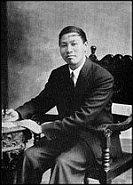
I can think of few great men of the Faith whose writings have eluded more people than Watchman Nee. Perhaps it's his distinctly Asian view of Christianity, but no matter the reason, Watchman NeeNee is a man wholly surrendered to the Lord and his writings have profound depth. What else can be expected from a man who spent the majority of his Christian life locked up in solitary confinement in a Communist prison cell? Many today would claim that Nee's devotion to the Lord is the reason the Chinese house church movement is still going strong. (Nee bio here and at Wikipedia.)

Nee's The Normal Christian Life is a book every Christian should read, and it's one of the scant few worthy of inclusion in the Essential Reading sidebar of Cerulean Sanctum. Packed with wisdom on living out faith in Christ, it's a classic exposition of Romans. (CCEL has a free online version here.) I also heartily recommend his look at Ephesians, Sit, Walk, Stand. Having read several of Nee's books, I can promise that anything he writes will be fresh and will challenge you with godly wisdom from a different perspective than what you might be used to. A tragically underrepresented author in Christian blogging.

Other great writers do exist. C'mon folks, let's put a few different players out on the field!