A couple weeks back, I asked the question, "Is Christianity Broken?" Today, I want to revisit this issue, probably the most popular post to Cerulean Sanctum thus far.
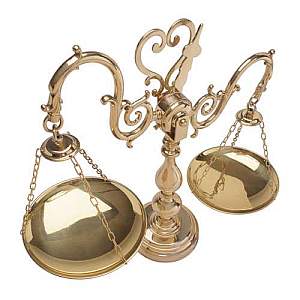 As a Christian for close to thirty years, I've seen a lot of movements within the Church in America rise and fall. In the 1960s, I witnessed the Protestant appropriation of Vatican II ideals, the rediscovery of the charismata by mainline churches, and the first flowering of contemporary worship music. The 1970s brought the Jesus People, the growth of Evangelicalism as a dominant political force, and the rise of the Third Wave churches. The 1980s gave us the beginnings of the Church Growth movement and the ascendancy of seeker-sensitivity. The 1990s have proven to be a backlash time, with every aspect of the faith being questioned and reconsidered, finding charismatics adrift within fads, the "Emerging Church" attempting a shaky counter-reformation, and—sadly—greater concessions to the spirit of the age within American Evangelicalism.
Now in the new millennium, with so many opportunities to stake a claim for the next thousand years, I would offer an old direction. To the question of "Is Christianity broken?" I can only say, No. What we are instead as American Christians is horribly out of balance. We have become a church of fads, running after what appears to work, but all the while ignoring the tools, wisdom, and gifts Christ purchased for us through His blood two thousand years ago.
I cannot escape this passage:
Then if anyone says to you, 'Look, here is the Christ!' or 'There he is!' do not believe it. For false christs and false prophets will arise and perform great signs and wonders, so as to lead astray, if possible, even the elect. See, I have told you beforehand. So, if they say to you, 'Look, he is in the wilderness,' do not go out. If they say, 'Look, he is in the inner rooms,' do not believe it.
—Matthew 24:23-26
Now certainly, this is an eschatological reference, but I want to focus on the mindset behind it. When we go rushing around trying to get on board with the latest "appearance of the Lord," we swing like a pendulum. There is a tendency for us to accommodate to the wisdom of our times, too, picking up whatever business or pop-psychology trend is hot, fusing it to our new Christian fad. But for those of us who have been around a while—and have kept our eyes open and our discernment intact—all this is not coordinated movement, but spasmodic lurching from one soon-to-be-abandoned methodology to another.
Today it is the "Emerging Church" or the "Purpose-Driven Life" and so on. The future will bring some new trends. But what about yesterday's hot new ministry or devotional style? Do we even remember what it was? Or are we too busy reacting to the fallout of it as we swing on the pendulum to the other extreme, far, far away from what we so eagerly endorsed just a couple years ago?
To the world, this means one thing: "The Church has no eternal focus; we can find no answers within it."
In our attempts to read the times and accommodate to them, we have lost our balance. We continue, also, to stake out positions that only exist at the extremes on issues, rather than considering the holy middle.
Lately, I have been involved in several discussions on topics relevant to the Christian walk. Those discussions show out out of balance we are:
- On the topic of prayer, I have talked with others about focused times of prayer and about "practicing the presence" of God all day. Supporters have gravitated to the extremes, favoring only one or the other. But isn't the truth of our prayer life centered in the balance between those two?
- On the topic of the Holy Spirit, I have encountered cessationists and "charismaniacs," but isn't it true that the Holy Spirit still works today and that He does not contradict the Word of God? Aren't both the cessationists and the charismaniacs stuck at the extreme swings of the pendulum?
- On the topic of Calvinism and Arminianism, like I wrote in a previous post (On the Brink of a Quantum Singularity with Calvin and Arminius), are those two positions possibly at the extremes and not in the center of where the Lord would have us be?
- On the topic of the social gospel versus the moral gospel, is this not a false dichotomy to be making? Isn't the true Gospel a complete whole that encompasses both? (Wrongly Dividing the Gospel)
- On the topic of the nature of Christ, isn't our Lord both a Lover who draws us to Him and a Warrior who will slay His enemies with the sword of His mouth? Isn't He both the Lamb of God AND the Lion of Judah? Why are we so often given to exalting one side of the Lord's person over the other, clubbing those people on the other pole with our "enlightened" view?
- On the topic of the Christian's duty to the environment, must we divide into camps that either support radical groups like Earth First! or who ascribe to a pillage-the-Earth mentality based off a mangled reading of the Creation account? Is there no wise middle ground that we can support?
- On the topic of the Bible, why must we dwell at the extremes: one that practically elevates the Bible above the person of the Lord Himself and one that shuns the Bible in favor of just hanging out with Jesus relationally? Where is the balance?
- On the topic of the role of the Church, aren't we supposed to make disciples AND stand in the gap within our society?
No one said this kind of discernment—or the natural walking out of the results—would be easy. But isn't that why the Holy Spirit was given, to guide us into all truth?
Our failure to achieve balance in our Christian worldview has only confused the lost, the very ones who need to hear a right and balanced message from the Lord. If the Church in North America is to be all that the Lord desires us to be we have got to work for balance and show more discipline in standing against the fads of our day.
This is not to say that we compromise. In most cases, there truly is no compromise needed. We have simply spent too much time at one end of the pendulum swing to know the difference, though. It may seem uncomfortable to leave those extremes, but in truth we have done so quite a bit in just the last thirty years as we react to changes in worldly wisdom; this should not be unknown to us. Our problem is our inability to stop our momentum as we swing from one side to the reactionary other.
Cultural relevance does not trump eternal significance, and this is where we most suffer. We must be more discerning, testing the spirits—especially the spirit of the age—to see if it is of God or not. Nor should we be afraid to ask the hard questions and to administer the test at all. Examining an extreme position does not naturally lead to error if we are examining it against the Word and by the Spirit. Such an examination may reveal our own extremism and allow us to come to the truth of the center.
In closing, I offer three points that will align us:
- We must be prepared to look out of step with culture and culturally compromised churches. Balance is never fashionable.
- We must never forget our history. As Goethe once noted, "He who cannot draw upon three thousand years is living hand to mouth." Historical perspective compels balance.
- We must always ask, "What is eternally significant?" The answer to that question will bring us into balance.
Think about this. I believe the issue of balance is the single most important issue facing the Church today.
Blessings!