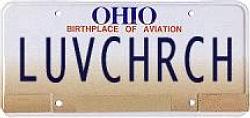
 Wishing to counter the sanguine nature of last Friday’s “downer” post (“Killing the Messenger“) with something not only more upbeat, but in defense of good churches, today I reveal why I love my church.
Cerulean Sanctum is a blog about helping the Church in America be the best Church she can be. As such, it can be critical, but I pray that one of the distinctives of this blog is that I don’t criticize solely to criticize. If I don’t have at least a solution or two, I typically stay mum on an issue. Sadly, you can’t throw a dead 404 link on the Web without hitting a Christian blog that is critical for no other reason than to be critical. If this blog ever gets to that point, I’ll shut it down because it will no longer be honoring to God.
God doesn’t need more whiners and moaners; He needs a glorious Church.
I go to Clear Mountain Community Church in Williamsburg, Ohio. It’s an independent Pentecostal church that is one of the most unusual churches I’ve ever encountered. What makes it unique is that it is a church merge (as opposed to a split—that in itself is rarer), but it’s the merger of a Pentecostal church and a Church of Christ. Yeah, you read that right. I’ve been there a year-and-a-half and I still can’t believe it.
But the Spirit of God makes it work. That combination makes the church exceptionally strong in that the diversity of folks in the church mitigates the weaknesses of both those traditions, allowing the better aspects to shine through. While some churches have theological blind spots, ours is better than some in reducing that due to the merger.
There’s usually a social disparity in those two traditions, too, but the merger has broadened the demographic swath from what would normally be found in a Pentecostal church or Church of Christ. You’ll find farmers and engineers, hairdressers and scientists, rich and poor in our church, all in a mix that’s probably better than any church I’ve been in. (Our lack is the fact that we’re about 98% white, but then so is the neighborhood for miles around—rural areas in the Midwest aren’t known for their racial diversity.)
Some churches have elders of varying quality, but ours are uniformly outstanding and from a wide variety of backgrounds. Our church has been through a lot, including losing the previous pastor to colon cancer in his mid-forties after what seemed like a total healing. But the elders held the church together after the death of the pastor and other tough losses, and this not long after the merger. That says quite a bit about the character of the men involved They made it work by the grace of God.
Our current pastor was one of those elders. He’s been in that church for more than twenty-five years. I like that—a lot. Any church that can hire from within has a successful discipleship program. Too many churches have such poor educational programs they couldn’t raise up a pastor from within if they used a crane. Our pastor is the real deal, though. He brings the added benefit, at least in my opinion, of not having been professional clergy all his life. He worked for a tire company, so he understands the working man’s existence.
He also understands the Scriptures and preaches Bible-laden sermons. My wife and I first visited the church back in December of 2004 and one of the elders told us that they’d called a new pastor. When one of the elders got up and preached a sermon that impressed me greatly, taught me a few things I hadn’t heard before (and I couldn’t remember the last time that had been the case), and generally placed a fire in my heart, I told my wife it was a shame they couldn’t make this guy the pastor. His command of Scripture was excellent and he preached the Gospel with no hesitancy of mixing in the tough parts with the nice ones. Little did I know we were in for a pleasant surprise!
Pastor Mark hadn’t even been installed when we got an invitation to come to his house for a home-cooked meal. We’d been at the church for two weeks and he and his wife were already inviting us over. (If you’re a pastor reading this, that’s a strong hint right there!) He was installed the next Sunday, and the next day we were the first guests he and his wife had over after being made official. I can’t tell you how much that meant to us.
It’s the single biggest strength of my church: genuine concern for people. The retired pastor (of the Church of Christ portion of the church from before the merger) and his wife went out of their way to show us around and talk with us in the cafe after the service was over. All the elders introduced themselves and talked with us. We made several acquaintances that first Sunday who have gone on to become good friends.
I watch the folks in my church and most do an excellent job of talking with newcomers, letting folks know that we’re so glad they chose to worship with us. Megachurches that pride themselves on being friendly should stop by our church sometime to see how it’s really done. Our church has fellowship lunches after the service at least once a month, and more like two and a half times a month during the summer. The men’s breakfasts are well-attended and the women’s ministry is strong. Everyone takes pride in the church as a body of worshiping believers and you can see the love not only for the regulars, but also the new folks and the visitors. We’re not afraid of our “special people”, either. I’ve been in churches that try to hide their “weaker parts,” but at our church, we’re not ashamed of those folks who are different. In fact, we treat them just like we treat everyone else.
And as my church is giving of their persons, they’re also giving of their money. I’m routinely astounded by how much money this church can raise for benevolences to others. We’re not big and we’re not rich, but folks put their money where their faith is. After some of the things my church has been through, at another church it would have been a financial death knell. But not here. Very generous people.
Very generous in speaking about Jesus, too. People at my church would never expect the pastor to be the only one witnessing. They’re out there speaking about Christ to others. Huge supporters of missionaries and other ministries, too. An understanding exists that it’s not “our church” and “their church”—we’re all believers in Christ—so however the word gets out is fine, even if it means that someone besides us benefits.
Charismatic and rural can tend toward some charismania, but there’s not a whole lot to see. Sure, there’s a few things that maybe go an eensy bit overboard, but I’ve seen a lot worse. What I appreciate so much about the folks in my church, though, is that they don’t go the other way, tightening down the hatches so tight that the Holy Spirit can’t work. Everyone understands freedom in Christ is not license, yet it’s still freedom. That’s so refreshing to find a Pentecostal church in a rural area that isn’t tied down by legalism.
And lastly, I appreciate the willingness of the leadership to acknowledge people’s gifts and ask them to lead. There’s a gratefulness for everyone who contributes, and also a willingness to let someone else take the reins. There was a mix-up with a speaker we had scheduled for today and one of the “laypeople” in the church was asked to preach in his stead. You don’t see that too often.
Our church is firmly open to God’s direction. There’s a rare expectancy compared with many of the churches I’ve been affiliated with over the years. We earnestly desire to meet the Lord in worship and we know He’s going to do miracles. I’ve seen so many positive, godly things occur since we’ve been there that it’s hard not to think that every day will be better than the one before. We’re baptizing folks, the Gospel’s being preached, and we’re growing. Sure, we’ve got about 300 people there now, but that’s up probably fifty since we came on. Easter brought in almost 380.
I love my church. I’m grateful to God that He led us there after we wondered if good churches still existed. Do we have issues? Certainly. But the thing that impresses me about my church is the willingness to address those issues and act to fix them.
So if you stop by Cerulean Sanctum and read one of my blistering critiques of what is going on in the Church in America and think that I’m just a church-basher, know this: I love my church. Great churches like mine do exist. And more than that, I love the big “C” Church and pray only the best for Her.
Do you love your church? Leave a comment here and let us all know what you love about your church. And if you’re looking for a church, mine’s not perfect, but we’re blessed in many ways and God is moving in us. What more could we ask for?
Have a blessed week this week.


 I met with a friend the other day for lunch. He's a good man with plenty of God-given vision for the Kingdom, but he's discouraged.