In this last post in the series “Being the Body,” we’ll look at a few more ways that our churches can better grow the community of believers within them.
#8 – Our communities should regularly enjoy a real communion feast together.
Folks who have studied the communion meals of the early Church come away with one truth: they were true feasts. Not the thimble of grape juice and a portion of a cracker, 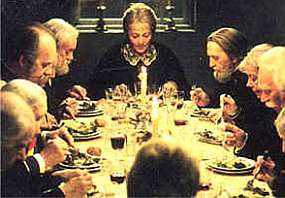 but entire meals in which the sharing of the bread and wine was the high mark.
We need to encourage our churches to prepare this kind of feast at least once a month. In fact, the more meals we eat together as a church, the more we’ll grow to know each other.
I would also encourage these real communions services to be a time when people share what Christ has done for them (since the last time a communion meal was held). We need those stories of faith to build our own faith, but we seldom get to hear them enough for them to do any good. This would also be a time for the entire church to pray for individuals in need. We could hear the need, pray for the need, and use that time to meet the need right then, if possible.
#9 – Those of us in community should always keep an open home.
A community is not closed. It’s always open to others. It’s 24/7/365, too. Because our homes are the Lord’s and not ours, we need to always make them open to others, be they part of the community or not.
We can’t let the fortress mentality so prevalent in our country today keep others out of our homes. Our homes are not bunkers, but stations of ministry. Our mission field starts within the walls of your house and mine. If we’re not making our homes open, then we’re despising God’s gift to us.
We’ve got to get over having each room perfect, too. If you’re house is a little messy, who cares? Real homes are messy to some extent. We’re not supposed to live in museums. Obsessing over a home’s cleanliness speaks more about our fixation on the material rather than loving people. Better that a house be filled with love for everyone who enters it than it be spotlessly clean.
(See sidebar category listing “Hospitality” for more on this.)
#10 – As a community, we must find a holistic Christian perspective on our employment.
We have no excuses: we spend too much of our day devoted to our means of employment. If you’re a regular reader, you’ve heard this before, but unless we Christians rethink the way we work, we will forever have the Lord third or fourth in our lives. We need a revival of Christians seeking God for ways to drop out of the rat race and still provide for our families. Since we’re making community a priority, these issues should be discussed by the community.
We must also rethink unemployment. As a community, we are responsible to ensure that no brother or sister in the community goes without work if they need it. Despite the fact that today’s jobs are much more specialized than in ages past, we must ALWAYS draw alongside anyone seeking work and actively help them find a job. Our community is diminished by letting the unemployed search for work alone. If we are not dropping at least two dozen leads for each unemployed person a week, then we’re shirking our responsibility. The Bible commands that we work, therefore we are compelled to provide or seek work for those in the church community who need it. And we don’t stop helping until they get it.
(See sidebar category listing “Work” for more on this.)
#11 – True community makes ministering to the “weaker parts of the Body” a priority.
And who are these? The single parents, the elderly, the mentally ill, the sick, the developmentally disabled, and the families of those people.
An exceedingly powerful way to tell how vital a church truly is would be to examine how they deal with these folks. Are people ashamed of the mentally retarded teen, or do they go out of their way to incorporate him in the life of the church? Do people volunteer to take care of him so his parents can have a couple nights out to themselves each month?
Same goes for the single mom or dad. Some churches treat them as if they’re an embarassment rather than ministering to them as Christ would. If their singleness bothers us, then we should be routinely watching their kids so they can get out and meet a potential mate.
Real community always considers the weak and asks what can be done to bless them or their families. It’s one of the perpetual thoughts of people who esteem others better than themselves.
#12 – True community is never afraid to be countercultural.
Being a community flies in the face of everything we hear daily as Americans. Thinking of others first does not come naturally to the natural man, but to the spiritual man it is the core of his ministry. If we fear Man, we should not be servants of Christ.
For this reason, we must pursue real community in the Body of Christ even if the world fights viciously against our desire to do so—and it will, because the world is passing away. But the communion of saints is eternal! What we begin here in our church communities is the groundwork for something that will never perish. We must always remember that our fitness as a community will reflect in the afterlife. God gives us our time here to fit us to heaven, and if we’re not living in a godly community that stands apart from the world’s individualism, then we are not being good stewards of the time the Lord has given us.
The bottom line of community is this: we can continue to live as randomly scattered body parts that accomplish little for God’s glory, or we can be the vital Body of Christ living in countercultural community. God demands the latter of us when we come to Christ. Yet our American cultural mandate is anything but community-focused.
We Christians in America must rethink everything we’ve assumed about community, putting it under the authority of the Scriptures as illumined by the Holy Spirit. That we’ve failed to do so even the slightest bit speaks against the American Church’s obedience to the very principles God lovingly gave His people.
I believe that nearly every vice in our churches today can be traced back to a flawed understanding of what it means to live in true community. We are the Body of Christ. To live as a Body, we must make life-changing decisions. Time is short, so we must start being real community or God will judge us for it.
So do more than consider the twelve ideas presented in this series, start living them out. And go before the Lord and find even better ways to live out community. What I’ve laid out here is a mere sketch of what can be done
Have great week and bless others.
Posts in this series:
(Image: Still from the movie Babette’s Feast, 1987)

 A simple phone call to Mr. Pitt would dispel all pretenses, but it sounds good. And who's got that phone number lying around anyway?