
A Response to “Five Types of Critics in the Church”

Standard

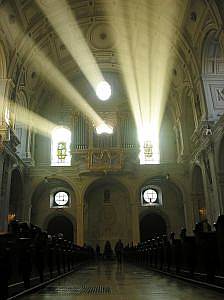
Light in a dark churchOver at Challies.com, Tim posted a link in his A La Carte section of Oct. 1 to a post by the head of Lifeway, Thom Rainer, “Five Types of Critics in the Church.” As they say on the Interwebs, read the whole thing (hey, it’s short too!).

Rainer posits his five types of people who criticize church leaders:

  • The constructive critic
  • The negligent critic
  • The hurt critic
  • The sinful critic
  • The self-serving critic

He then adds:

“…make every attempt to discern the type of critic with whom you are dealing. In many cases, the criticisms will benefit your life and ministry. In other cases, you may have the opportunity to deal with the critic in a pastoral and redemptive way.”

The more I pondered the article, especially the list of five critics and what Rainer says about them, the more critical of the article I became. Ironic, eh? It seemed to me the article brought into focus a big issue in the contemporary American Church.

Reflecting on what Rainer wrote about the five critics (you did read the article, right?), what came through more than anything is the chasm that separates paid, professional ministers from “the laity.” The descriptions of the critics seemed to have a built-in class distinction, as if the people in the seats or those “in support” don’t have much right to criticize what happens in a church or parachurch ministry. By listing five types of critics and then telling leaders it’s essential to discern which they are dealing with, Rainer betrays a general lack of connection with what is really going on in the lives of “the laity” and enforces a classification system that further insulates leadership from criticism. Nothing puts uppity, troublesome people in their place like a label.  And though Rainer tries to temper this by saying that criticism can be good for one’s ministry, it seems tacked on and “Christianized.”

Here is my experience…

I have noted many times on this blog that what many people interpret as sin, stupidity, and opposition is nothing more than people just trying to get by in life. My experience is that the vast majority of people are desperate for some kind of stability, a foundation that will keep them going through the motions one more day. Most of what we don’t like in other people’s lives is their coping mechanism in operation.

We live in turbulent times. People feel powerless and angry. Many are losing control of their lives and fear acceleration of that loss. Mental illness is an epidemic, with the number of people on psychoactive drugs at the pandemic stage.

In the middle of this stands the Church. That Church says, “Jesus is the Rock,” and claims to be a port in the storm of life. People believe that too.

Criticism doesn’t erupt in a vacuum. Most people become critical when change happens (or when it should happen but doesn’t).

When I see criticism building in a church, it is often because leaders tinkered with aspects of church life that were a comfort to distressed people. Those people saw their respite toyed with and it created further stress in their lives.

More than anything, church leaders today do not take into adequate account how change affects the flock. Those leaders get into their heads that they want to adopt the latest hotness even when people are perfectly fine with the way things are. Leaders think of “Behold, I am doing a new thing” as a verse that gives imprimatur to every whim of change.

Fact is, this is highly disruptive to folks who see the Church as their last refuge of peace and tradition in a world changing far too quickly, and often for the worse. Church leaders who force change—and often do so rapidly so as to keep up with whatever is new and trendy in church programming and growth theories—are often breeding their own critics.

What bothers me about the Rainer article is that leaders create this disruption and then don’t want to be bothered by the fallout. Worse, when people feel threatened by changes, they end up having to face a leader who has been told that threatened people must be labeled by the leader with one of five types of critic tags. I find this advice startling in its superiority, perpetuating the “touch not the Lord’s anointed” mentality Christians often face in their leaders.

Of the five types of critics Rainer sketches, I honestly believe that most people are constructive critics with some level of self-serving. When church leaders disrupt the safety people feel in the normalcy of their church life, those people lose a valuable sense of personal stability, so of course there is a self-serving aspect to their frustrations. How could it be otherwise? Most people won’t come forward unless they feel some personal attachment to the criticism they risk sharing.

And it is a risk. What gets “laity” disenfranchised faster than saying, “Um, Pastor, should we really be doing this?”

Five types of critics make it sound as if the majority of criticism is wrong, what with “constructive” seeming as if it comprises only 20 percent of all criticism. I disagree. Most people are constructive because they love their church and really don’t want to see it run onto the rocks that have destroyed so many other cherished institutions in life, the wreckage of which is all around people and ever obvious, fostering much of the ill-ease they feel about life in the 2010s. That many churches ARE hurtling toward the rocks because of leaders who DON’T listen to the criticisms of “laity” is one of the epidemics of our age.

As a counter to Rainer, I offer that leaders need to lose the labels. We don’t need to see a label on a type of criticism; we need leaders who recognize that we may be feeling disrupted by something that has happened in or to the church.

Also, leaders, discern the times. People are looking for safety. Messing with what people find safe is a recipe for generating frustration, which leads to criticism. Realize, too, that critics are not stupid, nor are they attempting to halt everything that can be good about change. Most are asking is for greater temperance in moving forward and a recognition that change for change sake has wrecked more than one solid church. Many are frustrated with having yet more lack of input in yet one more aspect of life.

To the leaders I ask that you be more wary of the new than you are of your critics. Today’s new and hot is tomorrow’s old and busted, and not every “vision” proves to be of the Lord. And sometimes, the “laity” understands this better than you do.
Further Thoughts on Why Christians Cannot Be “Values Voters”

Standard

Last week, I talked about why Christians cannot be “values voters.” In the wake of a few conversations and some comments on that post, I wanted to add further thoughts beyond those contained in the first post.

You hear the term values voters used to group those people who use a fixed set of specific issues as a basis for their voting patterns. This term is often applied by conservative Christians to describe the (usually limited) number of ideas they use to clarify for whom they should vote in elections or to note which political issues are most important to them.

Five further reasons why I believe values voting is a grave mistake:

Values alone say nothing about their source and their reason for existing.

Why does a value exist? And what is its source?

Christians must be concerned for sources. Our source is God. A.W. Tozer has said that because we are created by God, all of our answers are found in Him. The wisdom of that understanding of God as our Source cannot be lost when Christians consider their belief and praxis.

Where voting values becomes problematic is that trumpeting a particular value doesn’t necessarily say anything about the source for that value or why that value is important.

During Jesus’ earthly ministry, the Pharisees who opposed Him were extremely concerned that Jesus’ activities would eventually bring further oppression from the Romans. In the end, to their eyes, Jesus represented a threat to all that was good, historic, and essential to the Hebrew faith, nationality, and practice. Preserving that heritage, on the surface, appeared to be a noble value, but we know where it ultimately led. Because the Pharisees did not understand the Kingdom of God, did not grasp what God the Source was doing, in fact, did not know God properly, their values were off, no matter how righteous they seemed. In the end, their values voting led to the crucifixion of Jesus.

The decisions we make in life cannot start at an ends and work backwards. They must start at the source. If we do not understand the source for what we believe, then our values will always drift. What is often the case is that the values then become entities in and of themselves, with little reference back to the source. More often than not, this leads to catastrophes (which we will examine later). We end up with values divorced from sources, and the sources always suffer for this split.

Voting values tends to focus too narrowly on a small set of values, while ignoring the wider set of all values and their essential interplay.

When values tend to exist in and of themselves apart from full knowledge of sources, some values end up ignored. Sadly, that ignoring is often purposeful and inexplicable, given our Source

Again, this is a problem of working backward from a values idea to its supposed source. In doing this, a person selects a line of progression and traces it back to its source. But this is the problem of the blind men and the elephant. Each of the blind men focused on one characteristic of the elephant (its thick legs, its long trunk, etc.) and believed that the value told him all he needed to know about the source. We know the result. That each blind man failed to take the values of others into account when trying to comprehend the whole only furthered the confusion.

In the case of the blind men, knowing what an elephant looked like first would have allowed them an almost infinite set of values that could have been traced from the source. By working from the source in its entirety, only then could the men appreciate the values that proceeded from that source, values that they may never have explored if they worked back to the source from one or two values alone. Seeing the source would have greatly expanded their entire set of possible values.

This is critical for Christians. Because we know God, the set of values from which we operate is vastly larger than the small set from which values voters operate. This wider set that proceeds from who God is necessarily requires that any end values not only mirror their source but interplay with each other. And this interplay is not something that a few values here ans there account for. It’s why values voting tends to create massive blindspots—and that leads into the next issue.

Voting values without understanding who God is (or by ignoring  the full revelation of who He is) leads to catastrophic errors.

A values voting statement from Protestant Christian leaders :

“A state that once again rules in God’s name can count not only on our applause but also on enthusiastic and active cooperation from the church.

“With joy and thanks we see how this new state rejects blasphemy, attacks immorality, promotes discipline and order with a firm hand, demands awe before God, works to keep marriage sacred and our youth spiritually instructed, brings honor back to fathers of families, ensures that love of people and nation is no longer mocked, but burns in a thousand hearts. …

“We can only plead with our fellow worshipers to do what they can to help these new productive forces in our land reach a complete and unimpeded victory.”

Sounds familiar doesn’t it?

I changed one telling word in that quote from the Lutheran bishopric: nation. The original was fatherland. The quote is part of a 1933 Easter statement in support of the values of the new ruling party within Germany.

Yes, it’s a cheap shot. But it’s also a telling one. When Christians get too caught up in pick-and-choose values preservation and restoration, while at the same time losing touch with the wider set of values found in God the Source, catastrophes happen. When we let values grow greater than sources, disaster is near. When we let a small set of values overrule other values, especially if those overruled are in truth the most important values of all, then we open the door for unimaginable error.

It seems clear to us today that the Christians of 1930s Germany should have seen all the warnings signs. However, they choose to ignore them because those values that should have signaled a warning were ignored in favor of other values. Many in the German Church did not go back to God the Source, which should have led them to reject the politics and ideals of a party that looked good on the surface but which was evil underneath. We simply cannot forget how easy it is to follow in those same mistaken footsteps.

Values voting leads to strange—and usually undesirable—bedfellows.

Too many Christians in 1930s Germany espoused values that led to their support of  the Nazi Party. Today, limiting our values to a choice set throws Christians into an equally distressing company of bedfellows that are then used to define who we are. When we pick and choose our primary values, when we forget about sources and limit ourselves to values-based ends, we get lumped into all manner of fringe and hate groups. This only furthers the media bias against Christians and fuels opposition. And that opposition is not because of who Jesus is but because we have focused on too small a set of values that allowed us to be labeled by them.

What fellowship has Christ with Belial? Yet persisting in keeping values at the forefront will often lead us into bed with devils if we are not careful, and the wider world will notice without fail.

Values voting closes lost people to the Gospel.

Because we tend to define ourselves by a  limited set of values that do not reflect the wideness of God the Source, the media can more easily label Christians and use those labels to undermine our ability to reach others for Christ. The entirety of the Culture War is nothing but an extension of values voting, and it is a war that we not only lost, but which continues to define us negatively and hurt our ability to reach others for Jesus.

There is a difference between suffering for the sake of a source and losing out because of a limiting value. We confuse the two, though, and perceived losses in values cause those focused on values to bunker deeper in values, which inevitably leads away from resting in the Source. As a result, what truly matters to the Source gets demoted in our belief and practice.  Because we trust values more than the source, we no longer trust the source for outcomes.The journey down the spiral gains further momentum.

It bothers me when Christians sell out some values for the sake of others. By not going back to the two big question of Who is God? and How can He be known?, we force ourselves to compromise some values to promote others. That confused response only further confuses lost people who look to us to maintain truth amid all the lies swirling around us today.

Values voting is an error we cannot commit. It is an ends without a source—or the result of a source easily forgotten or ignored when a limited set of values is made an idol. That the Christian’s source is God alone should ever be before us, and the breadth of Him as Source never forgotten.

Why Christians Cannot Be “Values Voters”

Standard

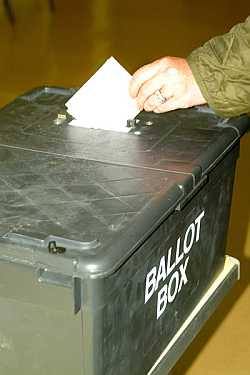
Casting a voteWe have another American election coming soon. If you are a Christian, you are probably well aware of the “this is the most important election in the history of our country” mantra of fear that gets trotted out by various Christian groups every election cycle. We will certainly hear a verse shared most often today in conjunction with politics, 2nd Chronicles 7:14. We will hear about Judeo-Christian values and saving them from whichever evil political party is deemed most diabolical at this time.

“We have to preserve our way of life! If we don’t, what will happen to our nation?”

There’s a problem with that line of thinking though: It’s the same belief and chant that resulted in Jesus’ crucifixion. The Pharisees were the “values voters” of their day.

The problem with voting values is that values exist in a vacuum. Whose values? Which values? In Christian circles, we hear typically that stopping abortion, halting same-sex marriage, and safeguarding religious freedom are the top three. I will not dispute that those are valuable and worthwhile issues to address. However, the Bible speaks far more often and more boldly about economic justice, yet evangelical Christians balk at talking about economic justice because fixing that problem would probably disrupt our personal little kingdoms. Love for the “alien” and “sojourner” is also mentioned repeatedly in the Scriptures, but that’s not a value most of us consider at the voting booth.

Values change too. Remember that ridding our country of “demon alcohol” was once the most important value the American Church held dear.

Here’s the essence of this post…

These are the two most important questions of life:

Who is God?

How can He be known?

As Christians, the Bible is our book, and it exists to answer those two questions. We as Christians are to embody the answers to those two questions. And as the embodiment of those answers, we are to align everything in our lives to presenting those answers always and in everything we think, say, and do. Our lives are intended from the second we are justified by faith in Christ to be the living response to the two most important questions of life.

Think about that. Then think how we are to live as a result.

Politics is a nasty business. In a democratic republic, we Americans are given some say in our government. For those of us Americans who are Christians, our participation in that government must reflect the answers to the two questions. We are not allowed to answer falsely or to hedge our bets. The answers to the questions cannot be compromised because what is at stake is the truth about the character of God and His revelation.

Nothing the Christian does should question the character of God because no “value” matters more. All answers in life proceed from who God is. Our response to any predicament or issue always must come from who God is is and how He can be known.

This is how we live. And this should be how we vote.

I wrote that the Pharisees were “values voters.” Recall how they were unable to properly answer the question of who God is and how He can be known. This is the failure of values voting. It can’t work back from the “answers” depicted by the “values vote” and determine the truth of who God is and how He can be known. For this reason, Christians can’t vote based on values.

But people try. And this is how we end up with the political mess we find ourselves in.

Yet if we are to move beyond ever-changing values voting then we must always vote with the answers to the two essential questions in mind. They must inform everything we think, say, and do.

How then can we support any politician who distorts who God is and how He can be known?

How then can we support any politician who answers the two questions with lies in both word and practice?

Our task as believers is to reflect the answers of who God is and how He can be known in every aspect of life, including voting.  If we don’t do this, then we send a confused, broken, and destructive set of answers to a world dying for truth.

God has not given us a spirit of fear, has He? And yet we vote out of fear, not out of answering the two questions. We are fearful over the loss of values, but never over the loss of proper answers to the two questions. This is grossly wrong.

As Christians, we are to vote for those people who can answer the two questions properly in both word and practice. Anything else is not of faith and not of truth. God puts few burdens on us, but properly dealing with the two questions is one of those “burdens.”

But here’s the thing: God is in control of the outcome. He asks us to boldly uphold the answers to the two question and then trust Him to handle whatever the outcome of doing so will be. We should never fear to answer those two question boldly and without regrets.

What if this means that in answering the two questions of life boldly and without regrets we vote for a political candidate who answers the two questions correctly but who will certainly lose the election? Well, that may be what is asked of us by God, because answering the two questions properly is what we are about—always.

Do we truly trust God for election outcomes? Does He not say that He is the one who raises up and tears down a nation’s leaders? Do we believe that He knows what is best? If we do the right thing and vote for upholders of the proper answers to the two questions, and those candidates lose, have we not done what God has asked of us? If the “wrong” candidate makes it into office, are we to judge God because He asked of us one crucial thing and now we have regrets over His sovereignty? Are we that faithless?

We Christians say we want things to change in our country. Voting values, for all intents and purposes, has been a miserable failure at changing anything. It was always doomed though. Unless we vote according to the answers to “Who is God?” and “How can He be known?”we will never change anything.