
NOT overheard at a local church board meeting, parachurch ministry press conference, year-end megachurch round table, or big Christian conference:
“We’re not going to make plans, set goals, commit to any programming, buy any teaching materials, start any further ministries, hire or fire any staff, or even talk about the future until we see what the Father is doing.”
No, that’s not something you’re going to hear any time soon—despite the words of Jesus:
So Jesus said to them, “Truly, truly, I say to you, the Son can do nothing of his own accord, but only what he sees the Father doing. For whatever the Father does, that the Son does likewise….”
—John 5:19
How is it possible then that we consider ourselves better than our Lord by acting without first checking to see what the Father is doing?
It seems to me that we Christians in America would be far more effective in nearly everything we do if we stopped with the Type-A personalities, stopped all the works that aren’t working,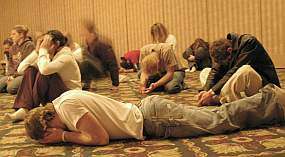 and instead did whatever it took to see what the Father is doing—and then did it.
If that means prayer for months on end, calling an all-church/ministry/organization fast, and actually practicing the revelatory gifts of the Holy Spirit, then that’s what we do. Then maybe we American Christians would see some success and see a changed nation.
Because if we’re truly doing what we see the Father doing, that thing He is doing WILL be effective, and all the more so when the Body of Christ gets on board.
It seems so simple. Why then do we not do this? Why do we charge ahead and waste time on works that God is not in?
The answer: We’re spiritually lazy and unwilling to let our laziness be found out.
Jesus didn’t see what the Father is doing by any means other than a deep prayer life and listening to the Holy Spirit. You can’t fake that, though, and expect to see what the Father is doing. Sadly, many churches, parachurch ministries, and national-stage Christian leaders make the attempt.
Which is how we’ve gotten to this place of disparity where our nation is brimming with Christians yet they have little or no effect on the culture and society at large.
What if a church was bold enough to drop all the worthless running around and instead prayed, fasted, and learned to hear the voice of the Spirit for the purposes of understanding what the Lord is doing? What if a parachurch ministry said, “Honestly, we’ve been wasting your donations because we didn’t first check to see what God was doing before we barged ahead with our plans”? What if a nationally known Christian leader said that he was going to take a year off to seek God so as to know what He is doing so that leader could present that to his followers?
I keep hoping to see this happen, but I’m not getting any younger.