This morning, I planned on going back to reading Philippians as part of the Bible reading plan I talked about earlier this year, when the Lord redirected me elsewhere: to Haggai of all places.
Haggai.
That’s probably not a book in the Bible that you’ve spent much time perusing. I really only am familiar with one well-known passage out of Haggai, and then I even forgot it was in Haggai. I thought it was in Isaiah:
The silver is mine, and the gold is mine, declares the LORD of hosts.
—Haggai 2:8
So I cleared the cobwebs off my mental filing cabinet and stashed that passage in the Haggai folder.
But what struck me from the redirection I received this morning was the following passage. I think it fits perfectly in the theme that’s been running here for the last several weeks:
“Is it a time for you yourselves to dwell in your paneled houses, while this house lies in ruins? Now, therefore, thus says the LORD of hosts: Consider your ways. You have sown much, and harvested little. You eat, but you never have enough; you drink, but you never have your fill. You clothe yourselves, but no one is warm. And he who earns wages does so to put them into a bag with holes.
—Haggai 1:4-6
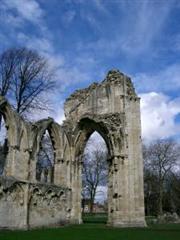 Context: the Jews had returned to the land after captivity in Babylon, had restored much of their old land, but the temple lay in ruins. God didn’t appreciate that the people had restored their former dwellings, but left his dwelling place a shambles.
Notice the contrast here of working hard and receiving little, while the house of God lies neglected. The people ran after their own satisfaction, but it was never enough. Meanwhile, God dwelling place rots.
Most of us reading this post are seasoned Christians. We know the lingo and know enough Bible to be dangerous. I’m sure most know about the symbol of houses in Scripture. I’ll lay out a premise anyway.
God never intended to live in a house built by human hands. His intent, before the spirit inside of Man departed at the Fall, was to have His Spirit animate us and lead us:
Yet the Most High does not dwell in houses made by hands, as the prophet says, “‘Heaven is my throne, and the earth is my footstool. What kind of house will you build for me, says the Lord, or what is the place of my rest? Did not my hand make all these things?'”
—Acts 7:48-50
After the death and resurrection of Christ Jesus, our dead spirits were made alive when we repented and believed in Him. Now the Spirit of God can return to the home intended from the beginning:
Do you not know that you are God’s temple and that God’s Spirit dwells in you? If anyone destroys God’s temple, God will destroy him. For God’s temple is holy, and you are that temple.
—1 Corinthians 3:16-17
And more than just you and more than just me, the Spirit of God dwells in the sum of us, His collective people. This explains the necessity of the Church. (Evangelicals forget this truth to the detriment of the Church Universal: Jesus isn’t just a personal Jesus.) While God restores each of us by dwelling in us individually, he also dwells in the community of the saints:
So then you are no longer strangers and aliens, but you are fellow citizens with the saints and members of the household of God, built on the foundation of the apostles and prophets, Christ Jesus himself being the cornerstone, in whom the whole structure, being joined together, grows into a holy temple in the Lord. In him you also are being built together into a dwelling place for God by the Spirit.
—Ephesians 2:19-22
So while it is important to understand Haggai’s prophecy in terms of its original context, we must not ignore God’s reasonings behind it and what those reasonings mean for us today.
How many of us continue to build our houses, our little worlds, in the physical but neglect the spiritual house of God? You, I, and us together are that spiritual house. We are the dwelling place of God, His temples.
It saddens me that men and women will spend thousands of dollars and hours decorating their homes, but spend so little time resurrecting the ruined house that is their spiritual lives. We live in McMansions on the outside, but we’re content to let God dwell in the dump that comprises our inner lives, the house in which He came to dwell so long ago when we first came to Christ.
And what is the result of this?
You have sown much, and harvested little. You eat, but you never have enough; you drink, but you never have your fill. You clothe yourselves, but no one is warm. And he who earns wages does so to put them into a bag with holes.
That last sentence just slays me. A bag full of holes. If that doesn’t describe the state of the American Church today, I don’t know what does.
If we’re to restore the ruin that comprises our spiritual house, the dwelling place of God, then we need to get serious about what distracts us from that purpose. We’ve been talking about materialism and discontent the last few weeks. We’ve looked at how overconsumption makes us sick, not only in our bodies but in our souls. In short, we’ve examined how well we’ve “paneled our houses” as Haggai notes, while the house of God lies ignored.
The refugees who’d returned to the land got the message of Haggai and repented:
Then Zerubbabel the son of Shealtiel, and Joshua the son of Jehozadak, the high priest, with all the remnant of the people, obeyed the voice of the LORD their God, and the words of Haggai the prophet, as the LORD their God had sent him. And the people feared the LORD. Then Haggai, the messenger of the LORD, spoke to the people with the LORD’s message, “I am with you, declares the LORD.” And the LORD stirred up the spirit of Zerubbabel the son of Shealtiel, governor of Judah, and the spirit of Joshua the son of Jehozadak, the high priest, and the spirit of all the remnant of the people. And they came and worked on the house of the LORD of hosts, their God, on the twenty-fourth day of the month, in the sixth month, in the second year of Darius the king.
—Haggai 1:12-15
Th people took seriously the word of the Lord. They turned from picking out new drapes for the kitchen and worked to rebuild the most important house in their community: the temple of God.
The results?
Now then, consider from this day onward. Before stone was placed upon stone in the temple of the LORD, how did you fare? When one came to a heap of twenty measures, there were but ten. When one came to the wine vat to draw fifty measures, there were but twenty. I struck you and all the products of your toil with blight and with mildew and with hail, yet you did not turn to me, declares the LORD. Consider from this day onward, from the twenty-fourth day of the ninth month. Since the day that the foundation of the LORD’s temple was laid, consider: Is the seed yet in the barn? Indeed, the vine, the fig tree, the pomegranate, and the olive tree have yielded nothing. But from this day on I will bless you.”
—Haggai 2:15-19
If we wonder why so little spiritual prosperity shows up in your life and mine, if we go to the vat of wine and find twenty measures instead of the fifty we thought were there, perhaps we’ll understand why now.
What’s the state of your spiritual house? Are you spending all your time on the material in your life, neglecting the dwelling place of God? Should you be surprised when the spiritual reserves aren’t there in times of trouble (or even in times of plenty)?
God isn’t going to contend with Man forever.

 No one wants to think about a pastor dying unexpectedly, but what if yours did?