
The Finger in the Mirror

Standard

We hear the word repentance bandied about in Christians circles, and in some of those circles, it’s practically a mantra. The list of things we Christians need to repent from is an arm long, filled with things like lust, jealousy, faithlessness, failure to tithe, lack of a decent quiet time, etc.

We also hear pastors and parachurch leaders going on and on about the culture wars. Each day seems to bring a new call to arms from some ministry or self-appointed Christian leader to pray and/or write our political reps over homosexual marriage, abortion, Obama’s health care package, illegal immigration, the rise of Islam and jihad, and so on. The list is nearly endless.

But what I NEVER hear is a combination of the two messages that asks Christians to repent for our complicity in helping to empower the very culture war problems we fight. Never.

A friend sent me a call to prayer for the gathering of Muslims due to take place Friday, Sept. 26, 2009,  in Washington, D.C. Evidently, Islam is trying yet again to market itself as the religion of peace, even as it promotes Sharia law, says little about terrorism,  and advocates a host of legalistic follies that oppose the Gospel of Grace and send millions into a Christless eternity.

When I read that call to prayer arms, I had to ask the question that Christians in America avoid at all cost: In what ways am I at fault for this?

A few thoughts to consider:

  • If American Christians had continued to follow the way of Jesus in ministering to the sick, would we have the health care debate now tearing our country apart?
  • If American Christians had continued to follow the way of Jesus in caring for the orphan, the widow, and the elderly, would we have abortion on demand and a nearly bankrupt Social Security system?
  • If American Christians had continued to follow the way of Jesus in visiting the prisoner, would we have a sky-high recidivism rate?
  • If American Christians had continued to follow the way of Jesus in caring for the poor, Do we truly believe He is the answer?would we have government welfare and the burden of having fostered a society-wide victim mentality?
  • If American Christians had continued to follow the way of Jesus in loving the outcast, would we still be fighting the homosexual agenda on its proponents’ terms or battling race and illegal immigration  issues?
  • If American Christians had continued to follow the way of Jesus by actually obeying His  Great Commission, would we be fighting Islam in this country or dealing with any of the culture wars we seemingly can’t wait to engage with calls to prayers and letters to our congressman?

I would offer that the answer to these and other questions like them is a simple NO.

I would offer that we Christians are as much to blame for the condition we find ourselves in as any of our supposed foes are, but you won’t hear that from the pulpits or from parachurch ministry leaders.

When the Church of Jesus fails to do what the Gospel asks of us, something will fill the vacuum created by our absence. And I can guarantee this: We will not like what fills the vacuum.

Honestly, the denial on our parts sucks the life out of me. And yet we will go on and on about our foes, the way the government does things we don’t like, or the next moral truth to come under assault.

We talk about our nation being a Christian one, but in truth, we’re Christian in name only. If we’re not living the Gospel, then of course everything will go to hell. Why would we be surprised at that?

Do we still believe that Jesus changes lives? Do we believe that Jesus is the answer to all of life’s issues? Then we better stop living as if we don’t.

Equipping the Saints: Stepping on the Brake

Standard

If you’ve been a reader of this blog for a while, you know that I have trepidations about Internet communications. I’m also concerned that the speed of our lives is out of control, as several posts here on that subject will also attest.

The Wall Street Journal ran an article combining the two issues: “A Manifesto for Slow Communication.” Absolutely read it.

Face-to-face communications between human beings is down for the count. As soon as most of the people in one of my long-time small groups were on Facebook, the group folded. Another small group Bible study my wife and I are a part of is attended mostly by those folks who have the least connection to high tech gadgetry. It should come as no shock then that even though this group is open to people of all ages, my wife and I (in our mid-40s) are the youngest people there.

As the Church, these issues pose a serious problem.

What happens to the people in the pews when the business world says “40 hours a week,” but keeping your job means actually having to work 80 hours a week?

What happens when people no longer have time to invest in the life of their church?

What happens when people stop doing ministry because they are too busy?

What happens when everyone stays  in touch by Facebook, but no one meets together face-to-face?

What happens when our dependence on online communications depletes our ability to recognize vocal and body language clues?

What happens when the primary means of teaching others, face-to-face student-teacher engagement, is lost?

A friend of mine who was hired for a 50 hour a week job was working 70-80 hours instead. When she pushed back after several years at that pace, her boss was upset, despite the deluge of accolades my friend had received over her many years of service. This is the world that has been pulled over your eyes...She’s now looking for work.  Hers is a common story.
I worried that Facebook would not be satisfied as a supplementary connection among friends, those who would otherwise meet face-to-face. Indeed, I was right. This summer has gone down as the least personal of my entire life. Facebook seems to be the only way many communicate.

I noted the small group demise above, but another Christian small group we’re a part of pretty much went on hiatus this summer. The reason? People were too busy.

Midweek church services are falling by the wayside. Hardly any church around here has a Sunday night service, either. Fewer churches have Sunday School for adults, though we somehow still manage to cobble something together for the kiddies (when our harried, frantic volunteers can find two seconds to breathe, that is).

Like a decade-old, cotton T-shirt washed too many times on hot, our social fabric is growing increasingly thin. We still recognize the T-shirt for what it is, but we can see through it now.

Questions for this generation of Christians:

How will we educate the Body of Christ if we don’t meet together regularly?

How will leaders identify spiritual gifts in their congregants and nurture them if they don’t meet together in person?

How will younger Christians see the life of Christ modeled in the mature Christian if we can never find time to get together?

How does one read the countenance of another via Facebook?

What happens to the laying on of hands in a digital age?

I don’t have an answer for those questions (and many others like them) other than to say that we Christians must be the countercultural example. If we don’t start slowing down and living differently, then Christ will come back to a world without faith. Because you can’t throw a new convert into a microwave for a minute and expect a fully baked disciple when the bell dings.

The $0.00 Tithe: The Church in a World of Free

Standard

“And as ye go, preach, saying, ‘The kingdom of heaven is at hand.’ Heal the sick, cleanse the lepers, raise the dead, cast out devils: freely ye have received, freely give.”
—Matthew 10:7-8 (KJV)

Recently, a few gripes have been circulating across the Web from plugin developers for WordPress. As an open source product, WordPress itself costs nothing. As hardcore GPL supporters, the company behind WordPress has even displayed a bit of ire that some designers of themes have insinuated links to pay sites in their free offerings. This made some theme developers livid because it threatened their revenue stream.

But the plugin developers’ complaints are new. They say that their free plugins, which often have notes added requesting donations (which I’m fine with, as the plugins are a lot of coding work), don’t even receive thank yous from users, only complaints.

Welcome to the world of free.

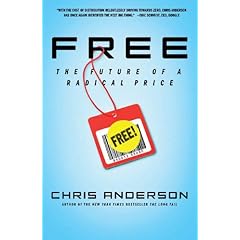
Recently, Chris Anderson of Wired Magazine, whose pontificating about “the long tail” captured the fancy of business leaders everywhere, released his latest book, Free: The Future of a Radical Price. It expands on an article he wrote in 2008, “Free! How $0.00 Is the Future of Business.”

Anderson argues that unless a business is giving away important products for free, it’s doomed. The way companies will have to make money from free  is by offering some kind of “freemium” deal, giving away part but offering a paid whole so attractive that people will want to buy it in addition to what they are receiving freely. On some level, that makes sense.

As someone who takes advantage of free, I love it that good things are available without cost. My computers bulge with open source software, some of it outstanding. The time clock I use to track the work I do as a writer is a free Adobe Air application. And if I wanted to, I could dump Microsoft Office and go with Open Office. So free is good.

But I’m not a freemium buyer. If I have to pay, I tend to do without or find a source that offers similar functionality that is still free.

And this is a problem, because that inability to convert free users to freemium buyers is destroying some businesses. Google has managed to figure out how to do this, but few others have. The newspaper industry is a classic example of “death by free.” Free online news and free classifieds through Craigslist have gutted their business model. The New York Times tried to cajole readers into paying for access to online op-ed pages, but with everyone in the world having an opinion, no one bit. Only The Wall Street Journal has had any success with free and freemium, and even they’re losing money.

What’s bad about this is that free is a genie that won’t easily go back into its bottle. Too many people expect to get something for nothing now. And many of them are like me: “No thanks on the upsell.”

When I ponder free and freemium, I consider how they will affect the Church, especially in the West.

Last year, the Church of England lost £400 million due to investment wipeouts in the world’s economic turmoil. They had to seriously curtail spending as a result. Other denominations face similar shortfalls.

Attending church, on one level, is technically a free activity once the cost of driving to a church meeting is excluded. But then again, it’s not. Some churches demand a tithe. Others don’t, but they still rely on the generosity of attendees to fuel pastoral salaries and the increasing costs of educational materials and programs. And lately, has anyone checked the church utility bill? Yowza!

But with more and more people believing in the gospel of free, where does this leave the Church?

For 13 years, I was part of a megachurch  noted for its drawing the unchurched or those dissatisfied with prior church experiences. Throughout the history of that church, a low expectation existed concerning asking people in the seats for their money. As a result, that church, despite many thousands attending, faced nonstop cashflow issues. Too many people showed up, partook of all the costly services the church offered, and gave $0.00 in return. In the end, that church had to radically alter its perspective on asking the people for money, and even instituted a membership program (freemium?) where none had existed before.

I believe what I saw at that church was the cusp of the problem the Church in America overall will encounter with this idea of free.

And so I wonder…

In what ways are the thought processes of church attendees being affected by this notion of free?

How will free alter the way the American Church operates?

Is there a freemum option open for churches?

How will companies that serve the American Church adapt to free? Will they go the route of newspapers?

Will free ultimately make American Christians more stingy or less?

I look at the Book of Acts and I see a model of free that is totally at odds with the way we American Christians live. Nothing we do in the Church here is free. If free genuinely catches on and the business world manages to make it work, I think the Church faces some radical problems it has not bothered to prepare for.

In the wake of lost investment monies, Westernized churches around the globe are reporting budget shortfalls and subsequent program cancellations or staff reductions. Church buildings, staff salaries, and programs ain’t cheap. A world built on a cost of $0.00 poses enormous challenges to Western churches grown used to watching stacks of money pour in from the faithful.

Honestly, I think a world of change is needed—and quickly. What do you think?