I once read about a pastor who was criticized for telling people he was baptizing that when they came up from the water not to be surprised if they were speaking in tongues—which was the case for many. Critics would argue that this set a false expectation.
But in thinking about this, I have to come down in favor of the pastor.
You see, each of us is receiving indoctrination. Just being alive means that a perpetual stream of thought patterns assaults us 24/7/365. Some of that stream is obvious; some is not.
Three responses to indoctrination exist: We can embrace an idea, ignore it, or counter it.
When we look at the American Church today, we have to ask just what kind of indoctrination we are receiving. By and large, the message coming out of our churches sounds like this:
Jesus loves you, even though you sometimes sin. You can rest in His grace and not be worried about doing things for Him except to read your Bible and pray. Show up on Sundays and to the occasional church event. If you are young, go to a good college and get a degree that ensures a solid job working for a reputable company. Find a good-looking Christian mate from among the right kind of people, buy a house, and have 2.2 kids. Make sure those kids are loaded with activities and skills so they can get into an even better, more expensive college. Live in the right neighborhood with the right kind of people who can help you advance in life and build your career. Go on vacations and enjoy yourself. Give some money every once in a while to worthy causes. And most of all, be happy with your Christian experience, even if you sometimes wonder whether it’s really all it’s cut out to be.
Seriously, isn’t that the indoctrination most of us Christians receive from childhood until the day we die?
In stark contrast, here is the Bible’s true indoctrination:
You have been crucified with Christ. Any pretense you had to living like worldly people is dead. Jesus Christ, the Lord of All, dwells inside you. Greater is He that is in you than he that is in the world. You are being changed from one degree of glory to another, moving from sinner to saint. You are seated in the heavenlies with Christ and are empowered by His Spirit. Therefore, nothing is impossible for you. The Christian life is filled with miracles; they should be expected. You overcome the world because Christ did. Take dominion. Make disciples of all nations and tear down strongholds. Worship Christ with your entire being, even if that puts you at odds with the establishment. Pray at all times and in all places, and expect those prayers to come to great fruition.
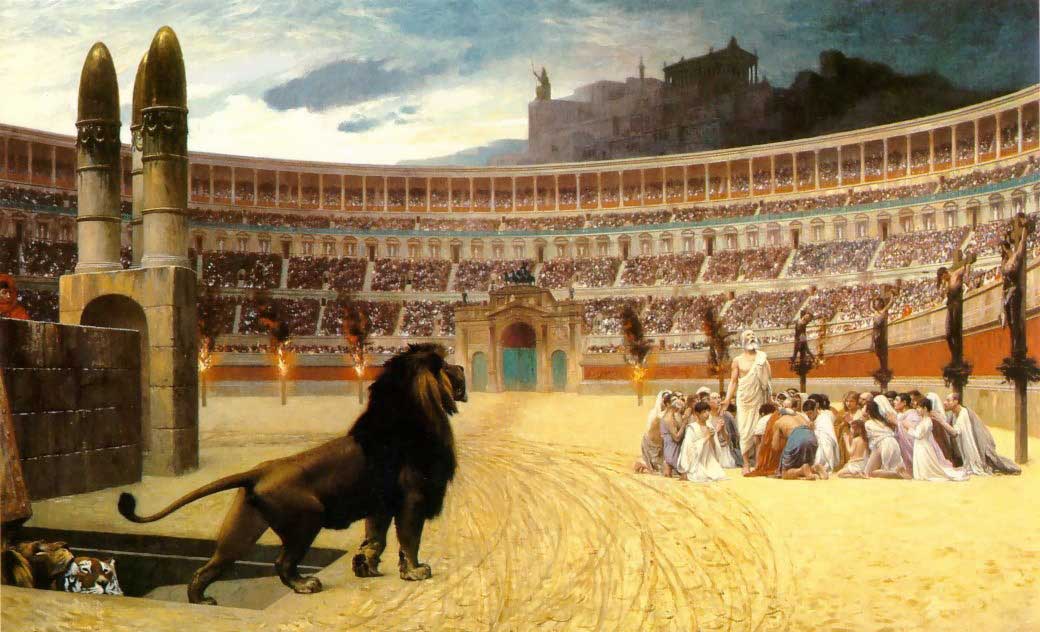
You will be hated for Jesus’ sake. Because you have counted all things lost for the sake of knowing Christ, you will live a countercultural life that will be misunderstood by most people. For this reason, many of you will be martyred for the Gospel because Christ is in you, is transforming you, and compels you to speak about Him.
Your love will be for all men, no matter race, creed, or color. You will care for the downtrodden and weak. You will repay good for evil and will love and pray for those who persecute you. Your life is now hidden with Christ, therefore, you are not your own. You only do what the Father is doing, not what you want. Your life is expendable for the cause of Christ. Therefore, you should not think too highly of yourself, but in humility you should value others as much as yourself and your family, if God in his graciousness gives you a family. Your primary family is the family of God, and building up the community of faith through the supernatural gifts God has implanted in you is one of your primary reasons for existence. Meet with the community of faith as much as possible and ensure that no one among you lacks for anything needful, even if that means you personally do without the trappings of worldly class and culture. And no matter what kind of life you end up living, you should give thanks to God at all times.
Most of all, never stop laying ahold of Christ and abiding in Him.
We don’t set that kind of expectation in our churches, though, do we?
The Church in America bears little to no resemblance to the Church of the 1st century because our indoctrination is lukewarm or nonexistent. Period.  Some may argue that they do try to indoctrinate people into that more Biblical model. But the fact is that we hear it rarely, and surely not enough to compete with the nonstop message the world gives. And a worldly message abhors a vacuum, too.
As a Church, we have got to get serious about speaking truth to each other. We have got to stop watering down our indoctrination. If we don’t, the world is all set to step in and give us its own deviant set of expectations.
In closing, imagine what the next generation of Christians would be like if we set just the one expectation that they would be martyred for Christ because they love Jesus so much. Too strong? I don’t think so. For too long we’ve been preaching a watered down message that asks nothing. Why then should we be surprised at the powerless outcome?

 lost people to come to our church meetings has only succeeded in diluting our ultimate effectiveness. As it is said: The good is often the enemy of the best.