Busting Myths About Christianity: Assessing Myths 7-8

Standard

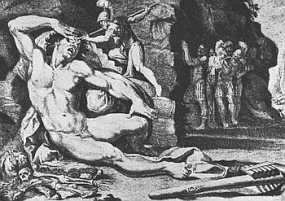
Odysseus blinding the cyclops PolyphemusOver the last week, we've been looking at commonly heard statements about Christianity that have taken on mythical proportions. It's hard  to be a Christian in the West and not encounter these myths: 

  1. Christians are more judgmental than non-Christians.
  2. Christians are stingier than non-Christians.
  3. Christians are more intolerant of other people than non-Christians.
  4. Christians are more short-sighted than non-Christians. 
  5. Christians don't know how to have fun. 
  6. Christians despise intellectuals more than non-Christians do.
  7. Christians prefer kitsch over important art.
  8. Christian subculture mimics the world rather than creating anything lasting.
  9. Companies run by Christians are as unethical as secular companies, and perhaps more so.
  10. Christianity causes more problems in the world than any other religion.

Today, we'll look at myths #7 & #8:

7. Christians prefer kitsch over important art

As the Church of Jesus Christ grew and expanded, it touched nearly every art form. The Gospel's revelation of the divinity of Christ and His human nature resulted in a synthesis that ultimately broke the back of gnostic religions. This, in turn, created an environment in which art flourished, as God's coming to Earth as Man hallowed imagery.

But while the important artists that forged the backbone of Western art identified as Christians, the 19th century saw an increasing backlash against the realism that undergirded Christian art up until that time. With the coming of German higher criticism in the late 19th century, questions about the veracity of Scripture led to questions about absolute truth. The resulting cultural decline reflected in art that deconstructed itself.

Christian artists, unable to fend off the trend, either stayed true to their art and faded into profitless obscurity, or they pandered to low culture in an attempt keep bread on the table. When modern marketing techniques raised advertising to the level of popular art, the culture rewarded ad icons. Those icons, when mass marketed, led to an even lower form of art now known as kitsch.

I suspect that the rise of fundamentalism on one side and higher criticism on the other, dealt a death blow to Christian art during the Great Depression. Fundamentalists, in an entrenchment move, lumped all contemporary art into the category of "potentially evil," and this spilled over into the Evangelical consciousness. As a reaction against the supposed judgment that fell upon this country for the Roaring Twenties, Fundamentalists pushed hard against all forms of profligacy, and art, as a whole, suffered in that wake. Art, in general, lay damned.

But God built a creative spirit into man, so that desire to create needed a channel. What it got was a version of art that combined advertising imagery with a new sanitized Christian "ideal." And popular art, especially by Christians, has not recovered.

In her seminal book, A Profound Weakness: Christians & Kitsch, Betty Spackman argues from two sides of this issue, at once decrying kitsch as poor art, while acknowledging that it can still carry meaning for Christians. More to the point, she makes a bulletproof case that much of what passes for Christian art today is more kitsch than art, and that recovering a true appreciation by Christians for more masterful art may be difficult given the current state of Christian subculture around the world.

When all of Evangelicalism in the West is considered, it's hard to escape the truth that kitsch dominates our expression. From our "His Pain, Your Gain" t-Shirts to "WWJD" jewelry to modern megachurches, Christian culture perpetuates kitsch over substantive works, the typical Christian bookstore replacing the secular museum. Worse yet, the average Christian today can rack his brain and not come up with the name of a contemporary Christian artist—with the possible exception of Thomas Kinkade.

The problem of Christians and kitsch extends to all parts of the creative life within the Church. As kitsch itself is a derivative form, so too many creative endeavors within the Christian community lack a true defining Christianity, instead adding a Christianized coating to secular forms. What a true Christian expression of the arts might look like in the 21st century is yet to be seen, but we all should hope to live long enough to witness its full blossoming.

Assessment: Confirmed

*** 

8. Christian subculture mimics the world rather than creating anything lasting

Our affinity for kitsch means Christian expression cannot avoid including it at the core of our subculture. As mentioned above, the derivative nature of kitsch means the art itself has come from some other source, itself often derivative. Christians attempting to create out of that limited pool come off as pseudo-sanctified mynah birds, rather than images of the Spirit as dove.

For this reason, contemporary Christian culture in the West lives more off a perverted form of its past than a vital present. When the Reformation is reduced to a derivative t-shirt, it's hard to argue that modern Christians care one iota about leading culture, preferring instead to be culture's dog on a leash.

Appealing to cultural relevance only worsens the problem, pulling the Church down into the world's cultural cesspool. Though not all of modern culture should be viewed at arm's length, sadly, the aspects deemed most usable by the Western Church are the ones most needful of discarding. Sure, it may be possible to erect something intriguing out of rusty tin cans, but is that redeeming the time we've been given by the Lord?

Until the Church in the West abandons its love affair with redeeming the sleaziest parts of our culture, most of what we redeem from it will be garbage. And derivative garbage, at that. Encouraging folks guided by the Lord to create new directions in culture—leading, not following—and backing their gifts wholeheartedly is our only hope.

Assessment: Confirmed 

***

Stay tuned, the final two myth assessments still to come… 

Entries in this series:

{Image: Odysseus blinding the Cyclops Polyphemus

Busting Myths About Christianity: Assessing Myths 4-6

Standard

The other day, we looked at three myths that dog Christianity, particularly the form found in America. Today we'll examine three more.

The ten myths:

  1. Christians are more judgmental than non-Christians.
  2. Christians are stingier than non-Christians.
  3. Christians are more intolerant of other people than non-Christians.
  4. Christians are more short-sighted than non-Christians. 
  5. Christians don't know how to have fun. 
  6. Christians despise intellectuals more than non-Christians do.
  7. Christians prefer kitsch over important art.
  8. Christian subculture mimics the world rather than creating anything lasting.
  9. Companies run by Christians are as unethical as secular companies, and perhaps more so.
  10. Christianity causes more problems in the world than any other religion.

Let's look at numbers four through six…

4. Christians are more short-sighted than non-Christians

You won't find a church with a Fifty Year Plan. Or a Twenty, for that matter. Long-range goals don't figure into much of what we do in American Christianity. In many way, we American Christians resemble a school full of amnesiacs, always learning, but never remembering the past well enough to build toward a future.

Somehow, we've allowed the first half of one passage to subsume the rest of Scripture: 

Come now, you who say, "Today or tomorrow we will go into such and such a town and spend a year there and trade and make a profit"– yet you do not know what tomorrow will bring. What is your life? For you are a mist that appears for a little time and then vanishes.
—James 4:13-14 ESV

While most of us would deem "Live for today for tomorrow you die," to be the ultimate self-centered expression of a culture hellbent on hedonism, we've somehow aligned it with the James passage. We get all dispensational and start talking how "it's all going to burn." Our lives take on "So what?" sheen.

That so many people who call themselves believers fall into this trap should bother us. But it doesn't.

Jesus said this:

"Do not lay up for yourselves treasures on earth, where moth and rust destroy and where thieves break in and steal, but lay up for yourselves treasures in heaven, where neither moth nor rust destroys and where thieves do not break in and steal. For where your treasure is, there your heart will be also."
—Matthew 6:19-21 ESV

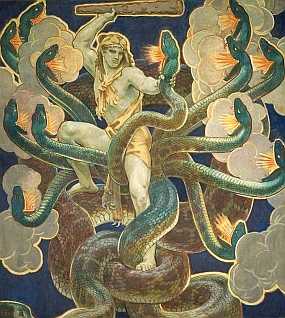
We need to look at James in light of Jesus. The Lord tells us that our mist-like life here and now has eternal purpose that will carry over into the afterlife. Singer-Sargent "Hercules and the Hydra"It is one thing to live for the day, but quite another to live for the day so eternity is richer.

You don't hear enough sermons about storing up treasure in heaven. I hear plenty about living the good life now, yet the only correct way to understand "it's all going to burn" is not as an excuse to cover profligacy this side of heaven, but as the means of testing every man's and woman's work after we die.

Who can blame a non-Christian for going for the gusto now? He or she's got nothing else to look forward to. Some will move beyond the "live for the moment" lifestyle that plagues America, opting for the concept of a "legacy." Even that may be wishful thiking, hoping our typical three-month collective memory will somehow stretch out to a century or more.

But when a Christian adopts "grab all the gusto' as a personal motto? That's the most pathetic short-sightedness of all. Yet how much of modern Christianity in the United States lives by that mantra? Better that we all be poor wretches considered the scum of the earth by non-Christians than we build a Camelot now that will only succumb to moths and rust.

Are all Christians that short-sighted? No. But increasingly, our churches fill with folks looking for the good life stamped by the Holy Spirit's seal of approval. When our preaching says nothing of building a true legacy that we will actually play out in eternity based upon what we do now, our short-sightedness damns us to a future as the shoe-shine boys of heaven, buffing the sandals of saints who laid it all down, even unto death.

We know we have an eternal future. What is more short-sighted than living as if that doesn't matter?

Assessment: Confirmed

***

5. Christians don't know how to have fun

When it comes to amusing ourselves to death, I think American Christians find as many ways to do it as non-Christians, albeit with fewer F-words and less full-frontal nudity.

We demanded, and seem to have received, more movies geared to Christians. And while the finished products haven't been all that spectacular, our craving for more will ensure they keep coming–with increasing regularity.

I plan on writing more about this topic in the near future, but in many ways, we Christians in the United States traded sanctification for entertainment. When God Himself no longer seems to excite us, we surround Him with our little cultural dog and pony shows, praying someone will pay attention. How else do we explain the entertainment complexes we used to call "churches." At one point in time, we went to see men on fire for God, but now preachers have to literally pour gasoline over themselves and light a match to get anyone to sit up and take notice.

Oddly enough, this fifth myth may be a remnant from the Seventies, before Christians got hip to their entertainment choices. I'm not sure non-Christians today hold the opinion that Christians don't have fun. That's been replaced with the concept that Christians don't really care about the life and death belief system they hold, practicing those beliefs more as a hobby than a way of life. If anything, it's the non-Christian who's grown more serious about life, while too many of us Christians worry that our new 60" TV still isn't big enough to show all the fine detail in the latest Left Behind video game we bought after reading the book and seeing the movie.

It's quite sad that in so many instances the one thing that separates us from non-Christians isn't the amount of entertainment we consume, but the randomly-sterilized nature of the entertainment we spend millions of dollars buying. Sure, their violent video game has swearing, but our violent video game doesn't.

If we think we're fooling God with that kind of subtlety, we're only fooling ourselves.

Assessment: Busted—perhaps too Busted

***

6. Christians despise intellectuals more than non-Christians do 

It would be safe to say that I don't personally know any Christian intellectuals. On the other hand, while I do not know any non-Christian intellectuals, either, I know a few who have convinced themselves they are. And as we all know, an audience that only consists of one's self is usually an easy audience to please.

First Things has a couple online articles covering Mark Noll's seminal book on this issue, The Scandal of the Evangelical Mind (found here and here). Dr. Noll researched that book during my tenure at Wheaton, and though I never took any classes from him, I had a few other profs I'd classify as intellectuals. Unfortunately, like most intellectuals, those profs congregated in very tight circles. The less intellectually rigid of us rarely encountered them "in the wild." And so it is today.

I knew an Old Testament scholar who attended the same church I once did. Sadly, that church never seriously appreciated the kind of study that scholar pursued. Though they trotted him out on occasion as a kind of "please take the witness stand, Doctor" expert, he eventually left the church. I suspect he tired of being a sort of intellectual freakshow amid people who'd rather be watching Fear Factor.

So whither the Christain intellectual? Do any still exist?

Say what we will about history, but it's loaded with Christians (and people who mentally assented to Christianity) who drove the arts, philosophy, literature, and science—and in large numbers.

But what happened to them all? Where did they go? Sure, you see a Plantinga here, and a…uh, hmm. I'm not coming up with any names for contemporary Christian lit authors. Artists? Nope—no one comes to mind. In fact, I suspect that most Christians, even if their lives depended on it, couldn't name one contemporary Christian intellectual or artist.

Are we so bereft today that all we can remember are those great Christian intellectual luminaries of the past? Christianity nurtured Western civilization into being, yet in the 21st century we Christians gave it all away.

Perhaps we missed the point of this verse:

Where is the one who is wise? Where is the scribe? Where is the debater of this age? Has not God made foolish the wisdom of the world?
—1 Corinthians 1:20 ESV

Rather than understanding that cleverly invented myths from the world's wisemen don't trump the eternal truth of God correctly handled God's wise men, we threw all the wisemen—and their wisdom, no matter the source–out.

That this ignores most of the rest of Scripture, and also makes a fine distorted case for tearing all the wisdom books out of the Bible, eludes far too many people. In the end, Christianity never calls anyone to turn off his mind. To insist it does only results in the kind of brain-dead emotionalism that leads to error. Hoisting godly wisdom by it own petard makes the Church look vacant in the cranium.

While the non-Christian may ignore the intellectuals, I suspect precious few of them are hauling out treatises to discredit the life of the mind. We Christians of the 21st century, unlike our predecessors of long ago, seem to be the ones intent on slaying the intellect.

If the few Christian intellects left decry the problem, perhaps there's some truth to the rumor. But then, we don't listen to anything they say anyway.

Assessment: Confirmed

***

More myth assessments in days ahead…

Entries in this series:


{Image: Hercules and the Hydra by John Singer-Sargent — Simply awesome.

“Arise, My Love, My Beautiful One, and Come Away”

Standard

Last Monday, the FedEx driver delivered a package for Christmas, the gift I bought my wife this year. Due to some good fortune, I found that gift for ten percent what it normally cost. We can't afford to have a big Christmas this year, so ninety percent off comes as a real boon.

Since we're literally the last house on the line, the people who built our house needed a power booster box in order for the electric to work right. For some reason they elected to put that box close to the house. When they added a second garage later, the bulky box wound up in the middle of the newly expanded driveway.

Typically, delivery drivers knock and hand me my package. I warn them about the box and all is well. But at Christmastime, drivers hustle, so they don't knock. The FedEx driver didn't, therefore he got no warning from me. You can guess the rest.

Homeschooling got derailed that day as I spent the afternoon contacting all the right parties to ensure that no one got killed from the damaged electrical box. My electric company brought out a crane truck to put the box back in place, then tested to make sure everything was safe.

Jump to this past Thursday morning.

I typically write this blog for the following day after 10PM the night before. Then I date it for just after midnight. For some reason, I wrote "We Need a Gospel That Speaks to Failure" early in the morning on Thursday, then posted it for just after midnight. Unbeknownst to me, as I was writing that post, failure poised to strike the Edelen household.

Shortly after taking a shower that seemed a bit chill, I walked down into my basement to find our hot water heater had exploded. Think how the Tasmanian Devil balloons after Bugs feeds him a cake made out of dynamite, freeze that image at the point of maximum Taz expansion, and you have a perfect image of what our hot water looked like.

Well, I know a man in our church who stood up at a recent men's meeting and declared his plumbing business needed more clients. Being a freelance writer, I know how hard it is for independent contractors to get work. So even though my tendency would be to go with the plumbing company I would typically call, I called the church guy instead.

The thought of another big, unexpected expense heavy on my mind, I contemplated the irony of the post I had waiting to go out later. Of course. Write about a trial; face the trial.

The church plumber tells me when he arrives that it wasn't the hot water heater that failed initially but the pressure regulator on the water line. With no pressure regulation, the hot water heater then blew. He didn't have a new pressure regulator with him.

Now I had a problem.

When you live in a town of 2,000 people, the sidewalks roll up at 6PM. My wall clock read 6:10 PM. To my surprise, a call to the local hardware store reveled they had extended hours that evening—and they had one pressure regulator in stock. Huzzah!

Wanting the job to go as quickly as possible, I told the church plumber that I'd go into town to get the regulator if he wanted to keep working. So my son and I jumped into my truck to head for the hardware store.

Pulling out of my garage, I had to maneuver into a portion of my gravel driveway I never drive over so I could avoid the plumber's truck. By the time I got to the end of my driveway, I noticed my truck handled sloppily. I didn't get 0.05 mile away from home before the thud, thud, thud behind me told me a sad story. Turning around, I limped up the driveway, and found a cotter bolt sticking out of my back tire. Between the tread and the sidewall. Where it can't be repaired. On an expensive 4×4 tire only ten months old.

Merry Christmas.

Oh, the bitter irony that the electrical company's crane would toss a cotter bolt that ended up destroying a perfectly good tire. Oh the extreme bitter irony that I should drive over that part of the driveway in order to get around the plumber's truck. Oh the heart crushing irony that all the money I saved on the item I bought for my wife that the FedEx guy delivered would be more than wiped out by the cost of a new tire.

And Thursday's trial's not over yet… 

{Tonto mode on}

Friday, much filled with appointments. Thirteen-year old spare on truck leak slowly. Ruined tire must be replaced. Appointments must be kept, else great trouble arise. Tire stores in town that can be reached on slowly leaking spare do not have tire. Dan must make dangerous trek over many miles of prairie to procure tire elsewhere, while making many appointments under far less than many moons.

By grace of the Great Spirit, Dan succeeds. Dan very much tired and grinding teeth. Dan not happy with last rising, setting, and rising of the sun.

{Tonto mode off}

I didn't go to church on Sunday. Once a year, for most of the last thirty years, I volunteer for the Audubon Society Christmas Bird Count. I've been a birder since I was twelve, so I've got a little experience. The local Audubon Society president lives across the street from me, so we've gone out before to count. It's a good time with a friend and neighbor.

While I normally play drums every Sunday morning for worship, I'd already arranged for someone to fill in for me. Most of the Christmas Bird Counts I've done have been the Sunday after Christmas, but different Audubon clubs run the counts differently, so any Sunday over a four week period is possible. The Sunday before Christmas, I'm sure, wasn't the best time for me to be shirking my rhythmic duties. 

I don't miss church very often. I don't like to miss church. I need to be with God's people every Sunday.

The alarm goes off yesterday at 5:20 AM and I roll out of bed. The day is gorgeous, partly cloudy with temperatures in the mid-60s—a rare confluence this time of the year in Southern Ohio. My neighbor, Rob, and I head out, eat breakfast with the counting crew, and hit our region to count.

Within hours, all the garbage from the week before drained out of me as I walked through God's Creation. I spotted a beautiful Ring-necked Pheasant and marveled at the power God built into its legs as it sprung into flight. Ring-necked PheasantI considered the Red-bellied Woodpecker's head, so wondrously made that it doesn't give itself a concussion hammering for bugs under tree bark. I watched the Northern Harrier hover in place, then trace lazy circles in the cerulean blue sky. I stood awed at a flock of Starlings twisting and turning in flight, but with no single bird leading the dizzying formation. The perfectly aerodynamic V formation of Mallards. The Belted Kingfisher's plunge into cool waters. The Kestrel's patient hunt for food.

Four things on earth are small, but they are exceedingly wise: the ants are a people not strong, yet they provide their food in the summer; the rock badgers are a people not mighty, yet they make their homes in the cliffs; the locusts have no king, yet all of them march in rank; the lizard you can take in your hands, yet it is in kings' palaces. Three things are stately in their tread; four are stately in their stride: the lion, which is mightiest among beasts and does not turn back before any; the strutting rooster, the he-goat, and a king whose army is with him.
—Proverbs 30:24-31 ESV

I worshiped God outdoors today. Carolina Wrens and Song Sparrows provided the special music. In the power and mystery of God's Creation, I heard the same words the Lord spoke to Job, and I asked myself, Who am I in light of so great a God?

When I walked through the doors of my house, I realized I hadn't considered my troubles all day. And I doubted that a Sunday spent in church would have led to the same release I found from the Creator's sparrows:

Look at the birds of the air: they neither sow nor reap nor gather into barns, and yet your heavenly Father feeds them. Are you not of more value than they? And which of you by being anxious can add a single hour to his span of life? And why are you anxious about clothing? Consider the lilies of the field, how they grow: they neither toil nor spin, yet I tell you, even Solomon in all his glory was not arrayed like one of these. But if God so clothes the grass of the field, which today is alive and tomorrow is thrown into the oven, will he not much more clothe you, O you of little faith? Therefore do not be anxious, saying, 'What shall we eat?' or 'What shall we drink?' or 'What shall we wear?' For the Gentiles seek after all these things, and your heavenly Father knows that you need them all. But seek first the kingdom of God and his righteousness, and all these things will be added to you. "Therefore do not be anxious about tomorrow, for tomorrow will be anxious for itself. Sufficient for the day is its own trouble.
—Matthew 6:26-34 ESV 

Sometimes, God will speak to you apart from the fellowship of believers for a time of special, intimate healing. Listen for that time; this is what He'll say:

My beloved speaks and says to me: "Arise, my love, my beautiful one, and come away, for behold, the winter is past; the rain is over and gone. The flowers appear on the earth, the time of singing has come, and the voice of the turtledove is heard in our land. The fig tree ripens its figs, and the vines are in blossom; they give forth fragrance. Arise, my love, my beautiful one, and come away.
—Song of Solomon 2:10-13 ESV 

Then let yourself be swept up in His arms.