
Deep Economy, Part 1

Standard

I picked up A.W. Tozer’s The Knowledge of the Holy about six years ago and it made me tremble. I can’t remember a book having so much power in its pages. I think it may be the best book I’ve ever read.

To that short, short list of tremble-inducing tomes, I add Bill McKibben’s Deep Economy: The Wealth of Communities and the Durable Future. Why the quaking? Because McKibben captures in the short 232 pages of this book much of what I’ve spoken of here at Cerulean Sanctum. And he does it quite well.

When I blog about community, agrarianism, stewarding Creation, and living lives of deep meaning for the Kingdom of God, it’s an intricate dance of ideas that sails over some people’s heads. Bill McKibbenSomeone we know well referred to my wife and me as “hippies” for some of the ideals we espouse that touch on these topics, and while we take that lovingly, we also understand that people don’t fathom what we’re talking about.
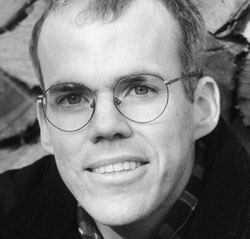
Bill McKibben understands. His book lays it all out in a way that concentrates the profound message: We need to ask ourselves if the lives we live in 21st century America have real meaning beyond consuming more.

Jesus Christ occupies the center of purpose. No human life finds purpose apart from Him because He made us to be Kingdom people who embody His very image. Our message to the world not only reflects in the words of Truth we speak, but the lives of justice and mercy that we live—His life, His truth, His justice, His mercy. For this reason, the Christian lives a life that is different, a life dedicated to loving God and loving our neighbor as ourselves.

Anyone who desires to live that life will rudely encounter the pragmatism, utilitarianism, Social Darwinism, and consumerism that fight with bloody tooth and claw against the Kingdom of God. None of those four worldview are compatible with true Christianity, yet the American Church suffers from their deadly infections to the point of lying in some spiritual hospital in a fevered coma.

Those worldviews own us, no matter how hard we American Christians say otherwise. If you read here long enough, you know that I believe we’ve varnished those worldviews with a thin coat of Christianity and called them redeemed.

But they simply can’t be.

We are wasteful people who pillage the Creation the Creator told us to steward, and then we beg for more. We use spiritual language and manipulate the Gospel to our ends, calling on it to give imprimatur to our uncontrolled growth and need for more material wealth, no matter what the expense. As I noted a few weeks ago, a word exists for that mentality: profligacy.

Deep Economy is a book about profligacy and its deleterious effects. It explains why uncontrolled economic growth will not work on a global scale. It explores the psychological depression arising from desiring more and more stuff at the expense of our souls, our communities, and the world around us. It sounds the clarion call that our lives are out of whack and we’re taking the planet down with us. It proclaims our obsession with the individual must be reversed so genuine community prevails.

Next week, I’ll be exploring each major concept in Deep Economy. I’ll also show why McKibben’s analysis aligns with what we Christians know to be true from the Scriptures. Most of all, I hope I can sway a few doubters to see that another way to live exists, one that better reflects the heart of the Lord.

If you can find the book, pick it up and read it this weekend. And do so with an open mind and spirit. McKibben takes a middle of the road approach even when some of his talking points sound…dare I say it, liberal. If anything, though, those points may be the ultimate in conservatism.

Thanks for reading. Hold on tight…
Blogging “Deep Economy”

Standard

Diane Roberts of Crossroads clued me into Bill McKibben’s latest tome, Deep Economy: The Wealth of Communities and the Durable Future. You’ll notice that I’ve added the book to the sidebar under “Essential Reading.” Not too many books wind up there, so this should tell you something.

If you’ve read Cerulean Sanctum for any length of time, you realize that I blog on several pet topics repeatedly:

  • Rediscovering genuine community
  • Recovering local economies
  • Instituting practical agrarianism
  • Caring for creation
  • Fighting globalism
  • Resisting American “bootstrap” individualism
  • Countering Social Darwinism in our work lives
  • Eliminating wastefulness
  • Developing a true Christian counterculture

McKibben, who self-identifies as a Christian, has written a book that details the problems our society faces with regards to these issues, then lays out solutions. Because I believe Christians must be on the forefront of these issues, I believe this to be a criticaly important book, and one that illustrates in a way that all readers will grasp why we should be concerned.

In the days to come, I’ll be discussing the main talking points of Deep Economy and why we must confront them if we’re to live out the Gospel.

Stay tuned…

Demolishing the Culture of Busyness

Standard

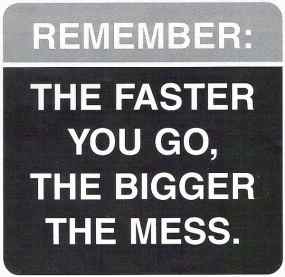
I didn’t want to put out two “Dire Dan” posts in a row, but besides the problems we have with taking care of the least of these, we have a serious problem with busyness. Yep, speed kills...and now we have the proof!Any long-time reader knows that I feel busyness damages the soul and makes us less aware of the the Lord’s leading. And it’s a growing problem.

Now my suspicion is no longer conjecture.

Dr. Michael Zigarelli, associate professor of Management at the Charleston Southern University School of Business, conducted a study over five years that shows that Christians are succumbing to the tyranny of the urgent.

I’ll wait here while you read the article.

Read it? Great!

In light of yesterday’s post, how can we possibly meet the needs of others if we’re always focused on our own lives as we rush hither and yon? Well, we can’t. Sort of puts a crimp in those Kingdom of God plans, doesn’t it.

Who succumbs to the rush?

And professionals whose busyness interferes with developing their relationship with God include lawyers (72 percent), managers (67 percent), nurses (66 percent), pastors (65 percent), teachers (64 percent), salespeople (61 percent), business owners (61 percent), and housewives (57 percent).

Let’s break that list down to root issues that create busyness.

Lawyers, managers, salespeople, and business owners

  • Distorted work lives (caused by industrialism).
  • The pursuit of money.

Nurses, teachers, housewives, and pastors

  • Bearing the load of caring for others in a relationally-disconnected society created by distorted work lives and the pursuit of money.

The root causes listed are familiar to readers of this blog. Many posts here cover these root issues. Sadly, those tenacious roots grow deeper every year, but we hear little about them in our churches.

It’s not enough to say that we must focus more on God. That’s just adding another task to the problem. Instead, we Christians must start questioning the underlying root issues that cause this busyness.

While the study does not explain why Christians are so busy and distracted, Zigarelli described the problem among Christians as “a vicious cycle” prompted by cultural conformity.

“[I]t may be the case that (1) Christians are assimilating to a culture of busyness, hurry and overload, which leads to (2) God becoming more marginalized in Christians’ lives, which leads to (3) a deteriorating relationship with God, which leads to (4) Christians becoming even more vulnerable to adopting secular assumptions about how to live, which leads to (5) more conformity to a culture of busyness, hurry and overload. And then the cycle begins again.”

I agree with Dr. Zigarelli’s analysis. First, we are caught in a vicious cycle of busyness. Second, the implied cure is to no longer conform to the culture.

What must that non-conformity look like?

I suggest that we Christians must

  • Revitalize and rebuild local economies that counter globalism’s trend toward marginalization of communities and individuals
  • Discover alternative work lives that keep families (and communities) together during the day
  • Pursue simplicity by rejecting consumerism
  • Create alternative Christian communities that better conform to the Gospel’s standard of benevolence and more effectively shoulder the burden of caring for others
  • Reform our doctrinal emphases from head knowledge to the practical outworkings of the Faith
  • Stand by and encourage those who reject conformity to the prevailing culture rather than marginalizing them
  • Craft a new vision for living lives devoted to God first and to each other second.

Folks, these root issues penetrate deeply into the Western psyche. Busyness simply reflects the root. As Jesus notes of some demonic powers, only prayer and fasting will drive them out. And I believe some element of the demonic weaves through these roots.

None of this will be easy. It means revisioning all aspects of how we live our lives. Too many of us think how we live now is the only way it can be. But that’s a lie. We’ve got to stop believing that lie and start believing that God can change things if we repent and start asking hard questions that demand even harsher answers.

See these posts for more: