Being the Body: How to Forge Real Community, Part 4

Standard

It’s discouraging how disconnected we are as people. Even Christians live like there’s no one else outside the walls of their church. Sadly, in many cases, we erect walls inside the church, too.

I continue to receive private e-mails from folks who are resonating with this series because they’ve been victims of our lack of community. Their churches gave them the “God helps those who help themselves” line and let them twist in the wind.

It tears me up to read those stories. Yet they keep coming in increasing number.

In some ways, I can’t blame people for choosing self-sufficient isolation and a hands-off attitude toward others. Prayer circleWe’re inundated by those two messages. As much as we believe that no one can tell us Americans what to do, we live in a culture that bombards us with a million takes on how we should live. Every day, no matter how much we believe we’re our own guides, media saturates us with messages we heed without much thought. Don’t believe me? Did you tailor your wardrobe or plan your activities today based on what the weatherman said? That’s just one simple example.
While Joe Meterologist at KRPP TV isn’t certified to teach, his message is educational nonetheless. Our teachers outnumber us, and few of them teach a message that upholds basic Christian thought. We tell ourselves we ignore the pedagogical aspects of the messages we hear, yet they still impart a worldview. We Christians need to understand that just because we spend ten minutes a day in Bible reading doesn’t mean we’re inoculated against the diseased mantras the world chants around us.

One of the worst messages we Americans receive focuses on the idea that each of us is our own man (or woman). But as pointed out in the first installment of this series, that message conflicts with God’s message of community. We Christians must mercilessly counter the propaganda of self-centeredness by understanding that

#7 – Godly education builds godly community.

Just as people don’t start out seeking good, they don’t start out seeking godly community. Nor do they even know what it is, considering so few truly see it practiced.

Seeing it practiced lies at the core of how our churches need to begin educating Christians to be a community. Several educational practices, if correctly instituted in our churches and homes, can help us develop true community:

a. We must teach community.

Community is at odds with the selfish way we live. Living selfishly takes no conscious training at all. Simply allow a child to absorb our culture as it stands today and that kid will grow up thinking of one person and one person only.

Our churches need to start teaching the “We”  and the “Us” instead of the “I’ and the “Me.” Our worship songs need to be about our community worshiping God, not just individuals. Our Sunday School curricula must stress that none of us lives or dies to himself. We must train our children to get their focus off themselves and onto the Lord and His people. We need to make it clear that Christians do not go the way of the world, making us a countercultural community that must increasingly swim against a cultural and societal current that works against everything community is. For that reason, we must hang together or the stragglers will get picked off.

Children who are taught to value the community will stay in that community. Our kids must know that they are part of a much bigger picture, the entire story of God’s redemptive plan.

b. We must teach a holistic Christian worldview.

It’s time we got serious about starting in Genesis and teaching through Revelation, underscoring God’s relationship with His called-apart people. Each Christian must fully grasp they are part of a community of faith. They must know what makes that community special. They must also know the worldviews that war against Christianity, understanding them for what they are, while also understanding how those other viewpoints fight to suppress community within the Body of Christ.

c. We must teach a unified curriculum.

One of the reasons that so many churches have problems with cohesiveness starts with their teaching. Very rarely does a church teach a unified, age-specific curriculum. By failing to teach this way, we send people home with no basis for further conversation. A family of five might have had the parents, teen, tween, and kindergartner receive totally different teachings, giving the parents no clear way to use what the kids were taught throughout the rest of the week.

But if the entire family received the same teaching geared for their level of understanding, everyone benefits from the community of learning fostered. In this way, the community teaches and learns together, unifying the Body.

d. We must teach the way of Christ to mastery.

Years of lousy achievement test scores have provoked public, private, and parochial schools into teaching to mastery. Students must master a topic before they advance.

Yet our churches seem to have no clue about mastery. The Bible hints there are levels of mastery in knowing Christ, but our church-based education systems (and in many cases, our teaching at home) reflects a cavalier osmosis approach to education.

But what if we discipled people to mastery?

Take serving. We should teach serving in our churches until people actually serve or else we don’t move on. We teach honesty until people are honest. We teach selflessness until people are selfless.

Radical idea, I know. But if our current system of making disciples is any indication, we have no clue how to make disciples. Mastery education will make the difference. Our churches will be profoundly altered if each person in them were to learn one truth of the Gospel a year and fully put it into practice—just one!

(I’ll be expanding this idea in a future post.)

e. The truths and values that we teach our church communities should always be visible.

I’m a strong advocate of churches putting up a huge plaque at every gathering spot within a church building stating what the core truths and values of the church community are. Obviously, affirming the kind of theological truths found in historic Christian creeds (like the Apostles or Nicene) would be included. Yet each church community is unique, therefore the Holy Spirit will be doing unique things in that body. A church located in a wealthy suburb will probably have fewer opportunities to work with the poor in their neighborhoods than an urban church would. Their truths and values would differ. Their plaque should reveal their community’s uniqueness.

If we’re to develop true community, we cannot avoid reinforcing the truth of the community’s shared creed. Making it readily visible to all in the community through plaques and remembrances is critical.

More importantly, the values a community believes and the truths it upholds must be seen in its practice of them. Actions do speak louder than words—or in the case of Christianity, godly actions permit the message to be received and believed. A community at odds with the practice of the Gospel will have zero influence in the lives of those in the church community and the lives of anyone they seek to reach for Christ. For this reason, the greatest means for upholding the Gospel within a community is truly living it.

f. Theological disputes must be handled as a community.

This may not seem unrelated to education, but the manner in which a church handles theological disputes proves to the community that everyone in it can learn from the collected godly wisdom of the group.

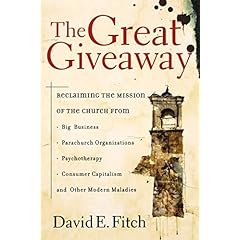
Sadly, one of the great gains of the Reformation has also turned into the great tragedy of Protestantism, in that we do not seek truth as a community, but as individuals. Though I fully support breaking from the hellish Roman church, we Protestants have not done well in upholding a unified interpretation of community truth. The freedom given for individuals to come to the Scriptures as unique persons results in a few too many unique views completely lacking in God’s imprimatur. A return to a community-based interpretation of Scripture would strengthen our churches’ educational programs by allowing the community to approach interpretation rather than just the individual alone.  (David Fitch discusses this marvelously in The Great Giveaway.) It also acknowledges the truth that the Holy Spirit not only dwells in the individual, but also in the midst of the church assembly. That understanding reduces opportunity for heresy and creeping error.

Having seen so many churches undercut by a winner-take-all approach to theological disputes, I think it’s high time we find a better alternative. A community approach may just well be the best way of all to educate our people even in the midst of controversy.

I fully believe that rethinking our education models within our churches to better align with community goals would greatly amplify our teaching and, ultimately, our success—a success for both making disciples and building godly community.

Look for the last set of suggested ways to build vital church community tomorrow.

Posts in this series:


The Great Giveaway, Part 3

Standard

The Great GiveawayThe finale of a three-part review (Part 1, Part 2) of David E. Fitch's The Great Giveaway: Reclaiming the Mission of the Church from Big Business, Parachurch Organizations, Psychotherapy, and Consumer Capitalism.

The final chapters (with the book's final summary chapter omitted from the review):

    6. Our Understanding of Justice
    7. Spiritual Formation
    8. Moral Education


Our Understanding of Justice

Overview

Fitch starts this chapter with a bang: what would happen in a church if a woman stood up during Sunday service and announced that she just found out she has breast cancer? The kicker: she says she has no health insurance. 

Evangelicals talk a great deal about helping others, but our execution is profoundly flawed. We tend to think of benevolence and justice as something a Christian individual does on his or her own. Fitch notes that justice begins inside the Body of Christ and extends outward. We serve our own as a community and our community serves those outside the community. We owe as much benevolence to the brethren as we do to the poor and hurting outside the church doors, But, too often, we fail to see how we ignore people within our own congregations as if the only brownie points we get from God are for helping strangers.

Like everything else, we've mangled the way the church should reach out. We've made it too individualized, the old "my ministry" mantra. But Fitch claims no real social justice exists apart from the local church as a whole operating to meet the needs of the needy.

The source for our broken ideals of justice and mercy are rooted in democracy and capitalism. Democracy marginalizes the minority and the weak, while capitalism exploits them. Our entire culture is based on winners and losers, but the are supposed to be no winners and losers inside the Church. The Church, so co-opted by culture, cannot see the malignancy that capitalism and democracy bring to this issue of justice. Christ's justice is not of this world and it trumps the systems we adhere to. The Kingdom of God supercedes politics and economics. We cannot say we are righteous if we fail to understand that social responsibility in the Bible is a component of righteousness.

Likewise, we base a person's value on his or her job, not on the value that Christ gives a person. The American Church's obsession with big business means it can no longer discern business success from spiritual success. We must learn that the two cannot abide together, much less determine levels of success in the Kingdom of God.

As to the woman suffering from breast cancer, Fitch recommends that churches set up leaders who hear requests for aid. These teams go beyond just handing out money, but seek to resolve sin issues in the needy person's life that may have led them into the state they're in. They work with the needy to help them overcome practices that caused their need, hold them to accountability, and offer grace. In the boldest move of all, Fitch recommends that no benevolence be given outside the local church. If people need help, one of the requirements must be that they join the worshiping body. With that given, no one walks alone through trials.

Comments

Apart from the misguided digs at democracy and capitalism (which I'll discuss further down), this chapter is easily the best in the book. Nearly everything Fitch discusses you've already read on Cerulean Sanctum. The Church in this country is simply not speaking about corrupt business practices, jobs, unemployment, health care, and a host of other issues that come down to everyday needs in the lives of people around us. We're too stuck in godless bootstrap thinking and "God helps those who help themselves."

But that's not Kingdom thinking; it's a cheap way to excuse us from being responsible to others in our community. As we know, though, Jesus praised the Good Samaritan and not the smug priests and Levites. Real community means that one person's problem is everyone's problem. Amish and Mennonite communities understand this, but we Evangelicals are too stuck in our self-righteous modernity to get it.

As to Fitch's woeful understanding of democracy and capitalism, he commits the classic blunder of lumping defective practices in with proper practices, calling it all wicked.

Capitalism and democracy in and of themselves are neutral systems. Both can be abused, Both can offer great results.

Capitalism goes wrong is when it globalizes. Capitalism is an outstanding form of economics when coupled with local economies. Our country largely operated in this manner early on. Localized economies that practice capitalism cannot afford to have winners and losers because losers damage the community. If one farmer undercuts everyone in the community and puts others out of business, the entire community suffers for the bankruptcies that result. Capitalism within localized economies is naturally self-correcting. (Other balancing factors exist, but that's a whole 'nother post, as they say.) But on a globalized scale, winners and losers are natural because the losers can be located so far away that they (supposedly) do not affect local, regional, or even national communities. That's wrong, though. We can't operate that way even though it looks like we won't be the ones to suffer.

Then answer is to revitalize capitalism within local communities, not villify it altogether. The same goes for democracy.

Despite this problem in the chapter, Fitch nails our mistaken attitudes toward helping others and offers excellent solutions to better the Church's outreach to the broken and needy. 


Spiritual Formation

Overview

We've capitulated to psychobabble in our churches. Instead of operating from Biblical principles of sin, repentence, and restitution within a spiritual family, we've chosen to dignify sin through the manmade nonsense we call psychotherapy.

Pyschology is a worldview that competes against Christianity. As a result, it cannot be adequately reconciled with Christianity. Pyschology exalts the self, while Christianity says the self must die at the cross. Modernism created psychology because it sought scientific and rational explanations for Man's broken image. Like all philosophies that have their origins in modernism, psychotherapy promotes individualism at the expense of community and preaches tolerance of thoughts and actions the Church says should never be tolerated. The solutions to Man's problems lie not in psychotherapy, but in Christ. The Church needs to recover its role as the primary God-approved means of bring mental health into the lives of the shattered.

Psychotherapy wars against true discipleship, making it hard for Christians caught in psychotherapy's insidious trap to grow closer to Christ. The Church must distance itself from psychotherapy and refrain from explaining Mankind's problems in psychological terms. True spiritual counseling rooted solely in the Scriptures should be restored to our churches. The Church must replace the psychotherapist's couch.

Along with the office of trained spiritual counselor, Evangelicals must restore the confessional. Much damage results from Evangelical churches shunning the hearing of personal confessions. We've attached too much judgment and not enough grace to those who have sinned and seek repentence. In many ways, our laxity toward personal confession may have been the impetus that pyschotherapy needed to gain a foothold in the Church.

Comments

You'll find no arguments from me against Fitch's points in this chapter. Every argument is salient and well-documented. In fact, I would say my overview does a disservice to the breadth of analysis Fitch offers for how we traded truth for a lie.


Moral Education

Overview

Education is one of the cornerstones of discipleship. Unfortunately, the way we school our young works against true discipleship and moral education.

Evangelicals gave away rituals and rites of passage that set godly waypoints in our walks with Christ. We've also placed too much emphasis on the freedom of the individual to pursue his or her own beliefs rather than indoctrinating that individual into the beliefs of the believing community.  Lastly, we've turned our kids over to those people who would indoctrinate them in a worldview foreign to true Christianity.

Public school is not the Church. The civil religion taught in public schools is not remotely Christian. Values education is a ruse, too, since no one set of values in our country can cover all values systems. The public schools cannot be trusted to teach anything Christian; only the Church can do that.

Homeschooling (here comes the flame war) is not the Church. No one family can adequately stand in for what the Church community as a whole can provide.  One family cannot be a culture in itself, nor is it capable of withstanding all of secular culture. A single family is also blind to its own sins, leaving holes in a child's moral education. Family dysfunctions are only multiplied within homeschooling environments.

Parochial schools are not the Church. A tendency exists even in Evangelical schools to promote allegiance to country over allegiance to the Kingdom of God. Parochial schools often ape their public school counterparts, but add a sheen of Christianity over the top. They do not always begin with Christ first, instead patterning their operation off worldly systems.

Only a child schooled in Christ within the whole church community will get a rounded education. The Church best speaks against worldviews, while allowing safety for the schooled to engage defective thought systems.

Fitch advocates a return to full-blown catechism in Evangelical churches, starting in infancy. His own church has a goal of preparing all children for baptism and membership by age ten. He believes that all educations systems within a church reinforce each other, so that kids and adults get the same (age-appropriate) teachings matched to the church year lectionary. Running the children out of the church service is a mistake, too.

A church that practices catechesis will by necessity be smaller in order that everyone know the people in the worshiping community. Such a church organizes its life around the community of believers, altering family schedules to put worship of Christ first.

Armed with such a catachesis program, no one educational practice (public school, paraochial, or homeschool) will undermine the worldview instilled in our children. Therefore, any type of school might be chosen.

Comments

In theory, I believe that Fitch is on track. He correctly identifies the flaws in every schooling system. He's absolutely right that we need to recover rites of passage within our churches. My own church is re-examining this need. Just this last Father's Day, we instituted an annual blessing of the children by their fathers (and mothers). I'm also a strong proponent of some type of catechism within the Church. I think we need some sort of worldview analysis and overview, too. Lastly, I believe the Church has a responsibility to prepare young people, starting as young as ten, for being Christian husbands and wives through some kind of marriage awareness program.

That said, I think Fitch overlooks what can go wrong with catechism. One would hope that a church would handle catechism correctly, but as long as there are teachers, flaws exist. A bad set of teachers leads to a badly implemented catechism. I've favored more of a whole church rite that pulls all the church's men into a process by which they mentor the boys in the church, with a similar program for the girls. This mitigates the possibility of getting a lousy teacher who's not with the program.

Final Thoughts on The Great Giveaway

Like I said in the first installment of this three-part review, everyone should read this book. I'm sure you'll take umbrage with at least a few of the author's analyses and solutions, but that's good. Again, discernment is not a blanket condemnation. Think about what Fitch writes and lay it before the Lord. You may find the Lord changes your heart.

Fitch understands the needs of the 21st century Church and the needs of those outside it. He correctly states our need for ritual, symbolism, art, and beauty within our congregations. His views concerning the need for real community—not the half-hearted attempt that passes for community in nearly every church—are prophetically accurate. Modernism has turned the Communion of Saints into an Army of One. But Christ never founded an Army of One; He founded a Church.

Despite the  faults of modernism, it can't become a boogeyman. It's too easy to blame modernism or postmodernism or some other -ism for our problems. What we need to do is get back to the simplicity of the Gospel. And that's what Fitch calls for in this book.

I mentioned before that most of his solutions to the Western Church's problems are old school. If your idea of a finely tuned Church is not something Anglican circa 1790, then I ask that you at least consider what we may have lost in our churches since that time. Few of us would say we're better off spiritually than that age, so perhaps fine tuning Evangelicalism to incorporate that old school thinking wouldn't be a bad idea.

Read the book. Any review is a disservice, especially with a book as densely packed with ideas as The Great Giveaway. Fitch has a blog, too (see Kingdom Links in the sidebar), so the conversation continues.

Blessings. I hope this review provoked you—at least a little bit. 

The Great Giveaway, Part 2

Standard

The Great Giveaway

The second of a three-part review (Part 1, Part 3 ) of David E. Fitch's The Great Giveaway: Reclaiming the Mission of the Church from Big Business, Parachurch Organizations, Psychotherapy, and Consumer Capitalism.

The middle three chapters:

    3. Leadership
    4. The Production of Experience
    5. The Preaching of the Word


Leadership 

Overview

In this chapter, Fitch laments the moral failures of today's pastors, claiming that much of the problem is due to Evagelicalism's fascination with pastors as CEOs rather than faithful shepherds. The "Pastor as CEO" model isolates the pastor from the rest of the fellowship, making him an outsider who must never falter. That perfectionistic ideal helps foster the very moral failures it seeks to prevent. It creates ministry class distinctions and reinforces the negative industrialized ideals of modernism, warping leadership into nothing more than science, efficiency, and "please the shareholder" thinking. Church Growth principles are largely, though not entirely, to blame for this transformation of pastoral leadership.

The penetration of modern business practices into church leadership turns Christianity into a set of techniques. Discipleship and leadership become nothing more than behavioral responses to proper programming rather than a living, vital faith. The Church cannot be the Body of Christ if it is founded on business ideals coated with Scripture to make them palatable. Scripture is our only source for leadership and discipleship, not TQM, ISO 9001, or whatever Jack Welch blabs about in his book Winning

By creating CEO pastors, we ensure the false idea that only one person is in charge. Only one person has the correct interpretation of Scripture. Only one person is equipped to minister. This fosters a passive congregation that acts as an audience,  giving away its responsibility to be a community of faith. All church life exists in community, and the pastor must be treated as a co-equal in that community. He must be allowed to stumble and to also seek, just as the individuals in the community do. Ministry is a community activity, not just something done by pastors. Interpretation of Scripture belongs to the community, too, not the pastor alone.

The model for real pastoral care is found in servanthood, not CEO-dom. Fitch longs for greater emphasis put on ordination as a rite into true service. He believes that too much had been made of pastors knowing facts from the Bible, and on seminary graduation, than on an ordination process with effective oversight. We make pastoring too much a science and a professional credential than a practice of humble service to others.

Fitch also wishes to see seminary training take on more of a monastic living style than being simply a time to perfect doctrine. Seminarians would live in groups, farm, cook meals, and eat together. In addition, they'd be expected to take part in group prayer times, participate in confessional and accountability groups, take care of children, serve the poor, and live out their beliefs in genuine, humble service. Pastors should also be a part of confessional groups after seminary. Fitch also recommends that pastors be bivocational to better understand the daily lives of their congregants. Any pressure this puts on a lone pastor would be dispersed by eliminating the concept of a church served by only one pastor. Instead, churches would be better served by teams of leadership and not a pastor alone.

Comments

I thought this chapter was brilliant. While Fitch may have attributed too much of today's pastoral problems to business practices, his practical solutions are right on, more than covering his narrow focus. We must do something to cure our seminaries of their one-sided leanings toward the purely rational and didactic. Too much of what today's seminarians learn is theoretical and not enough practical. The return to a more monastic type of seminary would better turn out servants and not CEOs.

Giving church control to congregations and not one or two individuals is also critical. While many churches believe they do this with their pastoral staffs, too often it's more like the king and his court than a parliament of leadership equals. As for the idea of bivocational pastors, I know that too many pastors have been so insulated in the pastorate they lose all touch with what working people face in the cut-throat business world we have today. Being bivocational also reinforces the idea of servanthood, since few vocations will find a pastor dwelling in the corporate penthouse. Being one of the tiny cogs in the corporate machine would go a long way to waking up Church leaders in America to the moral disaster we've created with our modern business practices.


The Production of Experience

Overview

Are we worshiping God or creating personalized experiences? Fitch claims that Evangelicalism has veered into selfishness by overemphasizing the role of the individual. Modernism exalted the individual, but worship must be a communal activity, "Us," not "Me."  Modernism's conceit here is that one person can possess all the truth. Fitch says that the truth of the Gospel is meant for communities, and it is within community that heresy is fought and the truths of God best revealed to each person.

In this chapter, Fitch delves deeply into postmodernism, showing that, if left to its own, the modernistic individualism that so permeates our churches today ensures everyone hears a different Gospel. He takes on the subjective way in which we worship and communicate the Gospel, claiming that we're only fragmenting the truth of God in a consumeristic fashion. He writes that we need to recover narrative preaching and an understanding of the Gospel as a redemptive story that includes you and me. Framing what Christ did within history ties us into the traditional church of our ancestors.

His remedies for glitzy, experience-driven churches are old school. First, he longs for a return to liturgy (though he allows for a modernization) because it grounds the church meeting in shared worship and meaning. Rituals and rites of passage have their place in the Church, but Protestants gave them away in their mad rush to distance themselves from Roman Catholicism. Fitch also argues that Protestants mistakenly gave away symbols, art, music, and all things beautiful in their worship, sterilizing it from the rest of culture. He also desires a return to a Church calendar, at least in part, where churches better follow Advent, Pentecost, and some other regular seasons that have been abandoned in most Evangelical churches. Along those same lines, he believes Evangelicals have cheapened the meaning of the communion meal, relegating it to a few words spoken over grape juice and crackers rather than the meaningful meal it once was.

Comments

Anyone familiar with "Ancient/Future" discussions within the Emerging Church will recognize much of Fitch's commentary. He decries the shallowness of Evangelicalism created by false pietism and rugged individualism. In that, he's largely right. Evangelicals have run screaming from anything that smacks of the ritualistic group-think of Roman Catholicism, save for some Evangelical Lutheran, Anglican, and Episcopal churches that still practice many of the unifying rites and rituals he recommends.

Having grown up in an Evangelical Lutheran congregation, I can honestly say that I do miss seasons like Advent and Pentecost. I do miss some, though not all, of the ritual practices. I agree wholeheartedly with Fitch that our church services today have been stripped of far too many elements that help root us in Christ and in community. The Old Testament practices of worship resemble the old school style more than what most Evangelical churches practice today. God, obviously, is not against ritual.

Despite my agreement with some of Fitch's ideas here, this chapter (and the one following) were by far the most turgid and philosophical. While he may be a good church practice analyst, Fitch struggles in places in The Great Giveaway to get his points across in a cogent and accessible manner.

The other lack comes from Fitch not addressing the flaws in his solutions. Many Evangelicals fled the kind of church Fitch advocates. But Fitch doesn't deal with the lacks in liturgical churches heavy on "symbolism and meaning" that led to their diminishment today. While any thoughtful reader will be able to fill in the blanks here, some acknowledgment by the author would better help readers develop a true Evangelical practice that avoids what killed liberal Protestant churches that still practice liturgy.


The Preaching of the Word

Overview

Expository preaching fails because meaning is not universal. What the pastor preaches and the congregant understands are not necessarily the same thing. This only sows confusion and discord. Cultural and societal standards also create different meanings within a Scriptural passage. The Asian, African, and American will not interpret the same passage the same way because their cultures are different.

Fitch asserts that modern science governs the way the Bible is interpreted today. But processing a passage through a specific set of exegetical lenses cannot guarantee the correct interpretation of meaning. For this reason, Fitch  decries the Reformation's idea that each person can correctly interpret Scripture. With so many interpretations of a single passage abounding today, how can anyone, especially a preacher, be more than just a picker and chooser of this interpretation or that?

Seeker-sensitive churches accuse Bible churches of keeping the Bible shrouded so that those outside Christ cannot understand its message. Bible churches accuse seeker-sensitive churches of watering down the Gospel. Fitch claims both are missing the point.  The preaching of the Word must be seen in a communal context in which its meaning is held by the community that submits to it. Because meaning is held by a community, it is self-correcting of wayward individuals. No one person has "cornered the market" on a passage's meaning. The community, not the individual, does the interpreting.

Fitch advises that we recapture the narrative value of Scripture that draws the individual into a shared understanding. While expository preaching hands the listener a to-do list, narrative preaching puts us listeners in the story of God's redemptive acts so that we can better understand who God is and how He can use us in His story. This type of preaching resists forcing Scripture to be interpreted by culture rather than the other way around. Likewise, narrative preaching allows prescriptions (to-dos) to naturally follow description, the way the Bible lays out truth.

In the practical vein, Fitch asks that we return to lectionary reading that follows the church seasons. We should also return the speaking of the Word in our meetings to the congregation, rather than simply the clergy. Call and response uses of the Scriptures help the people absorb that they are responsible for what they hear. The application points of the typical expository message must return to a more holistic design that asks something of the gathered hearers immediately after the message. Fitch also calls for dialogue between the preacher and congregation after a message to better promote understanding, retention, and action. All interpretation must be tested by the congregation as a whole and not one individual.

Comment

Ah, Jacques Derrida! He raises his ugly, meaningless head again.

This chapter of The Great Giveaway is, by far, the most labored and least successful in the book. Problems abound on nearly every page. Fitch goes too emergent here, too conceptual, too philosophical, too buzzword, and ultimately derails.

Words have meaning. That meaning may vary from culture to culture, but where Fitch sees this as a lack in expository preaching, I see it as a strength. The African or Asian preacher has something to teach me about a passage that I may not have heard through my American cultural lens. Whereas Fitch sees that as a testament to the weakness of exposition, I see it as a strength. Fitch commits a grave error here by saying the whole of Christendom cannot hold multiple interpretations of the same passage. I see no problem with that, even if they appear to conflict. If anything, denominations that hold to one approved interpretation are much more likely to miss the nuances that make the Bible profound. The Bible is rich. It has rich meaning. Yes, no one person has a handle on all its truth, but together we get a better vision of its depth.

Fitch also holds the local church in too high esteem for its ability to rightly divide Scriptures. What's to say the church across the street doesn't have a different interpretation than what my church community decided. In truth, that's how it is now from church to church, so how is Fitch's recommendation better than what is already going on? 

While it may be a logical fallacy to equate the two, the poor understanding most Christians have of the Bible today parallels the demise of expository preaching in many Evangelical churches.  Somewhere in those two facts lurks a correlation. Nor is narrative preaching a surefire hit. I've been in churches that preach like Fitch recommends and Biblical knowledge can be just as sorely lacking as anywhere else. Nor is this a prescription against heresy. Again, witness liberal liturgical churches and their horrendous ability to self-correct using the type of preaching Fitch advocates.

This chapter of the book doesn't work—period. I didn't follow most of Fitch's points because he didn't make them as clearly in this chapter as in others. Either the argument is too subtle for his writing style, or else Fitch doesn't have enough ammo to fight the fight he picked. Either way, too much of this chapter reads like mumbo-jumbo. Considering I'm already familiar with complaints by the Emrging Church against expository preaching, that's a sad indictment of this chapter. Worse yet, some of Fitch's recommendations for practice (while nice to have in a church) aren't prescriptive for the ills Fitch himself exposes earlier in the chapter.

While I agree that expository preaching as it's done today is not as effective as it could be, I don't have good answers as to how to better it. Nor does David Fitch.

So we end this second part of the review on a down note. But stay tuned, because Part 3 of this review will cover what I believe to be the best portion of The Great Giveaway.