
 I'm a writer.
I know it may not show in the slapdash blog posts I toss up here, but it's true. As part of a testosterone-laden men's writing group—The Write Brothers—I have actual published authors attesting to the fact that I can string a few words together intelligibly. Even more to that point, I own a freelance writing company that covers everything from tech manuals to marketing copy to s/f novels. You name it; I write it. I've even been known to pen a highly regarded poem now and then. (Although the state of "poetry for cash" is more like "You pay us and we'll publish your poem." Somewhere, a red wheelbarrow is rusting.)
The allusion in my not-so-subtle title does not mean I will go the way of Hemingway, but it does mean that to be a Christian writer is to be a denizen of a tiny world on which a civil war rages. Piper, Sproul, Grudem, Warren, Hybels, and all those name authors don't have a clue because they're writing NON-fiction. They're oblivious to the artillery, the bloodshed, and the cries of the wounded. But as for me, well, I got drafted into the the war simply for my desire to write novels. And it ain't pretty.
I've got three novels at various stages of development, with one soon to see the conclusion and final edits, so even writing this on my blog could forever doom my work to the dark drawers of my Sixties-era desk. Yet I have to say it: being a Christian fiction writer is a lesson in compromise and multiple personality syndrome.
The irony of all this is that the market for Christian fiction is absolutely booming. These are the glory days for anyone trying to sell into what is known as the CBA (Christian Booksellers Association) market. Publishers are scrambling to pump up the Christian novel jam, so if there's a genre you like to read, expect to see it soon. Someone realized a couple years ago that Christians actually READ fiction, and with the Lord of the Rings series of movies/books reaping big press in Christian circles, two and two fused together. Mix in a little Mel Gibson movie and even the secular publishers starting thinking, You know, that's a pretty substantial market we've been ignoring. They're even starting up Christian imprints just to tap the 22 million people who bought a copy of that little book called The Purpose Driven Life.
So Dan, why the "tortured artist" schtick?
My current novel project started out in the secular counterpart to the CBA, the American Booksellers Association (ABA.) I was hoping to write a science fiction title that would bring strong Christian themes and symbolism to secular readers first and Christian readers second, all without suffering from what I call "The Sledgehammer Effect." If you read enough Christian fiction, I don't have to explain this. Wink, wink—we've all had that little Gospel train steam out of the book and roll right over our cerebrums.
But along the way, this novel changed. Every time I wanted to portray my believing heroine doing the kind of things that Christians regularly do—pray, read the Bible, and so on—the scene automatically excluded the book from the secular market. Any editor reading the work would say, "But this belongs on our Christian imprint!" and there it would be sent to be branded a work of "Christian fiction," forever shuttled out of reach of the very readers I was trying to capture. The mere mention of the devoted acts we do every day and that's all he wrote.
It struck me that if C.S. Lewis were writing his Space Trilogy (the inspiration for my market ploy) today, there would be no chance that a secular publishing house would touch the books. Out of the Silent Planet would be on Tyndale or Zondervan faster than you could say, "Peretti," and that would be that. Despite the fact that your average Barnes & Noble or Borders has been increasing their Christian non-fiction titles, Christian fiction still has a long way to go for shelf space in a secular market.
So I quit the battle and went for a CBA title. It's so CBA right now that Stephen King himself could not modify it into an ABA title. However, while I managed to avoid The Sledgehammer Effect magnificently, I only opened another can of worms.
The ABA is tough for Christian novelists to crack unless they're willing to veil all their religious references. But the CBA presents its own problems because now you have to be all things to all Christians. I think you can already see the problem.
Even as the romance genre has an iron-clad list of essentials, both do's and dont's, the Christian fiction list of acceptable novelist behaviors resembles the U.S. Tax Code in its complexity. The list of traps is endless and just finding an audience that won't stab you with your Mont Blanc for violating a key doctrinal belief of theirs is nightmarish.
Want to write a novel that features a positive Christian character who speaks in tongues? Well, if you think that being tarred and feathered on John MacArthur's Web site is great PR, then go for it. Or how fast and loose do you want to play with doctrine when it comes to fantasy or s/f? My wife just read a novel that asked, What if Jesus first came in the 22nd century AD? What would His first advent look like in an age of interplanetary space travel? Although that's a great premise, you know someone out there would object. As much as I want to embody the mythopoeia that Lewis and Tolkein championed, I don't want my publisher to deal with irate letters and bad reviews on Christian Web sites because I asked "What if?" of a treasured doctrine and people felt that my treatment of it was "off." (In my novel, I do explore a major doctrine by envisioning a more drastic expression of it than what the Bible states, adding s/f elements and conjecture.)
Even Lewis is not sacrosanct. I know he'll come under new scrutiny if Disney makes references to alcoholic drinks in their upcoming Narnia films. Any readers of that series will recall that Lewis was a virtual spokesperson for breweries and vintners. So how many teetotalers have objected to Lewis's world? Quite a lot, if a quick Googling of this issue is any indication. Well, I guess I would at least be in good heretical company.
Recently, I read a post on the Brandywine Books blog from a published author who no longer seeks publication. I was told to write the very best book I had in me. That's the best kind of advice, but sadly, I don't know if that advice belongs to another, less picky age. With publishers dwindling every hour, and market realities forcing every title to be a bestseller, the pressure to appeal to most of the people most of the time is enormous. Where that leaves Christian novelists is anyone's guess. Lowest common denominator is what I fear. The Christian fiction I've read lately surely bears that out.
Truth be told, I've been utterly incapable of making it through any of the Christian fiction I've bravely attempted in the last three years. A few folks contend that the quality is rising, but I can't see it. From my perspective, should some Christian publisher decide to purchase my novel, I can view this as my joining the larger pool of books I cannot bring myself to read to the end OR I can see it as my attempt to bring something better to the pool. I guess only a publisher can determine that direction. Considering what I've said so far in this post, my chances of getting that letter that sets every hopeful author's heart a-flutter have probably already dropped at least fifty percent.
Here's another truth: this post has been sitting in draft form on Blogger since April. Only this and the previous two paragraphs are new. Why you ask? For the very reason I just stated. Biting the hand that potentially feeds at a time when publishing houses have consolidated down to the number of toes on my left foot is not all that bright. But given that some are trumpeting the new wave of Christian fiction…well, I had to add my two cents.
I'm a writer; it's what I do.
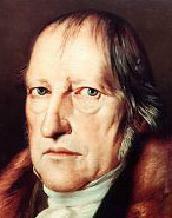 Hegel basically created his philosophy to explain the process of history. First there is one view or event called the thesis. Then there is the opposing view or event called antithesis. Out of these two (many times a compromise of the two; other times simply the end process of the two clashing) is the synthesis.
 David Wayne over at Jollyblogger