
Thoughts for a Fall Monday

Standard

It’s amazing to me how much I had to bundle up on a 63-degree day while I was out on my tractor. Something about that tiniest bit of chill in the air and being on a moving vehicle, that while not a motorcycle, still generates a breeze while one’s atop it. Also had to take the warmth precautions because I wasn’t feeling well, yet still had to do the work, as I am slammed this week and rain is forecast.

Five hours on a tractor will get you thinking…

Ox Gored: It never fails to amaze me the responses I get when I simply bring up the Acts 2 and 4 passages included in last week’s “Jumping from Bridges.” My main point was not to talk about alternative economies, but man did the folks come out of the woodwork who didn’t like the idea of sharing their stuff with anyone else. Hmm. Methinks I need to write more on this.

Hacking Me Off: I installed some software of the Cerulean Sanctum site to monitor hack attempts against its MySQL database. All I will say is this: It’s the computer equivalent of D-Day—and all day, every day. Also, I set up a server last week to do some testing and forgot to adjust one security item before I walked away from the computer to grab a bite to eat. Within 20 minutes two hacker sites were up and running on the computer. Unbelievable.

More Convenient Government Adjustments: Seems the feds’ method for tracking unemployed workers has got some holes in it, as they now admit they failed to account for an additional 800,000+ job losses. Though I recently talked about avoiding conspiracy theories, I’m forever annoyed at these convenient negative adjustments the feds make that come a year after the fact. “Oh sorry! Everything was worse than we said it was! No harm, no foul, because you’ve already forgotten about the past!” They’ve been doing this for years now with economic figures to the point that I’m not sure how anyone can trust them to get the tally right. Which is why all this “recovery” talk rings hollow.

In the BTW Department: It’s only a recovery when the jobs come back—which I have yet to see happen, especially when 800K+ unemployed were just added to the rolls.

Holy Grail Found: After two years of searching, I finally found a free WordPress theme that combines minimalism, good SEO, easy tweakability, threaded commenting, and bulletproof operation. Though this is my busiest quarter of the year workwise, I hope to have the new look for Cerulean Sanctum up by the end of the year. Expect an emphasis on the text, faster loading, more accessibility, and a stronger Google PageRank so you can find older posts more easily.

Church? What Church? I did something today that I don’t often do; I skipped church. I woke up not feeling well, didn’t have to play on the worship team (which is rarely the case), and had a few other reasons for not attending yesterday. When I ended up having to run an errand for my wife at a time when most people should have been in church, I was stunned to note the packed local Kroger grocery store. Packed. As in hard to find a parking spot. Seems to drive home the reality that we Christians are dropping the ball on evangelism. I mean, I don’t live in a very large town, but it seemed like half the town was at Kroger at 11 a.m. on a Sunday, and they weren’t in their “we went to the 9 a.m. service” clothes, either.

So Much for the Simple (Cheap) Pleasures: Rode in the county fair parade last week with my son’s Cub Scout pack, so we got into the fair free. Still, by the time we’d left, we’d dropped close to $45 on a bare minimum of food for three people and a ride pass for my son. Yikes!

The Difference Between the Rich City and Poor Country: While riding in that parade, I noted an extraordinary amount of clearly mentally disabled people of all ages along the parade route as we rolled by. I would not be exaggerating if I said that every twentieth person was mentally challenged. It makes me wonder if we in the country simply cannot afford to send such disabled family members to expensive group homes, so they end up living with us instead. In other words, our broken people are part of our community and are not tucked away somewhere out of sight. Makes for a lot of soul-searching. A week later, I’m still thinking about this.

My Two Cents: Everywhere I turn, it seems people are talking about tithing. I wonder how much of that talk is linked to the recession and a downturn in giving.

Two, Two, Two Bibles in One! Last week, I killed two birds with one stone by buying the one type of Bible I do not own in one of the few translations we don’t have in our combined collection: a New Living Translation (NLT) chronological Bible. While the chronological part is extremely handy, my one-word review of the NLT is “dull.” And dull is not what a translation should ever be. I mean, the Phillips Translation is simply worded, but it’s definitely active and gripping. Still, I keep holding out hope that someone will do a modern translation of the entire Bible that really makes use of the breadth of the English language, something that caters to a demographic other than sixth graders. I think the closest we have gotten is the one that J.R.R. Tolkien provided English wording for, the original mid-’60s Jerusalem Bible.

Because of my workload this week, I may not be able to post much or reply to comments, but your comments are deeply appreciated. Have a great week. And don’t forget to bless others in the name of Jesus!

The $0.00 Tithe: The Church in a World of Free

Standard

“And as ye go, preach, saying, ‘The kingdom of heaven is at hand.’ Heal the sick, cleanse the lepers, raise the dead, cast out devils: freely ye have received, freely give.”
—Matthew 10:7-8 (KJV)

Recently, a few gripes have been circulating across the Web from plugin developers for WordPress. As an open source product, WordPress itself costs nothing. As hardcore GPL supporters, the company behind WordPress has even displayed a bit of ire that some designers of themes have insinuated links to pay sites in their free offerings. This made some theme developers livid because it threatened their revenue stream.

But the plugin developers’ complaints are new. They say that their free plugins, which often have notes added requesting donations (which I’m fine with, as the plugins are a lot of coding work), don’t even receive thank yous from users, only complaints.

Welcome to the world of free.

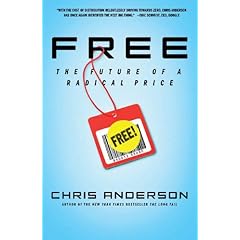
Recently, Chris Anderson of Wired Magazine, whose pontificating about “the long tail” captured the fancy of business leaders everywhere, released his latest book, Free: The Future of a Radical Price. It expands on an article he wrote in 2008, “Free! How $0.00 Is the Future of Business.”

Anderson argues that unless a business is giving away important products for free, it’s doomed. The way companies will have to make money from free  is by offering some kind of “freemium” deal, giving away part but offering a paid whole so attractive that people will want to buy it in addition to what they are receiving freely. On some level, that makes sense.

As someone who takes advantage of free, I love it that good things are available without cost. My computers bulge with open source software, some of it outstanding. The time clock I use to track the work I do as a writer is a free Adobe Air application. And if I wanted to, I could dump Microsoft Office and go with Open Office. So free is good.

But I’m not a freemium buyer. If I have to pay, I tend to do without or find a source that offers similar functionality that is still free.

And this is a problem, because that inability to convert free users to freemium buyers is destroying some businesses. Google has managed to figure out how to do this, but few others have. The newspaper industry is a classic example of “death by free.” Free online news and free classifieds through Craigslist have gutted their business model. The New York Times tried to cajole readers into paying for access to online op-ed pages, but with everyone in the world having an opinion, no one bit. Only The Wall Street Journal has had any success with free and freemium, and even they’re losing money.

What’s bad about this is that free is a genie that won’t easily go back into its bottle. Too many people expect to get something for nothing now. And many of them are like me: “No thanks on the upsell.”

When I ponder free and freemium, I consider how they will affect the Church, especially in the West.

Last year, the Church of England lost £400 million due to investment wipeouts in the world’s economic turmoil. They had to seriously curtail spending as a result. Other denominations face similar shortfalls.

Attending church, on one level, is technically a free activity once the cost of driving to a church meeting is excluded. But then again, it’s not. Some churches demand a tithe. Others don’t, but they still rely on the generosity of attendees to fuel pastoral salaries and the increasing costs of educational materials and programs. And lately, has anyone checked the church utility bill? Yowza!

But with more and more people believing in the gospel of free, where does this leave the Church?

For 13 years, I was part of a megachurch  noted for its drawing the unchurched or those dissatisfied with prior church experiences. Throughout the history of that church, a low expectation existed concerning asking people in the seats for their money. As a result, that church, despite many thousands attending, faced nonstop cashflow issues. Too many people showed up, partook of all the costly services the church offered, and gave $0.00 in return. In the end, that church had to radically alter its perspective on asking the people for money, and even instituted a membership program (freemium?) where none had existed before.

I believe what I saw at that church was the cusp of the problem the Church in America overall will encounter with this idea of free.

And so I wonder…

In what ways are the thought processes of church attendees being affected by this notion of free?

How will free alter the way the American Church operates?

Is there a freemum option open for churches?

How will companies that serve the American Church adapt to free? Will they go the route of newspapers?

Will free ultimately make American Christians more stingy or less?

I look at the Book of Acts and I see a model of free that is totally at odds with the way we American Christians live. Nothing we do in the Church here is free. If free genuinely catches on and the business world manages to make it work, I think the Church faces some radical problems it has not bothered to prepare for.

In the wake of lost investment monies, Westernized churches around the globe are reporting budget shortfalls and subsequent program cancellations or staff reductions. Church buildings, staff salaries, and programs ain’t cheap. A world built on a cost of $0.00 poses enormous challenges to Western churches grown used to watching stacks of money pour in from the faithful.

Honestly, I think a world of change is needed—and quickly. What do you think?

The Error of the Unstrung

Standard

I’ve got no strings

To hold me down

To make me fret, or make me frown

I had strings

But now I’m free

There are no strings on me

Hi-ho the me-ri-o

That’s the only way to go

I want the world to know

Nothing ever worries me

I’ve got no strings

So I have fun

I’m not tied up to anyone

They’ve got strings

But you can see

There are no strings on me

If you don’t remember that ditty from your childhood (or parenthood), it’s sung by Pinocchio in the classic Disney film.

I hear this song a lot lately. As I’ve listened to the Church in America over the years, I hear it voiced by a growing group of Christians who are ecstatic that they’ve dropped out of the institutional Church.

You know these folks. They talk about how much freer they are now that they no longer attend Sunday morning services. Now that they’re not part of a local assembly, they talk about all the things they can do for the Lord that they could not do before or were made to feel guilty for doing by the institutional Church police. Theirs is a louder and louder voice.

I was almost one of those people. Fed up with the way churches operated, I wanted to mold a loose affiliation of church-shunners who felt exactly as I did, a hand-chosen group of friends who could pal around together in Christ and buck the established institutional system that had grown so lethargic and monolithic.  Strings? I didn’t want to have any strings on me, especially institutional Church strings.

But as I have mellowed in the last few years, I have come to realize the problem of being unstrung.

An unwillingness to be herded plagues the American psyche . As the world’s iconoclasts, no one has the right to tell us what to think or how to behave. If we don’t like something, no force from heaven or hell can dissuade us. Rugged individualism defines us. We are the ultimate bootstrappers, devoted to me, myself, and I. I don’t need you and you don’t need me, and that’s the way the American religion works.

Strange as it may seem, that same mentality reigns in those people who deem the institutional Church unworthy. And just as I cannot support the errors of the American religion, I am fully convinced that abandoning the traditional church in this country is a grave mistake.

When the Lord formed His Church after Pentecost, it was a ragtag group of misfits. You had widows, orphans, Roman politicians, prostitutes, Jewish zealots—the ultimate mishmash of classes, races, and temperaments. And that’s exactly how God desired the Church to be.

Can you imagine what it must have been like for the Pharisee who had just come to Jesus to sit down with whores and Romans? How stretched, right? Do you think that man grew on the inside?

When one of us decides that we don’t want to be a part of the traditional local church, we lose something exceptionally valuable: the test of dealing with people we may not especially like.

We see a bit of this in the consumeristic action of church shopping. We hop and shop from church to church looking for one that best fits our desires, the one filled with people most like us. (Oddly enough, people who eschew the institutional Church are often the most vocal against church shopping. )

At a time in American history when it seems as if everyone considers himself or herself a victim, when we walk around as open wounds expecting some jerk to pour salt on us, when intelligent debate is no longer possible between people without the wailing and gnashing of teeth, and other people just plain suck, people who drop out of church only add fuel to that fire of misanthropy.

So while some may think they are truly spiritual by saying goodbye to what most of us recognize as church, I wonder if those dropouts are missing out on vital, God-ordained character building.

A few years ago, David Wayne of Jollyblogger interviewed a pastor from the country of Georgia. When David asked that pastor about church shopping and hopping, the pastor was shocked. In his country, church people were born into a church and were buried in its cemetery. What about discord and disagreements? David wondered. The pastor gave a simple answer: People were forced to work out their differences because they were fellow members of the Body of Christ.

When Christians drop out of church, we shun the vital truth that Christian character is built on dealing with one’s differences within a body of believers comprised of people who are not exactly like us. In fact, we may not even like many of those people.

But the Kingdom of God does not allow us to pick and choose who will be in it. God desires us to learn how to live with people who would ordinarily bug the heck out of us. That is part of our growth as Christians.

When I see people dropping out of church and proclaiming how free they now are, I can’t help but think that their supposed freedom comes at a steep cost, pinocchio.jpgthe cost of learning to find common ground with people they would not have chosen to be in their Christian clique.

Pinocchio had a cranium filled with sawdust when he sang how free he was from being tied to anyone. Is that how we wish to be?

When I hear people who have dropped out of church, they almost invariably talk about how they now get together with their handpicked friends, people just like themselves, for fellowship. I find that sad because I gain valuable lessons in my inner man when I must deal with a wide swath of diverse fellow believers I did not handpick.

God desires that I learn to love brothers and sisters in Christ who are ignorant, lazy, judgmental and stubborn—which may even be how others perceive me. He also desires that I share in the lives of people who are much smarter, more loving, and deeper in the faith than I am—people I might ordinarily avoid because they make my own walk with Christ appear so tepid.

Would I choose to hang with Christian 80-year-olds,  sports nuts, quilters, teens, auto mechanics, infants, and the like if it were not for the institutional Church? Probably not, but God asks me to anyway, forcing the issue by keeping me in the local church.

No matter where others fall on the spectrum of Christian maturity and social graces, all have something to teach me that is valuable. And I have in them people whose problems I might not ordinarily encounter, but for whom Christ desires I intercede and bear burdens. It is in those burdens found in people who are not like me at all that I learn what it means to seek all solutions in Christ alone.

The world around us is fragmenting into tribes, and God help us all when tribes clash. But the Church is not to be this way. We are called to get along, no matter what our fellow Christians may be like.

Sadly, when we drop out of church and go our own unstrung, “enlightened” way, we avoid this lesson. And we are poorer in spirit for doing so.

Blest be the tie that binds

Our hearts in Christian love;

The fellowship of kindred minds

Is like to that above.

Before our Father’s throne

We pour our ardent prayers;

Our fears, our hopes, our aims are one

Our comforts and our cares.

We share each other’s woes,

Our mutual burdens bear;

And often for each other flows

The sympathizing tear.

When we asunder part,

It gives us inward pain;

But we shall still be joined in heart,

And hope to meet again.

This glorious hope revives

Our courage by the way;

While each in expectation lives,

And longs to see the day.

From sorrow, toil and pain,

And sin, we shall be free,

And perfect love and friendship reign

Through all eternity.

— John Fawcett, “Blest Be the Ties that Bind”