Election Day is only days away and news breaks of the Ted Haggard scandal, conveniently timed (as the whistleblower himself notes) to cause the most political fallout.
Ugh.
We've been talking about community here lately, and while this post isn't part of the "Being the Body" series we're in, it's close. It's a tale about what happens when folks are removed from real community.
For the less media inclined, Ted Haggard, now the ex-leader of the National Association of Evangelicals and the ex-pastor of a huge Colorado megachurch, has fallen in some sort of scandal, causing him to resign both those roles. The allegations that brought Haggard down are unseemly, and I don't want to go into them here. But Haggard claims that some parts of them are true and, for the purposes of this post, that's enough.
The Godblogosphere is loaded with commentary on the Haggard situation. Everyone is weighing in with the reasons why this happened, but the analysis is the same tired lament focused on the usual suspects.
Recently, I reviewed a book by David Fitch called The Great Giveaway. One of the chapters dealt with pastoral sin, pointing the finger not so much at the pastors, but at the system we've created in our churches that sets the pastor apart as some kind of CEO, celebrity, or otherwordly figure with no ties to the rest of the church body. I believe that Fitch's analysis is far more accurate than what we're seeing discussed on the Godblogs.
A few points:
1. We've created a cult of celebrity around our most noted pastors. That kind of proto-idolatry only sets them up for failure because we no longer allow them grace to fail in the small things before they become larger.
2. Failure and sin are natural parts of the human condition. All have sinned and fall short of the glory of God, as we know. This includes our pastors, but we act as if it doesn't. Our mental disconnect sets up pastors for further failure.
3. Because of these factors, pastors find themselves separated from healing community. They cease to be fellow brothers within our church communities.
4. God institutes community for correction, even of leaders, yet our cult of pastoral celebrity destroys the natural workings of the correction. This places pastors outside the community and outside of the community's ministry TO them.
So once again, we see what happens when we do not allow the natural workings of godly community to police, protect, and encourage—even the pastorate.
While I do not condone what Haggard appears to have done, I'm not outraged. If anything, I feel sorry for what our kingmaker attitude has done to the pastorate. Unless we reform our communities, stop treating pastors as superhuman, get off our judgmental attitudes, and get back to recognizing that ALL the sheep have gone astray (not just some), we'll continue to see more high-profile pastors fall. We've got to be grace-filled communities that recognize the sin in our own leaders and allow them to receive grace from us, rather than blackballing them, stripping them of their ordination, and so on. With the constant threat of the "laity" turning on them like a pack of vicious dogs, pastors are all too likely to go into "coverup mode." No wonder the small sins wind up turning into monstrosities.
And don't believe that it can't be your favorite big-name pastor. I'm seeing a lot of people claiming their man is immune, all the while dancing on the ashes of Haggard's ministry. That's sickening, frankly. And unless we get wise to the fact our crippled views on community are what make stories like Haggard's possible, we'll continue to treat these pastors like they're a ruling class, rather than as sinful brothers in need of grace, just like we are.
We don't talk politics on this blog, but I wanted to drop that for one second to talk about this Tuesday's election.
I live in a state racked with pain. Ohio is in serious trouble. Our current Republican administration in this state is rife with malfeasance and failed agendas. The Republican governor has been an unmitigated disaster. His failures have resulted in Ohio being anathema to businesses of all sizes, driving many out of the state and attracting nothing to take their place. Now Ohio, the birthplace of more presidents than any other state, is in dire condition economically. We're the number one state for job losses, one of the worst of the worst signs of trouble.
I've noted in recent months through one of the series I did that I'm what they term a Crunchy Conservative. While much of what I believe politically sounds Republican, I oppose the Republican Party on many environmental, employment, and social issues.
This political season has underscored for me that we're drastically in need of some kind of reform in government. The Republicans don't represent the average family when they put big business ahead of the environment and small businesses. They don't represent the average family when they make all sorts of claims about supporting the family, but their final interest only comes down to supporting the richest one percent of families out there.
The Democrats, on the other hand, mouth some sort of allegiance to the little guy, but their party is responsible for supporting nearly every social evil imaginable.
And in the end, it seems like they're all liars anyway.
I believe that the same problem of making kings out of our pastors has soiled our politics. While politicians say they're part of the community, the community they're a part must only be millionaires and hedonists. I'm divulging no new truth here when I say that most people aren't like that. But the demographic on Capitol Hill doesn't reflect the common man out struggling to live in America 2006. It represents CEOs and loud-mouthed deviants.
My current rep is gung-ho about putting a nuclear waste site in a poorer area of the state not far from my home. Remember, I live in OHIO, not the Sonora Desert. She claims to be a part of my community, but I've got to wonder how any sane person would consider putting nuclear waste in a populated area with a high water table upstream from a major American city. I've got to wonder what PAC got to her and for how much. Isn't that sad?
She's a Republican. I don't know how I can vote for her, though. Her Democratic opponent supports a number of grievous moral sins. I can't vote for the opponent, either.
In short, no one represents most of the people I know in this district. Though they would vehemently protest my assessment, the candidates in this election aren't really part of our community. They're a part of some other class of people entirely who don't get us as much as we don't get them.
Sounds like some of the pastors in our churches, doesn't it?
I'm not sure what we can do about the problems in politics, but we can start doing a better job in our churches of allowing our pastors to fail in our community just as we ourselves are (or should be) allowed to. We need pastors who are like us, too, not outsider glamour boys who seem more attuned to politics than pulpits.

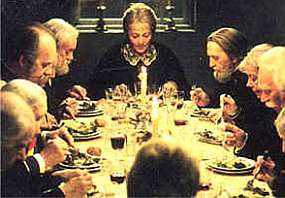 but entire meals in which the sharing of the bread and wine was the high mark.