
 Most of you know that I don’t write much on politics. This last month has been an exception as I have tried to wade through the hysteria plaguing this election to find an island of sanity. I fear that no sanity is forthcoming, at least not from this year’s angry electorate.
But I wish to write to you, my fellow believers, about a truth that few discuss much anymore. It’s about knowing what (and whom) we are for.
Let’s examine a verse that most Christians believe strongly but you won’t find in your Bible no matter how hard you look:
Finally brothers, whatever is not false, whatever is not unjust, whatever is not corrupt, whatever is not ugly, what is not lamentable, whatever is not dishonorable, if there is no mediocrity, if there is anything not deplorable, think about these things.
Many of you will recognize that as NOT being Philippians 4:8. Yet that is how most Christian think today. We have little concept of what we are for, yet we write what we are against on the lintels of our doors. Everyone and his brother knows what we Christians are against, yet very few know what we are for.
The problem of only knowing what we are against leads to dissipation and confusion. Imagine if the Lord had requested of the Hebrews that they choose this day whom they would NOT serve. Isn’t it much easier to know whom we are for? Doesn’t that exclude all others by definition? Otherwise, the Hebrews could have spent 40 years naming all the people(s) they were not for. Being for something or someone automatically means that we have excluded other options.
Christians are not to operate from the negative. We don’t find truth by exclusion, but by recognizing it straightaway. It is not enough for us to say that we know what is not of Jesus. Instead, we must know Him alone. When they train Secret Service officers to recognize counterfeit currency, they first familiarize them with the real thing. It makes finding the bogus bills so much easier. So it should be with us when we look for truth.
But as I noted, very few Christians know whom or what they are for.
A pertinent case in point…
I’m sure that a few of you, myself included, attended church this last Sunday and witnessed others sporting some sort of sticker, button, or label declaring allegiance to the GOP presidential candidate. Many are saying this candidate is the last hope for America. They cite him for his strong moral convictions. Some even claim he is God’s own candidate.
I find this curious because of the hypocrisy behind it. How so? Well, if we remember back to 2000 (and I would hope most of us might remember back that far!), that same GOP candidate was vilified by Evangelicals as some sort of hellspawn compared to the eventual GOP winner and future president. When I ask evangelicals today why they now support this once loathed man so vigorously, inquiring when this man experienced the born again conversion that has resulted in this wave of sudden support, I get blank looks.
Truth is, most of the people supporting this GOP candidate are doing so not because they are for him (though they pretend they are), but because they are so vehemently against the Democratic challenger.
Folks, positive outcomes never come out of siding against. They come out of demonstrating what we are for.
Well, conservative Christians are most definitely prolife, right? Not really. What we are is antiabortion. We are by no means prolife. If we were truly prolife then orphanages would be relegated solely to Dickens’s Oliver Twist, and nursing homes would be empty, instead of filled with our elderly parents. Again, what we are against and what we are for are not the same thing. We have to stop pretending they are.
If we were to stop pretending, I think things would improve. For instance, we would start electing politicians who state what they are for, not what they are against. And we would vote accordingly and stop lying to ourselves.
They say the definition of insanity is to keep repeating the same action while expecting different outcomes. By that measure, much of the American electorate is insane because we keep voting in the same two parties who are running our country into the ground, each time expecting a different outcome from voting the status quo.
This is because we have forgotten what we are for.
George Barna has repeatedly shown that Christians no longer know the basic truths of the Bible. And any history teacher will tell you that Americans are woefully ignorant of the founding documents of our country. Again, we have no idea what we are for. It is why our country is in the woeful state it is.
If Christians understand what we are for, then we will vote for born again candidates who are led by the Spirit of God and the Scriptures. If we understand what our country is for, then we will also vote for representatives who are for the preservation of the principles found in our Constitution.
Now, ask yourself this: Which of the two major party candidates is a born-again believer who is also a strict constitutionalist?
Again, this is a question of what we are for, not what we are against. If you answered that neither candidate meets the criteria, then you are on the way to understanding what you are for.
There are candidates running who are strict constitutionalists and born-again believers. If Christians knew who and what we were for, we would be throwing all our support to those candidates.
Many Christians will claim this election is about morality. But morality is little more than God’s rules with God excised from the picture. This is not what our nation can be for. We are either on God’s side or we are not. This is not about morality but staying true to Christ.
President John Quincy Adams said it well:
Always vote for principle, though you may vote alone, and you may cherish the sweetest reflection that your vote is never lost.
When we know what we are for, then we will know how to vote, even if in doing so we choose the less traveled road. We are not responsible to men but to God alone for the choices we make in this life.
Remember this: When we do not know what we are for, God fills in the blank. Oftentimes, what fills that blank is judgment.
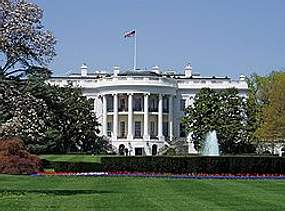
In the end, come Wednesday morning, no matter who the next denizen of the White House will be, Christians are charged to pray for our elected leaders. That is something each us us should always be for.
 Or the need for us to kowtow to what the national Christian “leaders” say we believers MUST DO—OR ELSE. Most of it contradicts itself. And sadly, it contradicts the Bible more than anything else.