
This final post of 2005 begins a short series that examines what I believe to be a pressing issue that is flying under the radar of the American Church. If we do not address it humbly and prayerfully in the coming year, I believe we American Christians will preside over a Church (and societal) implosion of our own making.
The thought that I cannot escape is about just that: thought. Our brains consist of two hemispheres, each with a God-imparted function. The left hemisphere handles language and logic, the right, narrative and art. The left excels in processing the batting averages of the 1927 Yankees and understanding that pigs can't fly, while the right finds wisdom and beauty in a poem or painting.
If Christianity in 2005 can be examined in any light, I would offer that the battles we are now seeing for the heart, mind, and soul of our Faith are those of the right and left hemispheres.
Some reading this will view what I have to say as nothing more than the ongoing tussle between modernism and postmodernism, or the Enlightenment and the post-Enlightenment. On some levels, this would be true. However, I do not believe it is necessary outcome that one or the other of those labeled sides should win, but that God's mind about our minds holds the key to where His will for us as a Church dwells.
Talk to anyone who studies trends and you'll hear them proclaiming that we are moving from the Information Age into the Conceptual Age. Where the Information Age's hallmark is the processing of data, the sine qua non of the Conceptual Age is design. Now that even a six-old can jump on a computer and find out facts about dinosaurs that paleontologists of thirty years ago had to spend months unearthing, data is cheap. The Information Age's attempt to make it exclusive to drive profits failed. It is no longer enough to have data. The power center has moved away from data-crunching to creating what machines cannot: objects of beauty. The new ruling class has shifted from computer systems analysts to graphic designers.
What has been commodified in the process is the very heart of the last Age. There are dozens of MP3 players on the market, but despite the fact that each is a technological marvel undreamed of twenty years ago (and with a price point that is startling), only one of those players has captured the zeitgeist of the transition from the Information Age to the Conceptual Age. Why is Apple's iPod outselling all the other MP3 players combined? Design. There are more-powerful MP3 players on the market, some selling for less than the iPod, but Apple's MP3 player dominates all others because Apple understood that design matters. As a result, the iPod is now iconic.
Design has triumphed as a result of the wealth of our day. A hundred years ago, a toaster was remarkable. Just having one of those expensive devices put you in the swanky minority. 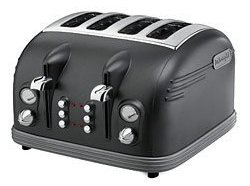 Today, though, it is no longer enough to build a toaster that toasts bread. We've seen toasters. Virtually every Western home has a toaster. Because a $7 toaster is possible, the companies that make toasters can't operate on the hope that people want their bread toasty. Something as humble as a toaster has to make a design statement or it will not sell. That's a profound paradigm shift. (Take a few minutes to marvel at what toasters look like today if you don't believe me. Note also the price paid for cutting-edge toaster design.)
The fallout of the design explosion that heralds the Conceptual Age is the ascendancy of the design-rich right hemisphere of the brain over the left. This, too, marks a sea change. Most of us did not grow up in a time that placed right-brain thinking over left. Our heroes are thinkers, not artists. Our educators drilled into us the truth that facts won out over concepts, our elders belaboring the reality that diagnosticians were the cream of society, able to follow a well-memorized flowchart to whatever answer was desired. There was the future! We had the data to prove it.
But they were wrong.
What is most frightening about the audacity of our elders to so drastically miss the future is what that failure has meant for the Church. So stay tuned for the second part of this post—next year—to find out how Christians must live in our brave new Conceptual Age world.
Tags: Artists, Designers, Design, Thinking, Feeling, Brain, Church, Faith, Christianity, Jesus, God
 2005 has been a year of tremendous growth at Cerulean Sanctum. Hundreds of readers left comments and blessed me by what they wrote. Most of the posts linked here were cited as being particularly helpful (or contentious) by the folks who stop by here on a regular basis, so I hope this collection of the best of this blog will provide plenty of reading material for anyone looking for challenging ideas that seek to reflect the heart of the Lord.
 This series has proven to be popular and some have suggested it’s too early to be concluding it. No doubt there are dozens of hidden messages we Christians send along with the Gospel, confusing its purity, especially in the ears of the lost. Stepping back and analyzing what we say and how we say it should be an essential part of all we do. We live in an age when truth is lacking or is filled with so much noise as to be obscured altogether, so diligence in keeping the Gospel free from extraneous garbage has never been more needed.